

ADHD therapy for adults, teens & couples
ADHD Therapy
in Orem, Provo & Logan, Utah
Practical tools for focus, follow-through, and emotions, plus real support for the shame and relationship strain ADHD can bring. You are not lazy, and you are not alone.


Is this for you?
Therapy for ADHD Is For You If You…
- Struggle with disorganization, forgetfulness, or staying focused in daily life
- Feel overwhelmed or frustrated when strategies to manage ADHD don’t seem to work
- Experience challenges in your career, relationships, or self-esteem due to ADHD symptoms
- Feel misunderstood or defeated by the difficulties ADHD brings
- Notice recurring misunderstandings and resentment in your relationship due to ADHD
- Struggle with imbalance in your partnership, where one person feels burdened while the other feels guilty
- Want to improve communication and understanding in your relationship
- Need practical tools and strategies to navigate ADHD in daily life
Understanding ADHD
What Is ADHD Therapy?
Quick answer
ADHD therapy is counseling that helps you understand how your ADHD brain works and build systems for focus, time, organization, and emotions, while healing the shame and relationship strain that years of struggling often leave behind.
1 in 16
U.S. adults has a current ADHD diagnosis, about 15.5 million people
55.9%
of adults with ADHD were diagnosed in adulthood, not childhood
6.0%
of U.S. adults reported a current ADHD diagnosis in 2023
Source: CDC, Morbidity and Mortality Weekly Report, ADHD Diagnosis, Treatment, and Telehealth Use in Adults, 2023. Read our post on why adult ADHD is often diagnosed later.
What we work on
From Daily Struggle to Systems That Work
Every person with ADHD is different. These are the struggles we hear most, and what therapy helps you build.
The struggle
What therapy helps you build
Losing track of time, deadlines, and appointments
→ Time systems that work with your brain: visual timers, body doubling, and realistic planning.
Starting tasks, or finishing them
→ Ways to lower the “activation energy” of tasks and keep momentum without relying on willpower.
Big emotions, fast
→ Emotional regulation skills for frustration, rejection sensitivity, and overwhelm.
“Why can’t I just do it?” shame
→ Self-compassion and a new story about yourself. See when ADHD looks like laziness.
A racing brain at bedtime
→ Wind-down routines and sleep habits for ADHD. Read ADHD and sleep.
Anxiety or low mood alongside ADHD
→ Care for what often comes with ADHD. Learn about anxiety therapy and depression therapy.
Signs of ADHD in adults
- Chronic lateness or losing track of time
- Starting many projects, finishing few
- Forgetting appointments, bills, or what you walked into a room for
- Restlessness, or a mind that will not slow down
- Strong reactions to criticism or feeling rejected
- Feeling like you work twice as hard to keep up
ADHD at different stages
Adults: many are diagnosed later in life, often after a child is diagnosed or work demands grow. Therapy helps make sense of years of struggle and build systems that fit your life now.
Teens: school, friendships, and growing independence can bring ADHD challenges to the surface. We work with teens and parents together. See therapy for teens.
Couples: when one or both partners have ADHD, we help you share the mental load and stop the blame cycle.
Living with ADHD as an adult?
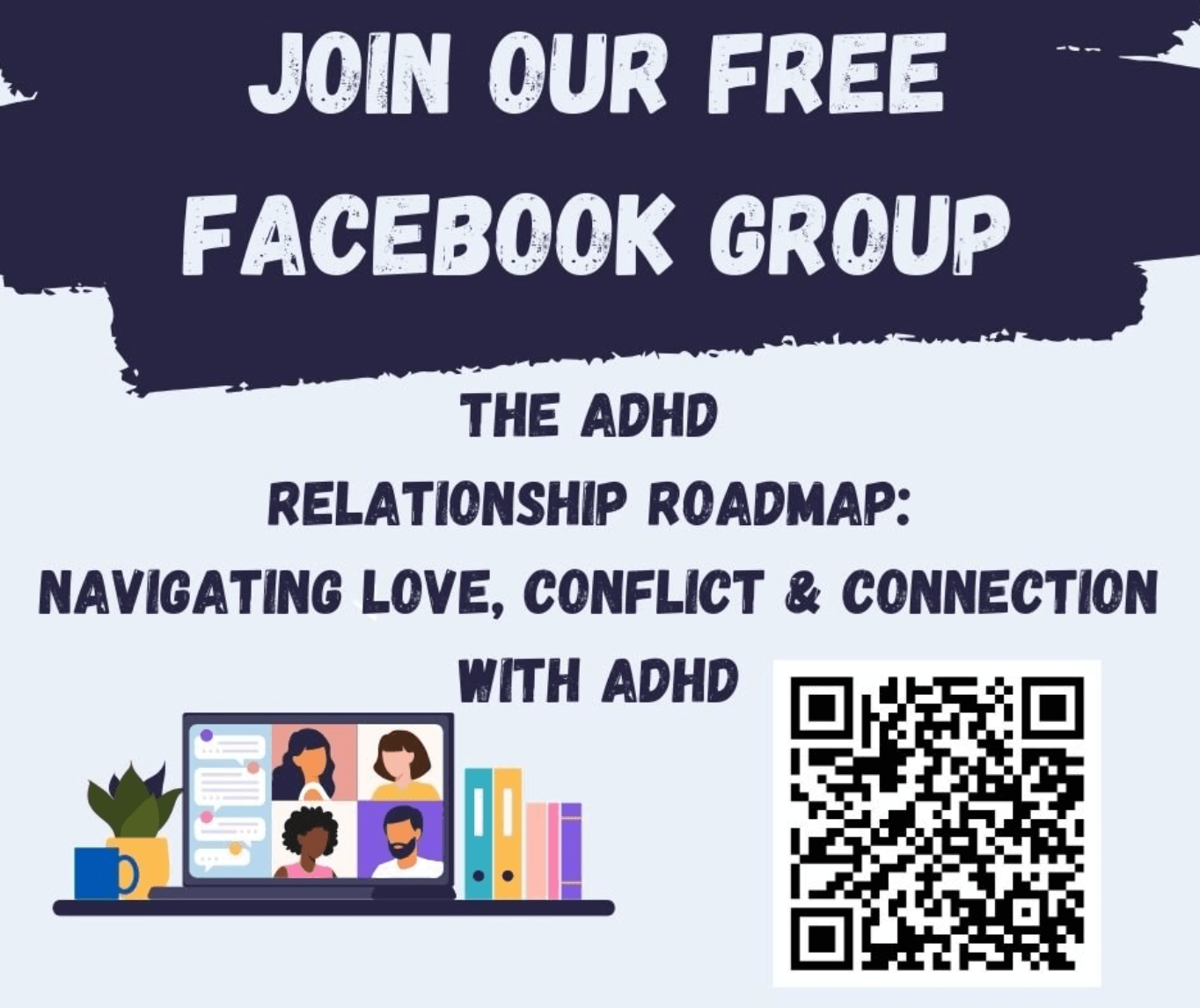
The ADHD Relationship Roadmap Facebook Group is a supportive space for individuals and couples navigating the unique dynamics of ADHD in relationships. Whether you or your partner has ADHD, or you’re still exploring what it means, this community is here to provide tools, insight, and connection.
Created by our very own, Tiffany Russell, LMFT and Sex Therapist, this group aligns with the upcoming course The ADHD Relationship Roadmap and offers evidence-based strategies, clinical wisdom, and a safe place to ask questions, share experiences, and grow!
Here you’ll find:
- Relationship tools tailored to neurodiverse couples
- Weekly prompts and tips for deepening connection
- Space to share wins, struggles, and “aha” moments
- Updates on course materials, webinars, and group support opportunities
Come as you are. Learn, grow, and find clarity on the road ahead!
How we help
Evidence-Based ADHD Treatment
CBT for ADHD
Executive function skills
Emotional regulation
Couples work for ADHD
Therapy works well alongside medication. If you want a medication evaluation, our partnership with Etherios in Orem offers integrated psychiatric care while you continue therapy with us.
Your first steps
What to Expect When You Start
First sessions: we talk about where ADHD shows up for you (work, home, relationships, emotions) and what you most want to change.
Small, specific experiments: instead of a big overhaul, you try one or two strategies at a time and keep what works.
Room for the hard feelings: frustration, grief over lost time, and shame are part of the work, not a distraction from it.
Progress you can see: we check in on what is changing in your days, not only how you feel in the session.
Recommended Therapist for ADHD
Orem, Utah Therapists

Joel Wallis, LCSW

Emily Haglund, CMHC-I

Sarah Warner, LCSW

Tiffany Russell, LMFT

Jen Paschall, MFT

Brittany Reynolds, LMFT, CAA-ADHD

Kat Willardsen, CSW

Jeannie Streadbeck, MFT-I


Provo, Utah Therapists

Hayden Allen, ACMHC

Jeremiah VanDyke, CMHC

Kylee Hales, CSW

Noah Weber, CSW


Logan, Utah Therapists

Nathan Tubbs, LCSW

Katie Funk, CSW

Sarah Reynolds, LCSW, CCTP-1

Jackie Petersen, CSW


ADHD in Relationships Is a Cascade Specialty
ADHD does not only affect the person who has it. It shapes who remembers what, who feels like the “parent,” and how conflict plays out. Our clinicians work with both partners, and our team includes Brittany Reynolds, LMFT, CAA-ADHD, and Tiffany Russell, LMFT, creator of the ADHD Relationship Roadmap community.
From our blog
ADHD in Relationships: The Pursuer-Withdrawer Cycle
From our blog
ADHD Relationships Need Better Systems, Not More Effort
From our blog
When ADHD Weighs You Down: A Shift for Non-ADHD Partners
ADHD Therapy in Utah

STRUGGLING WITH ADHD IN YOUR RELATIONSHIP? HERE’S HOW TO FIND UNDERSTANDING AND CONNECTION
ADHD can create unexpected challenges in relationships, leading to frustration, miscommunication, and emotional exhaustion for both partners. If you or your partner have ADHD, you may feel stuck in a cycle of forgetfulness, imbalance, or misunderstandings that strain your connection. This blog explores how ADHD affects relationships, common struggles couples face, and actionable steps each partner can take to foster better communication and understanding. With the right tools and support, you can break free from frustration and build a stronger, more connected partnership. Read on to learn how therapy can help.

UNDERSTANDING ADHD IN ADULTS
ADHD in adulthood often looks different from the way it presents in childhood. Many adults with ADHD feel like they’re constantly playing catch-up, juggling multiple tasks without ever quite finishing them. You may struggle to meet deadlines at work, maintain organization at home, or keep up with personal responsibilities. These challenges can lead to feelings of frustration, anxiety, or even low self-esteem.
What many don’t realize is that ADHD affects more than just focus and attention; it can impact emotional regulation, decision-making, and relationships. Therapy offers a space to unpack these challenges and develop customized strategies for daily life. Whether it’s learning how to structure your time more effectively, manage impulsivity, or cope with overwhelm, We’re here to help you rediscover balance and fulfillment.
Questions
FAQs About ADHD Therapy
-
Do I need an ADHD diagnosis to start therapy?No. Many people start therapy because they suspect ADHD or are struggling with focus, organization, or emotions. Your therapist can talk through your symptoms with you and help you decide whether a formal assessment makes sense.
-
Can therapy replace ADHD medication?Therapy and medication do different jobs. Medication can help with attention and impulsivity, while therapy builds skills, systems, and self-understanding. Many adults do best with both, and some choose therapy alone.
-
Can adults really have ADHD?Yes. According to the CDC, about 1 in 16 U.S. adults has a current ADHD diagnosis, and more than half of them were diagnosed as adults. Many people only recognize it after years of feeling "behind."
-
Do you work with couples where one partner has ADHD?Yes. ADHD in relationships is a specialty at Cascade Counseling. We help both partners understand the patterns, share responsibilities more fairly, and reconnect.
-
Do you see teens with ADHD?Yes. Our therapists work with teens and their parents on focus, school, emotions, and confidence. Learn more about our therapy for teens.
-
Can ADHD be mistaken for anxiety or depression?Yes. Racing thoughts, restlessness, low motivation, and feeling overwhelmed can look like anxiety or depression, and they often show up together with ADHD. A careful conversation about your history helps sort out what is driving what, so treatment targets the right thing.
-
Can ADHD affect intimacy and sex?It can. Distraction, impulsivity, and uneven energy can change how connected partners feel in and out of the bedroom. Our sex therapists understand ADHD. Read our post on ADHD and sexual inattentiveness in marriage, or learn about our sex therapy.
-
Where do you offer ADHD therapy?We offer ADHD therapy at our Orem, Provo, and Logan, Utah offices. You can see the recommended therapists for each location on this page.
What You Can Expect
A stronger relationship with yourself, your emotions, and your values.