
As the New Year approaches, there’s a familiar shift that happens for many people. Calendars reset. Conversations turn toward goals and resolutions. Social media fills with plans for change, discipline, and becoming a better version of yourself.
For some, that feels motivating. For many others, it feels heavy and overwhelming.
In the therapy room, I hear this every January. People say, “I feel like I should be more motivated,” or “Everyone else seems ready for a fresh start, and I just feel tired,” or “I want things to be different, but I don’t even know where to begin.”
If that resonates, you’re not alone. The New Year has a way of amplifying pressure, especially for people who are already carrying a lot. And from a therapeutic perspective, it makes sense that this season can feel overwhelming rather than inspiring.
Why the New Year Can Feel So Heavy
The New Year is often framed as a fresh start, but that idea comes with an unspoken expectation: now is the time to fix everything. Improve your habits. Heal your relationships. Be more productive. Be happier.
For people navigating anxiety, depression, burnout, grief, or ongoing stress, that message can feel suffocating. From a nervous system perspective, big expectations paired with low energy often register as threat rather than opportunity. Change requires safety and capacity, not pressure.
What I see most often in therapy is not a lack of desire to grow, but exhaustion. When someone has been holding themselves together for a long time, pressure doesn’t create momentum. It usually leads to shutdown, avoidance, or shame.

You Don’t Need to Reinvent Yourself on January 1st
One of the most important reminders I offer clients at the start of the year is this: January 1st is not a deadline for healing or growth. You don’t need a new version of yourself to move forward. You don’t need clarity, confidence, or a detailed plan right now.
Growth doesn’t happen because the calendar flips. It happens when people feel supported enough to be honest about where they actually are.
If the idea of resolutions brings up guilt or frustration, that’s information worth listening to. It may be pointing toward a need for gentler expectations rather than stronger discipline.
When Motivation Is Low, Listen Instead of Forcing
Low motivation is often misunderstood. Many people interpret it as laziness or failure. In therapy, it’s usually a signal. Low motivation often reflects emotional overload, unresolved stress, or a nervous system that hasn’t had enough time to recover.
Instead of asking, “Why can’t I push myself more?” it can be more helpful to ask, “What has been hard lately?” or “What am I asking of myself that might be unsustainable right now?”
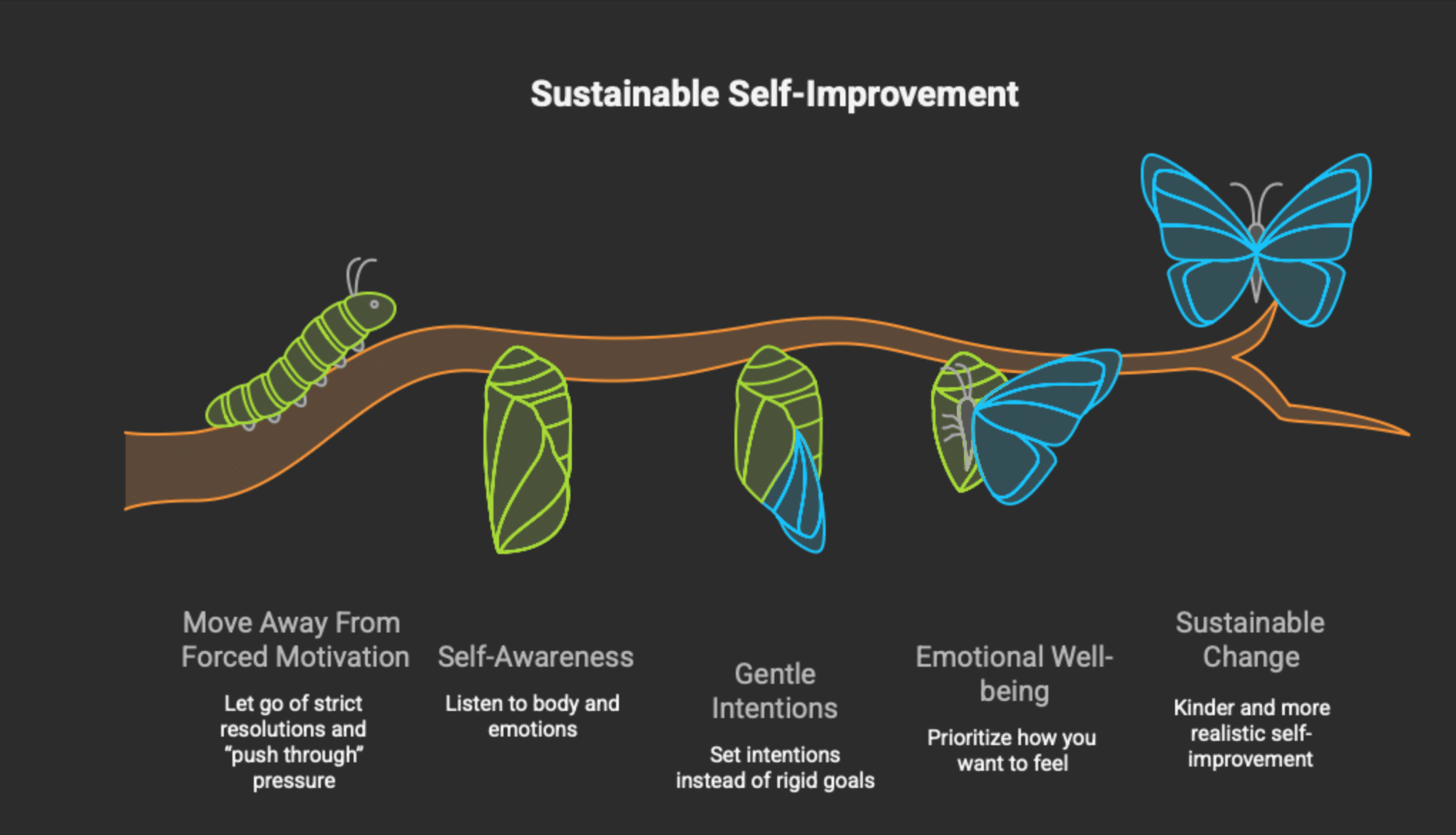
The New Year doesn’t have to be about doing more. Sometimes it’s about doing less, or doing things differently. Sustainable change starts with awareness, not force.
A Gentler Way to Approach the New Year
A supportive approach to the New Year begins with honesty. Choose one intention instead of a long list of goals. An intention might be creating more space, setting clearer boundaries, or checking in with yourself before committing to something. An intention isn’t something you succeed or fail at. It’s a direction you can return to.
Rather than focusing only on what you want to accomplish, it can be helpful to think about the kind of experiences you want to create or the ways you want to show up. Maybe that means being more present, more connected, or making space for rest. When goals are tied to your values and the life you want to build, not just outcomes, they tend to be more grounded and sustainable.
There will be days this year when old patterns resurface. That doesn’t mean you’re failing. It means you’re human. How you respond to yourself in those moments matters more than perfection.
A Bridge Into Part 2
If you’re feeling tired, inward, or unmotivated as the year begins, that experience isn’t just emotional. It’s also biological.
In Part 2, we’ll explore the science behind why winter naturally calls us to slow down and why spring may actually be a better time to set goals and make changes.
Get support at Cascade Counseling
If the start of the new year feels heavy, overwhelming, or confusing, you don’t have to carry it alone. At Cascade Counseling, our therapists offer a free 15-minute consultation to help you talk through what you’re feeling and see if therapy feels like a good fit. You’re allowed to begin this year with support. Reach out today to schedule your consultation and take the next step at your own pace.