
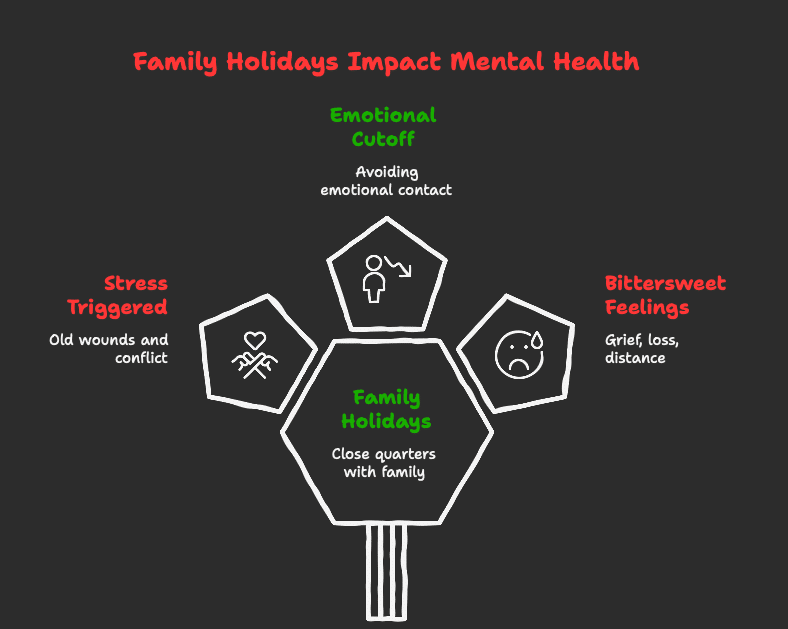
“It’s the most wonderful time of the year!” “There’s no place like home for the holidays!” That might be true for some, but for others, going home for the holidays can feel more like emotional boot camp. Why is it that returning home, even for a few days, can bring up stress, tension, or sadness? The truth is that the holidays often push us into close quarters with people who know us best and sometimes push our buttons the most. Family gatherings can bring joy and connection, but they can also stir up old wounds, trigger conflict, or reignite stress we thought we had left behind. If that sounds familiar, you are not alone. Let’s explore why being around family can feel so exhausting and what you can do to protect your peace this season.
Why Going Home Feels Hard
When we gather with family, we are not just sharing food and gifts; we are stepping back into long-established relationship patterns. You might find yourself falling into the same roles you played as a teenager or feeling tension around topics like religion, politics, or money. Even if your relationships are mostly positive, there may be grief, loss, or distance that makes the season bittersweet. For some, family members live far away. For others, they are gone altogether. And for many, memories of hurt or neglect make “home for the holidays” a complicated idea.
Therapist and researcher Murray Bowen described something called emotional cutoff, which is the tendency to reduce discomfort by avoiding emotional contact with family members. While it may feel like a form of self-protection, it often hides unresolved pain. True maturity, Bowen explained, involves finding ways to stay connected without losing your sense of self.
Learn more here:
Emotional Cutoff: https://www.thebowencenter.org/theory-concepts
How to Stay Grounded During the Holidays
The good news is that you can experience more peace, even in challenging family situations. These tools can help you approach your holiday gatherings with intention and self-awareness.
1. Remember and Acknowledge the Good
Every person has both light and shadow. Recognizing that truth does not excuse hurtful behavior, but it helps create space for compassion. Before your next gathering, take a moment to remember something good about each person you will see. Maybe it is their sense of humor, their cooking, or the way they care for others. When we notice what is good, we shift our attention away from constant defense and toward connection. Try offering one genuine compliment or word of gratitude during your visit. You might be surprised by how it softens the atmosphere.
2. Be Aware of Your Capacity
Each of us has a window of tolerance, which is the emotional zone where we can handle stress and stay regulated. When we are inside that window, we can manage discomfort, communicate clearly, and stay grounded. When we are outside that window, we may become hyperaroused (anxious, reactive, easily triggered) or hypoaroused (numb, detached, or depressed). Knowing how to recognize when you are inside or outside your window helps you decide when to engage and when to take a step back.
Ask yourself:
How does my body feel when I am starting to lose patience or shut down?
What helps me return to calm?
If you notice your body tensing, your heart racing, or your thoughts spiraling, it is okay to pause. Take a few deep breaths, go for a walk, or excuse yourself from the conversation. Sometimes, protecting your peace means choosing not to engage.
Learn more:
Window of Tolerance: https://www.nicabm.com/trauma-how-to-help-clients-stay-within-the-window-of-tolerance/
3. Set (and Respect) Boundaries
Boundaries are not about building walls. They are about creating healthy structure in relationships. Salvador Minuchin, founder of Structural Family Therapy, described boundaries as clear, rigid, or diffuse. Clear boundaries are healthy and flexible. Rigid boundaries are overly strict and prevent closeness. Diffuse boundaries are unclear and lead to emotional entanglement.
Before the holidays, think about your “rules for relating.” Are there topics that are off-limits? Are there time limits that help you stay balanced? It might not be the right time for a deep conversation about boundaries at the dinner table, but you can still practice them quietly and consistently.
Boundaries can sound like:
“I am going to step outside for a few minutes.”
“Let’s change the subject.”
“I would love to talk about that later, but I need a break right now.”
Healthy boundaries create room for both connection and self-respect.
Learn more:
Structural Family Therapy: https://dictionary.apa.org/structural-family-therapy
4. Accept That Peace Does Not Mean Perfection
Finding harmony with family is not about ignoring pain or pretending everything is fine. It is about accepting what is and choosing to respond differently. Some people may never apologize or change their behavior. You can still choose peace by focusing on what you can control, such as your reactions, your tone, and your energy. Self-awareness takes practice, but even small shifts make a difference over time. Therapy can be a powerful space to explore family patterns, grief, and emotional regulation. Talking through these experiences can help you understand your window of tolerance and how to expand it.
When the Holidays Feel Especially Hard

For many, the holidays also bring grief, whether that means missing loved ones who have passed away or navigating strained relationships that cannot be easily repaired. It is okay to acknowledge that the season can hold both joy and sadness.
Give yourself permission to feel the mix of emotions. You do not have to fake cheerfulness or push away the hard stuff. Let your feelings exist without judgment. Peace does not always mean happiness. Often, it means acceptance.
If this season feels heavier than usual, reaching out for support can help. A therapist can guide you through emotional regulation, grief processing, or boundary setting in a way that fits your situation.
Closing Thoughts
The holidays can bring connection and chaos, laughter and loss. If you find yourself dreading family gatherings or feeling drained afterward, know that you are not alone. Peace is not about pretending everything is fine, and it is not about cutting everyone off. It is about understanding your limits, honoring your needs, and staying grounded in your values. Family harmony takes effort and self-awareness, and it starts with small intentional steps. Give yourself permission to begin there. From all of us at Cascade Counseling, we wish you a gentle, meaningful holiday season and the courage to protect your peace.