

As winter arrives, many people picture cozy blankets, warm drinks, and quiet evenings. But for others, slowing down doesn’t feel peaceful at all. Instead, it brings uneasiness, guilt, restlessness, or anxiety. If rest feels hard for you, you’re not the only one. This comes up often in therapy, and it makes perfect sense once we understand what is happening beneath the surface. Winter invites us to pause, but our nervous system doesn’t always know how to follow that rhythm. Sometimes the body interprets slowing down as a threat instead of relief. Let’s explore why that happens and how rest can become a safer experience for your mind and body.
Why Rest Can Feel So Hard
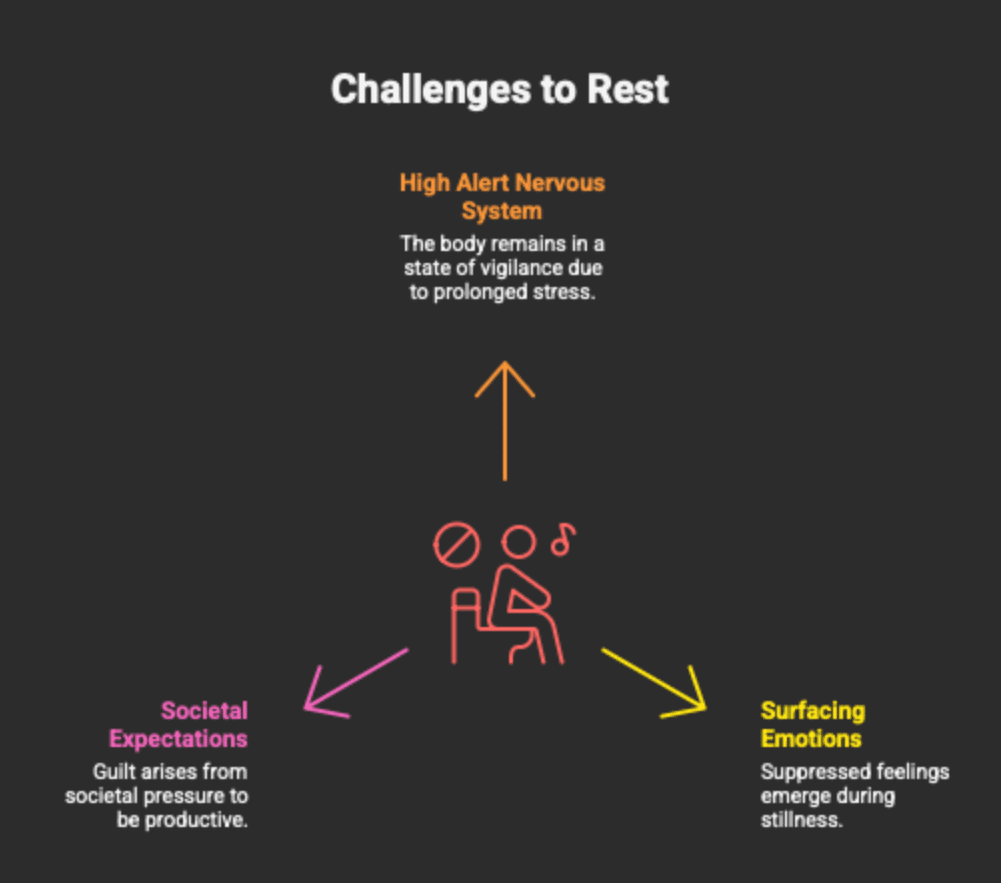
1. Many of us are used to running on high alert
If you’ve spent months (or years) juggling responsibilities, holding things together, or constantly problem-solving, your nervous system may have learned to survive in “go-mode.” When everything gets quiet, it’s unfamiliar — and unfamiliar can feel unsafe. The brain is wired to notice change. When the pace slows, it sends signals like, “Something’s different. Do I need to stay alert?” This isn’t failure. It’s the body trying to keep you safe based on what it has known for a long time.
2. Stillness reveals feelings we’ve been too busy to notice
Activity, noise, and distraction can keep harder emotions at arm’s length. When life slows down, all the feelings we’ve stored away finally have room to surface. It’s like shaking a bottle of soda all year and then opening it. The pressure has to go somewhere. Emotions don’t show up because you’re weak — they show up because you finally have space to feel what has been there all along. If the feelings feel too big, therapy can help hold that space without overwhelm.
3. Old expectations and comparison make rest feel risky
Many of us were raised to value productivity. You may have heard things like “Don’t be lazy” or “Keep going.” Those messages linger. Even when you try to rest, guilt can surface quickly. And when we compare ourselves to others who seem to be doing more, it only intensifies the discomfort. The truth is that rest supports the parts of you that work hard. Brains need quiet time to process, recover, and make sense of your inner world. Rest isn’t the opposite of productivity — it’s part of it.
How to Make Rest Feel Safer (Not Forced)
1. Keep rest small
Start with something tiny: a slow breath, a short pause before switching tasks, a minute of quiet. Smaller moments teach your system that slowing down doesn’t equal danger.
2. Notice what shows up in your body
If your chest tightens or thoughts speed up when you rest, this doesn’t mean you’re doing it wrong. It simply means a part of you isn’t used to slowing down yet. Notice without judgment.
3. Use comforting, grounding cues
Warm blankets, low light, soft music, aromatherapy, or a favorite mug can signal safety to your nervous system. These cues help the body feel held rather than startled by stillness.
4. Let one thing stay imperfect
Leave the bed unmade, skip one dish, don’t return one text immediately. Allowing life to be slightly unfinished teaches your nervous system that pausing won’t make everything fall apart.
5. Connect rest to what matters
Instead of trying to “relax,” ask yourself: “Why does rest matter to me?” Maybe slowing down helps you show up for people you love, or lets you feel more grounded and steady. Rest has a purpose when it aligns with what you value.

A Gentle Winter Reminder
You don’t have to love slowing down. You don’t have to feel instantly calm. If rest feels uncomfortable, it doesn’t mean something is wrong with you. It means your body learned to stay safe by staying busy. Winter can be a chance to practice a new rhythm — one that’s slower, softer, and shaped by your needs. Tiny steps count. And if you want support in learning how to rest without guilt or anxiety, therapy can be a steady place to explore what your system needs.
You’re allowed to ease into this season at your own pace. You don’t have to do it alone.