
How “Self-Improvement” Can Quietly Turn Into Self-Rejection
Many people come into therapy saying they want to work on themselves. They want to grow, feel better, and change patterns that no longer serve them. On the surface, that sounds healthy. But for many people, self-improvement slowly turns into something heavier. Instead of growth, it becomes pressure. Instead of curiosity, it becomes criticism. And instead of support, it begins to feel like rejection of who they already are.
If you have ever caught yourself thinking, “I should be further along by now,” “Why am I still struggling with this,” or “I need to fix myself,” you are not alone. These thoughts are incredibly common, especially among people who care deeply about personal growth. From a therapeutic perspective, they often signal confusion between growth and self-criticism.
Growth does not ask you to become someone else. It invites you to stay connected to yourself while things change. Self-criticism, on the other hand, asks you to abandon who you are in order to be acceptable. They can look similar on the surface, but they feel very different in the body and nervous system.
Why Self-Improvement Often Turns Into Self-Criticism
Most of us learned early on that change comes from pressure. Do better. Try harder. Do not mess up again. These messages are subtle, but they shape how we relate to ourselves over time.
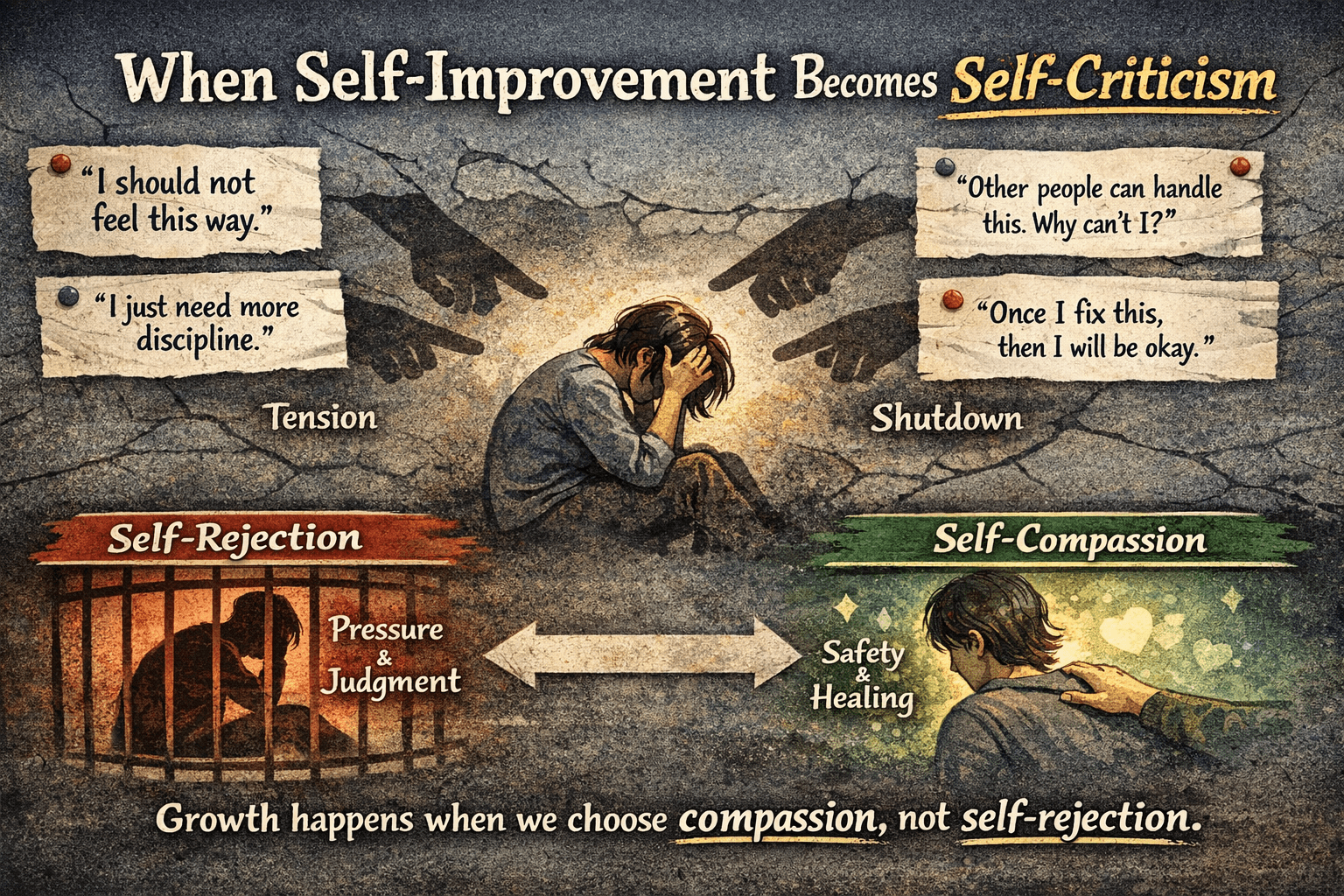
When self-improvement slips into self-criticism, it often sounds like:
-
“I should not feel this way.”
-
“Other people can handle this. Why can’t I?”
-
“I just need more discipline.”
-
“Once I fix this, then I will be okay.”
This mindset treats your current self as the problem. It suggests that who you are right now is not enough or not worthy of care. From a nervous system perspective, that creates threat, not growth. The body responds with tension, anxiety, shutdown, or shame rather than openness and learning.
In therapy, we often see that people are not stuck because they do not want to change. They are stuck because they are trying to change through self-rejection. The nervous system does not heal in an environment of pressure.
What Growth Actually Feels Like
Healthy growth feels grounded, even when it is uncomfortable. It includes accountability, but it also includes compassion. Growth says, “Something is not working, and I want to understand why.” Self-criticism says, “Something is not working because there is something wrong with me.”
One of the clearest differences is the tone of your internal voice. Growth sounds curious and steady. Self-criticism sounds sharp, urgent, or shaming.
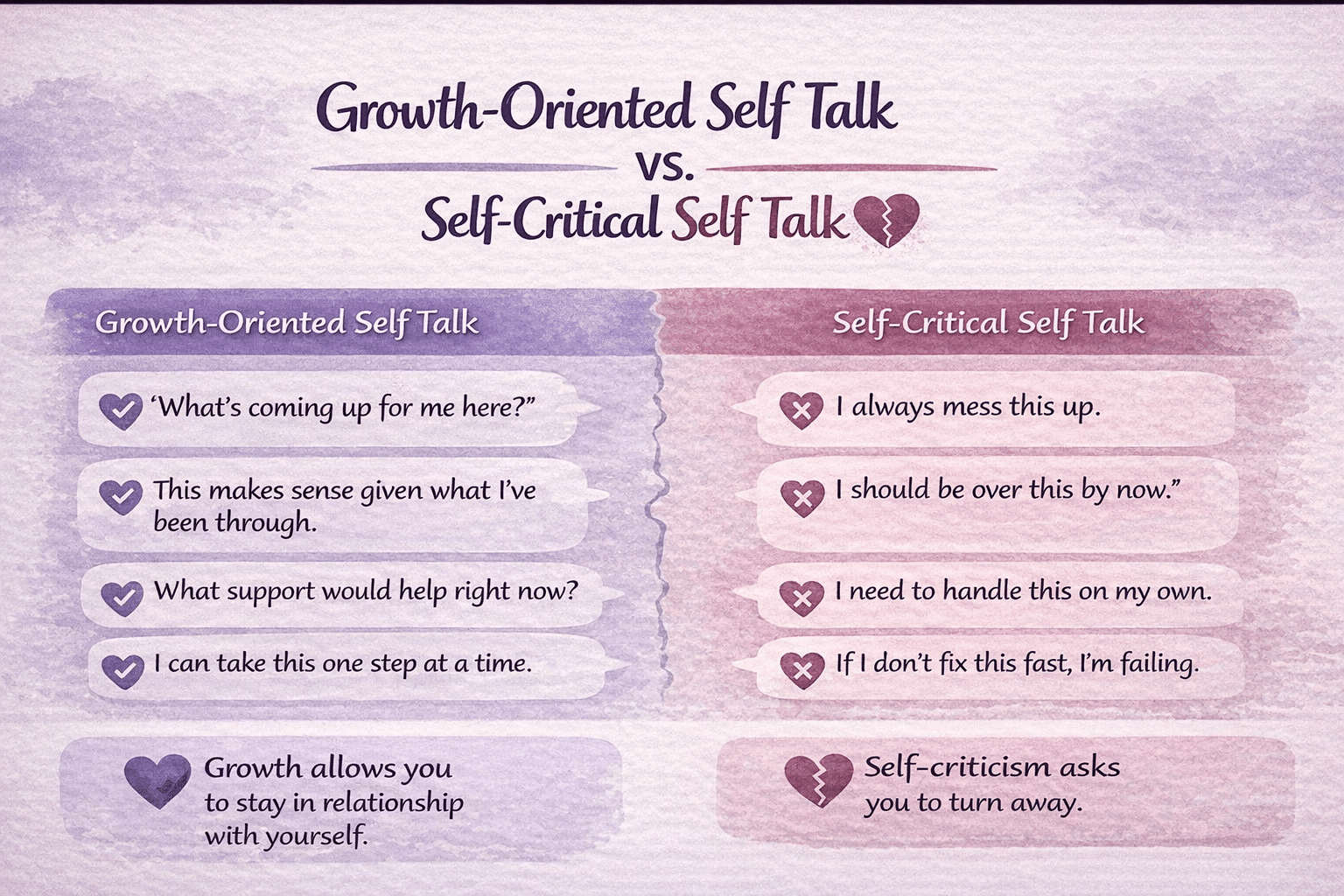
Here is a comparison that often helps clients notice the difference:
Growth-Oriented Self Talk
-
“What’s coming up for me here?”
-
“This makes sense given what I’ve been through.”
-
“What support would help right now?”
-
“I can take this one step at a time.”
Self-Critical Self Talk
-
“I always mess this up.”
-
“I should be over this by now.”
-
“I need to handle this on my own.”
-
“If I don’t fix this fast, I’m failing.”
Growth allows you to stay in relationship with yourself. Self-criticism asks you to turn away.
How Self-Criticism Fuels Anxiety, Burnout, and Shame
Many people seek therapy because they feel anxious, burned out, emotionally exhausted, or disconnected. What often goes unnoticed is how self-criticism keeps these patterns alive.
When you approach yourself with constant pressure, your nervous system stays on high alert. Rest feels undeserved. Mistakes feel dangerous. Progress never feels like enough. Over time, this leads to emotional exhaustion rather than growth.
Self-criticism often develops as a protective strategy. At some point, being hard on yourself may have helped you stay safe, succeed, or avoid disappointment. The work is not to get rid of it, but to understand it and learn new ways of responding that feel more supportive.
Shifting Toward Growth Without Self-Rejection
One of the most meaningful shifts people make in therapy is learning how to change without turning against themselves. This does not mean avoiding responsibility or ignoring patterns. It means changing the relationship you have with yourself while doing the work.
Helpful shifts include:
-
Replacing “What’s wrong with me?” with “What’s happening inside me?”
-
Noticing when motivation is coming from fear instead of care
-
Allowing rest and pacing instead of urgency
-
Responding to mistakes with repair instead of punishment
-
Letting values guide change instead of perfection
Growth happens when the nervous system feels safe enough to stay present. Safety creates flexibility. Flexibility allows change.
Therapy as a Space for Growth With Support
Many people worry that starting therapy means something is wrong with them. In reality, therapy is often the first place people learn how to grow without shame.
Therapy is not about fixing you. It is about understanding you with clarity and care. It offers space to explore patterns, emotions, and behaviors without judgment. Change becomes possible because you are supported, not pressured.
At Cascade Counseling, we often work with people who want growth but are tired of being hard on themselves. Therapy helps create a different experience of change, one rooted in understanding, compassion, and steady support.
If self-improvement has started to feel exhausting or punishing, that may be a sign it is time for a different approach.

If this resonates, support may help. Cascade Counseling offers a free 15-minute consultation so you can talk with a therapist, ask questions, and see if therapy feels like a good fit. Growth does not require self-rejection. You can begin exactly where you are.