

When most people hear the phrase postpartum depression, they picture a mother struggling after the birth of a baby. But postpartum depression does not only affect women. Men experience it too. Research shows that as many as one in ten fathers struggle with postpartum depression, and for many, it goes unnoticed or untreated. Men often tell themselves they should not feel this way because they did not give birth. They pressure themselves to be the strong one, the steady one, the supportive partner. But becoming a parent is one of the most intense emotional, physical, and relational changes a person will ever experience. And men deserve support just as much as mothers do. This post explores what postpartum depression can look like in men, why it happens, and the practical steps that help men work through it and heal.
Why Men Experience Postpartum Depression
Caring for a newborn brings a full spectrum of emotions. Joy, fear, responsibility, exhaustion, and sometimes an unexpected loss of identity. Many fathers feel a deep pressure to protect and provide. They try to stay calm and collected even when they feel overwhelmed. And because men are often socialized to suppress emotion, they may not understand that what they are experiencing is depression.
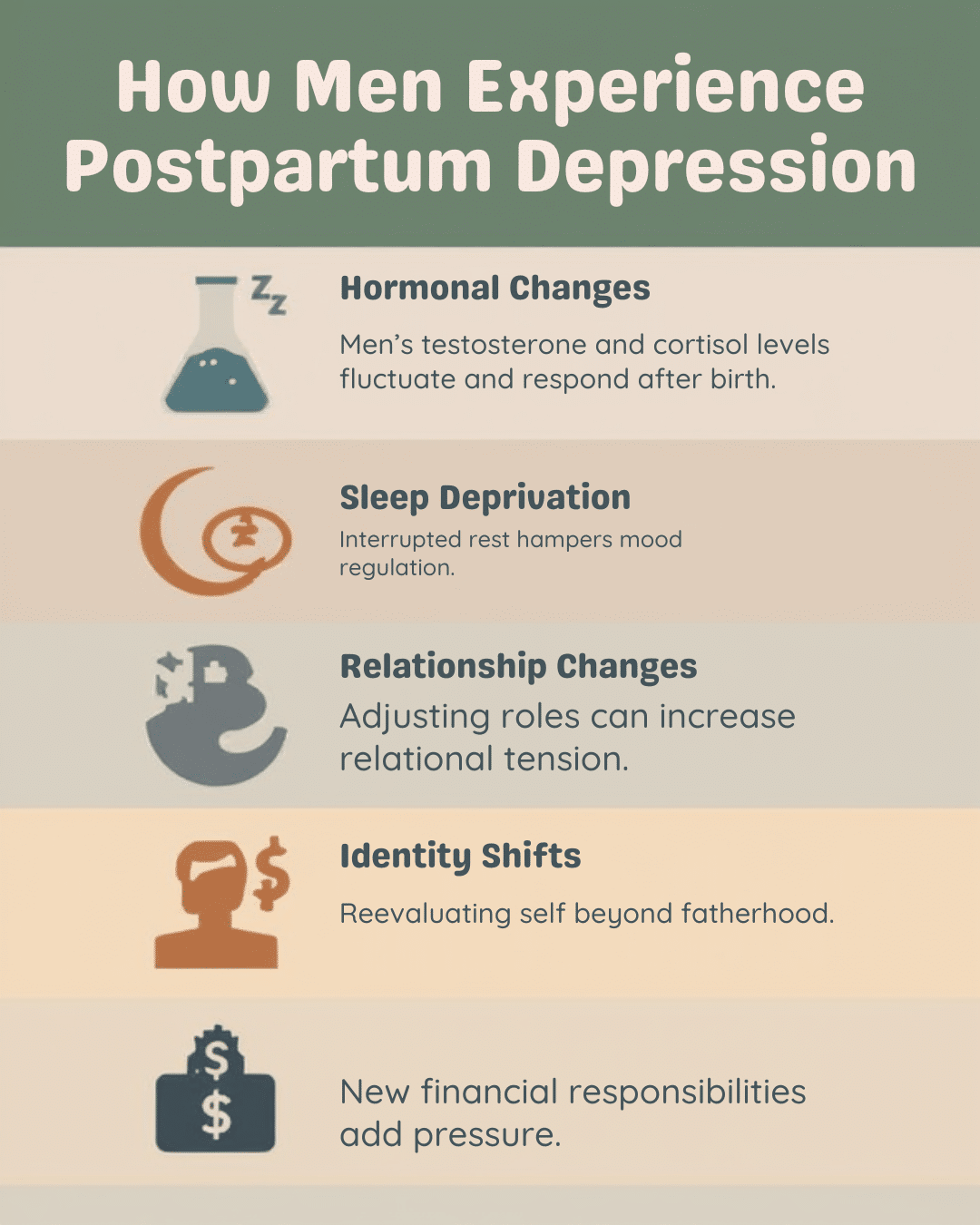
Hormonal changes
It surprises many people to learn that men undergo hormonal shifts in the postpartum period. Studies show that new fathers often have lower testosterone and fluctuating cortisol, prolactin, and oxytocin levels. These hormonal changes influence mood, patience, connection, and stress tolerance.
Sleep deprivation
Newborn sleep patterns affect everyone in the home. Chronic sleep loss impacts emotional regulation, concentration, frustration tolerance, and overall mental health. Even short bursts of interrupted sleep add up, leaving fathers fatigued and numb.
Relationship changes
The transition from couple to co parents is a major adjustment. Many men feel disconnected, unsure how to support their partner, or uncertain how their role has changed. Arguments increase. Intimacy decreases. Even loving partners can feel like roommates in survival mode.
Identity shifts
Fatherhood often triggers internal questions. Am I doing enough? Am I a good father? Will life ever feel normal again? Men who already struggle with anxiety, depression, perfectionism, or unresolved trauma may find those patterns magnified by the demands of new parenthood.
Financial or work stress
Many fathers return to work while still emotionally and physically depleted. The pressure to perform, provide, and maintain stability can feel like another full time job layered on top of new parenthood. When financial stress or job instability is present, these emotional challenges intensify.
How Postpartum Depression Shows Up in Men
Postpartum depression in men often looks different than in women. Because it does not always look like sadness, it is easy to miss. Instead, fathers may show irritability or anger, pull away from their baby or partner, feel numb or disconnected, have trouble bonding with their child, increase screen time or gaming, feel trapped, stop engaging with hobbies, use alcohol or substances to cope, have trouble concentrating, experience frequent anxiety or constant worry, or carry feelings of failure or shame. Many men describe it as going through the motions of life while feeling hollow on the inside.
Working Through Postpartum Depression: What Helps
Healing is absolutely possible. Men can recover, reconnect, and feel like themselves again. Support often looks like small consistent steps that build energy, confidence, and connection over time.
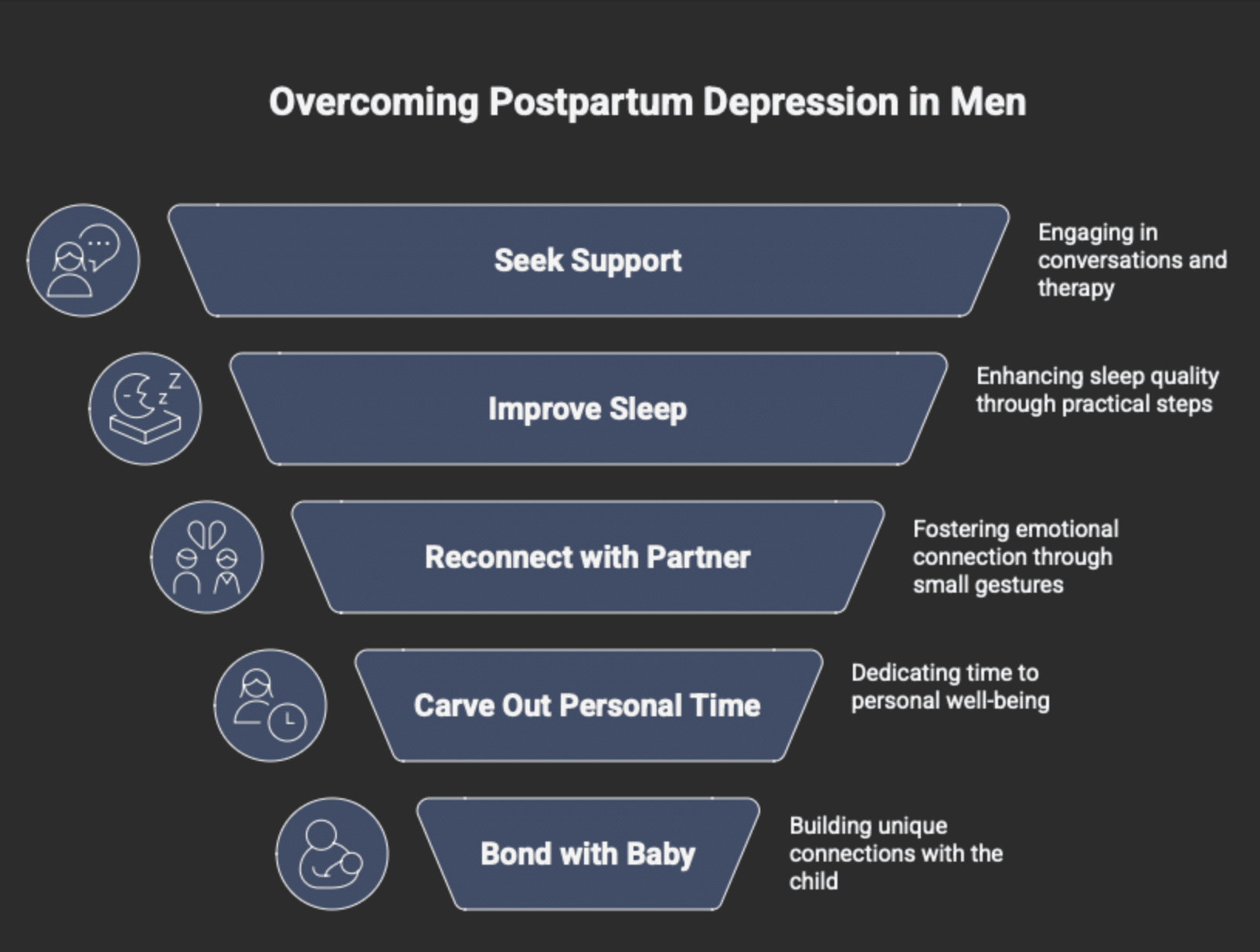
1. Stop minimizing your experience
Many fathers tell themselves their feelings are not valid because their partner had a more physically intense experience. They say things like I should not feel this way, my partner has it harder or I just need to push through. But minimizing your pain makes depression worse. You are a human being going through a massive life transition. You are allowed to be affected by it.
2. Talk to someone
You do not have to carry this alone. Even simple conversations can make the emotional weight lighter. Talking with your partner can start with grounded sentences such as I have been feeling really overwhelmed lately or I want to feel more connected but I do not feel like myself right now. You do not need the perfect words. You just need honesty. If opening up with a partner feels difficult, talking with a therapist can offer structure and safety.
3. Get screened by a therapist or physician
Postpartum depression in fathers is real, diagnosable, and treatable. Seeking an evaluation is not weakness. It is responsible parenting. Therapy can help you make sense of identity changes, fear, grief, relationship stress, or childhood patterns triggered by becoming a parent. Professional support can help you build coping tools and create a healthier emotional foundation.
4. Improve sleep in small realistic ways
You may not sleep well for a while, but you can improve sleep quality. Take turns with nighttime duties. Nap when the baby naps, even if it feels strange. Cut caffeine after the afternoon. Reduce screen time before bed. Even modest improvements in sleep often create significant improvements in mood, clarity, and patience.
5. Reconnect with your partner in small moments
Many men pull away when they feel like they are failing. But emotional connection does not require dramatic gestures. Five minute check ins. Sitting together during feedings. Simple physical contact like a hand squeeze. Saying thank you or I appreciate you. These small moments build teamwork and reduce resentment.
6. Carve out personal time without guilt
You are not selfish for needing time to recharge. Becoming a parent does not mean losing yourself. Even thirty minutes a day of something grounding can protect your mental health. A walk, a gym session, journaling, a hobby, or talking with a friend. You matter as a person, not only a parent.
7. Bond with your baby in your own style
Men often compare their connection to their partner’s. But bonding is not a competition. You can find your own ways to connect. Skin to skin time. Holding your baby during naps. Bathing them. Reading aloud. Babywearing. Walks outside. Bonding is built in small repetitive moments, not dramatic breakthroughs.
8. Challenge the tough it out narrative
Many men were raised to believe that emotional struggle equals weakness. They were taught to be silent, stoic, and strong. But real strength in parenting comes from flexibility, honesty, and presence. It comes from staying connected to yourself and your family instead of shutting down.
You Are Not Alone and You Can Feel Better
Postpartum depression in men is real, valid, and treatable. You are not failing. You are not broken. You are not supposed to know how to navigate every part of this transition perfectly. You are adjusting. You are learning. You are becoming a parent. And with support, connection, and time, you can find your footing again. You can feel more like yourself. You can experience fatherhood with joy instead of just surviving it. Healing is possible, and you deserve it.