
“I just need to trust them again.”
It’s a phrase I hear often in therapy, especially when working with couples. And it’s usually followed by a pause. When I gently ask, “What would that look like?” the answer is rarely clear.
Trust is foundational in relationships. It’s what helps us feel safe, open, and emotionally connected. When trust is strong, relationships feel steadier. When it’s shaken, everything feels more fragile. And when trust is broken, whether through dishonesty, crossed boundaries, or ongoing disconnection, it doesn’t rebuild itself automatically.
Time matters, but time alone is not enough.
We often treat trust like something passive, as if it will return if we just wait long enough or avoid talking about what happened. In my experience, rebuilding trust is active. It’s something we practice and create through consistent choices, not something that simply comes back on its own.
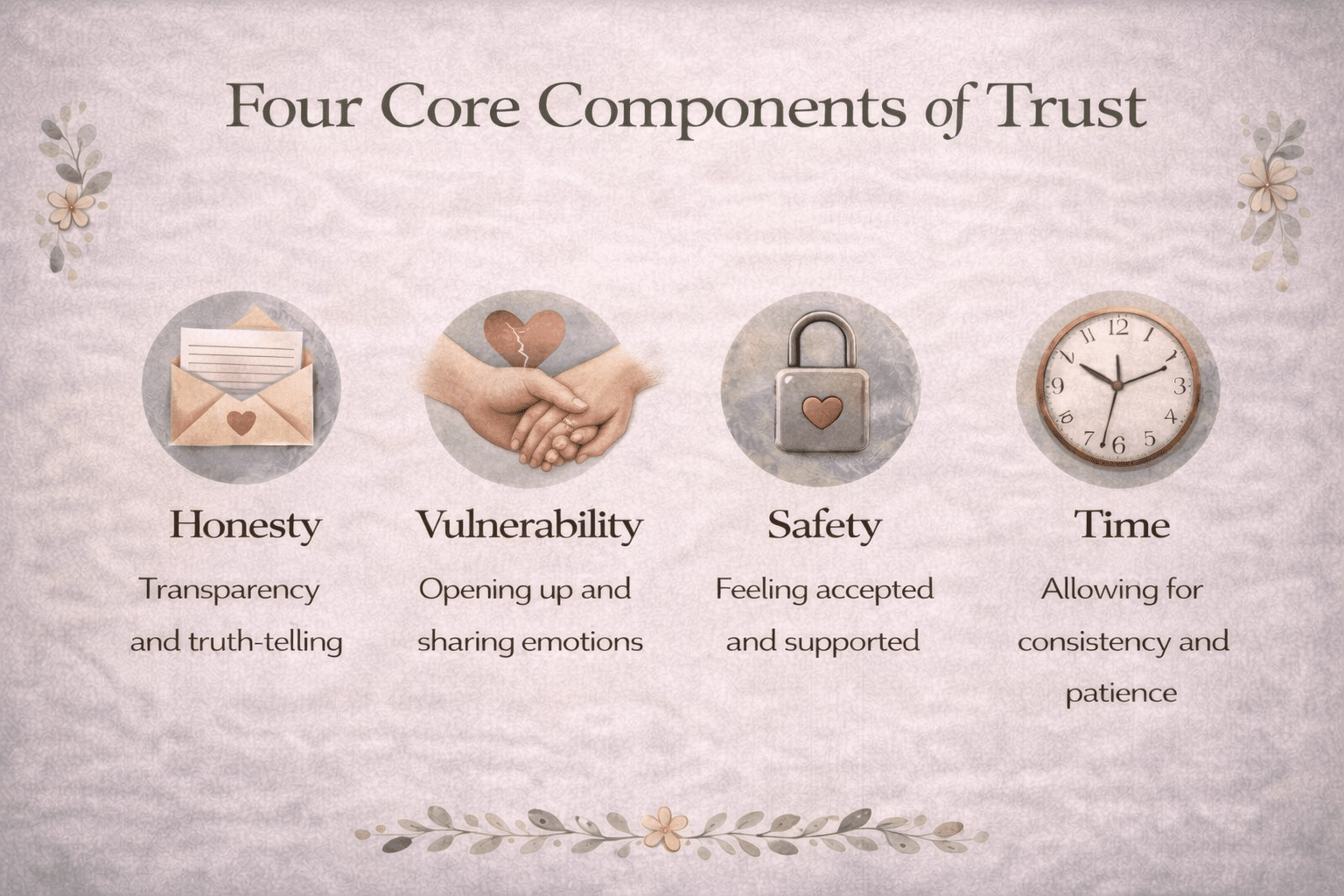
Four Core Components of Trust
When I work with individuals and couples on repairing or strengthening trust, I often return to four key components: honesty, vulnerability, safety, and time. Each one plays a different role, and each one helps clarify what’s actually needed to rebuild connection.
Honesty: Say What’s True
Honesty is more than just avoiding lies. It’s about being truthful in how you speak, how you act, and how you show up over time. It’s about naming what’s real instead of minimizing, deflecting, or avoiding uncomfortable truths.
Rebuilding honesty might look like:
-
Owning mistakes without defensiveness
-
Saying what’s true even when it feels uncomfortable
-
Following through so words and actions align
Honesty helps rebuild predictability, which is essential when trust has been shaken.
Vulnerability: Be Open About What You Feel
Vulnerability is the heart of emotional intimacy. It’s allowing yourself to be seen, not just when things are going well, but when you feel unsure, hurt, or afraid. Vulnerability is not oversharing or forcing emotional closeness. It’s offering what’s real in manageable, honest ways.
Vulnerability often sounds like:
-
“I felt hurt when that happened.”
-
“I’m afraid of messing this up again.”
-
“I want to feel close, but I don’t know how right now.”
This takes courage, especially after trust has been damaged. It can’t be rushed or demanded. But when one person takes a vulnerable step, it often creates space for the other to respond with openness as well.
Safety: Be a Safe Place to Land
We can only be vulnerable when we feel emotionally safe. Safety means knowing that your feelings will be received with care, not judgment, dismissal, or punishment. It means being able to say, “I’m not okay,” without fearing retaliation or shutdown.
Being emotionally safe for someone else might look like:
-
Listening without interrupting or trying to fix
-
Responding with empathy rather than critique
-
Respecting boundaries, even when it’s difficult
This is often the most challenging part of rebuilding trust because both people are usually carrying hurt. Emotional safety doesn’t require perfection. It requires effort, awareness, and a willingness to respond with kindness even when things feel tense or unresolved.
Time: Let It Be a Process
Time is the slowest part of rebuilding trust, and it’s often the one people want to rush. But trust doesn’t rebuild through reassurance alone. It grows through repeated experiences over time.
Time looks like:
-
Showing up consistently over weeks and months
-
Allowing space when needed without disconnecting
-
Letting change unfold without pressuring the process
Here’s the key: time only helps when honesty, vulnerability, and safety are present. Without those, time doesn’t heal. It simply creates more distance.

Trust Looks Different for Everyone
Trust is not one-size-fits-all. Different people and relationships need different things in order to feel safe and connected again. For some, trust is rebuilt through regular emotional check-ins. For others, it’s consistency in follow-through, transparency, or honoring new agreements.
If you’re working on rebuilding trust, it can help to ask:
-
What does trust actually mean to me?
-
What actions help me feel safe and grounded in this relationship?
-
What is one small step I can take, or ask for, this week?
Trust doesn’t return by going back to how things were. Often, it’s about creating something new, something more honest, more intentional, and more sustainable than before.
Trust Is Shown, Not Spoken
I once saw a mural that read, “Trust is shown, not spoken.” That line has stayed with me.
Trust is built through presence, not promises. Through small moments of follow-through. Through how we respond when someone takes the risk to be real with us. Through the patterns we repeat when no one is watching.

A Gentle Invitation
If you’re feeling stuck around trust, unsure how to rebuild it, or wondering whether repair is possible, you don’t have to figure it out alone. Therapy can offer a supportive space to slow things down, understand what’s happening beneath the surface, and practice new ways of relating that feel safer and more connected.
At Cascade Counseling, we work with individuals and couples who want help navigating trust, communication, boundaries, and emotional repair. We offer free 15-minute consultations so you can ask questions, share what you’re facing, and see if working together feels like a good fit.
Rebuilding trust doesn’t happen all at once. It happens one honest moment, one vulnerable step, and one safe interaction at a time.