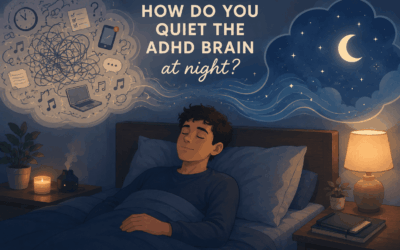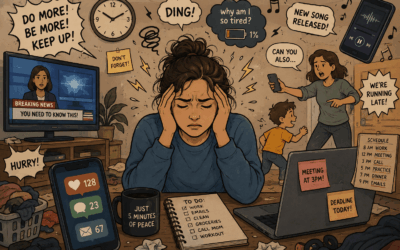


Emotional avoidance shows up in everyday ways that often go unnoticed. It’s staying busy so we don’t have to think, scrolling on our phone when anxiety starts to rise, shutting down during conflict, or telling ourselves we shouldn’t feel a certain way. Most of the time, we don’t even label these moments as avoidance. They just feel like coping. And in the short term, they often bring relief. We feel distracted, calmer, or more in control.
But that relief rarely lasts. Over time, the emotions we push away don’t disappear. They tend to return stronger, louder, and harder to ignore. From a therapy perspective, emotional avoidance isn’t a flaw. It’s a learned strategy rooted in protection. The work isn’t about judging it, but understanding why it shows up and what we can do instead.
Why Emotional Avoidance Is So Common
Humans are wired to move toward comfort and away from pain, both physically and emotionally. When difficult emotions like anxiety, sadness, shame, anger, or grief surface, the nervous system reacts quickly. The brain’s instinct is to reduce discomfort as fast as possible. That’s where avoidance comes in.
Avoidance can look like distraction, numbing, intellectualizing, people-pleasing, overworking, or emotional shutdown. These responses often develop early in life, especially in environments where emotions felt unsafe, overwhelming, or unwelcome. Over time, the brain learns that certain feelings are dangerous and should be controlled, ignored, or pushed down.
The problem is that emotions are not problems to solve. They are signals. When we avoid them, we unintentionally teach the brain that those emotions truly are unsafe. This increases fear, narrows our tolerance, and shrinks our emotional world. We may start avoiding conversations, relationships, or situations that matter to us simply because they bring up feelings we don’t know how to hold.
How Avoidance Keeps Us Stuck
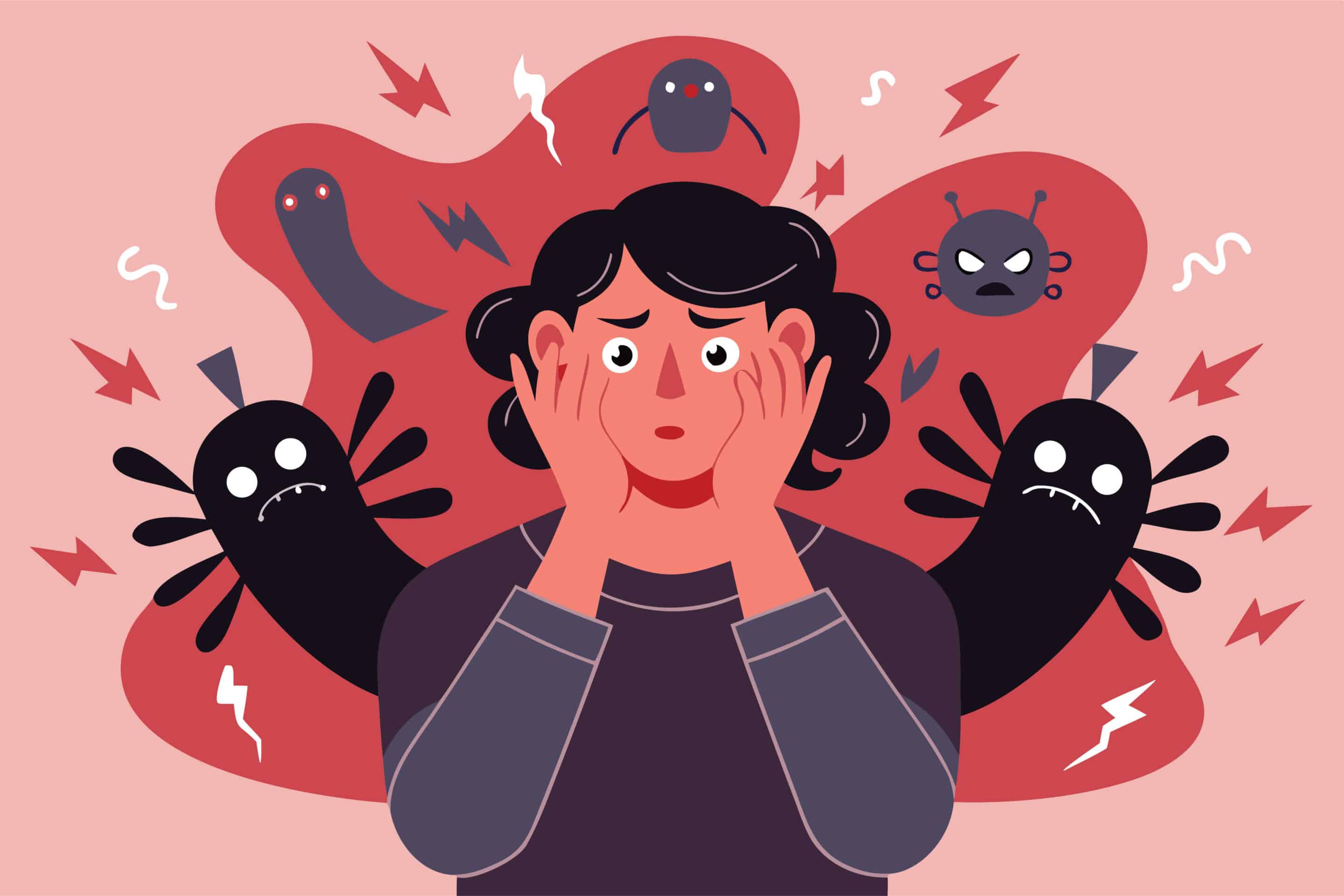
In therapy, one of the most common patterns we see is this: the more someone tries not to feel something, the more power that feeling gains. Anxiety becomes more intrusive. Sadness lingers longer. Shame grows heavier. Avoidance works like a short-term fix with long-term costs.
When emotions are pushed away, they don’t get processed. They remain stored in the body and nervous system, showing up later as tension, irritability, emotional numbness, or sudden overwhelm. Many people begin to believe they are “too emotional” or “bad at coping,” when in reality they were never taught how to be with emotions in the first place.
Turning Toward Instead of Away
A different approach begins with a small but meaningful shift: noticing emotions without immediately trying to change them. This doesn’t mean liking the feeling or letting it take over. It means allowing it to exist long enough to understand what it’s communicating.
From a clinical perspective, emotions often carry information about needs, boundaries, values, or unresolved experiences. When we meet them with curiosity instead of resistance, something changes. The intensity often softens. The body settles. The emotion becomes more workable.
Asking a simple question like, “What am I feeling right now?” or “Where do I notice this in my body?” can interrupt the automatic avoidance loop. It moves us from reaction into awareness, which creates choice.
Making Space for Discomfort Without Forcing Calm
Many people believe they need to feel calm, confident, or ready before they can take healthy action. In reality, growth usually happens alongside discomfort, not after it disappears. You can feel anxious and still have the conversation you’ve been avoiding. You can feel sad and still show up for what matters. You can feel overwhelmed and still take one small step forward.
This isn’t about pushing through emotions or ignoring limits. It’s about learning that discomfort doesn’t mean danger. Emotions can be present without being in charge. When we allow that, our nervous system slowly learns that feelings are tolerable and temporary, not threats.
Living in Alignment With What Matters
When we stop organizing our lives around avoiding discomfort, we gain access to something steadier: values. Values act as a compass when emotions are messy or unpredictable. They help answer the question, “How do I want to show up, even when this feels hard?”
Instead of asking how to get rid of a feeling, a more helpful question is, “What choice right now reflects the person I want to be?” Choosing value-driven actions, even in small ways, builds confidence and emotional resilience. It strengthens trust in yourself and your ability to handle difficult internal experiences.

Practical Ways to Work With Emotions Instead of Avoiding Them
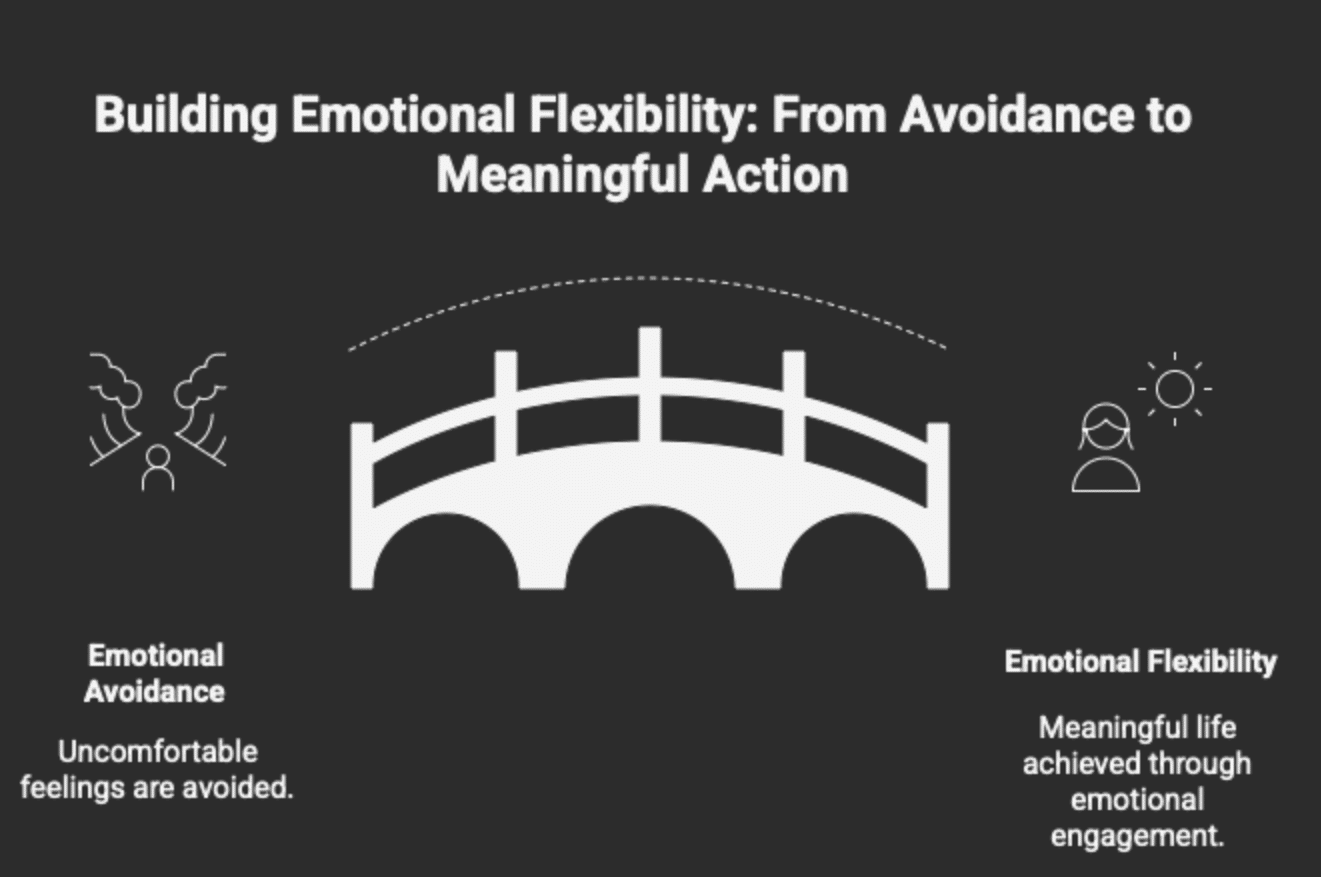
Here are a few therapist-informed tools that help build emotional flexibility over time:
-
Name the emotion. Putting words to what you’re feeling helps separate you from the experience.
-
Slow the body first. Gentle breathing or grounding helps regulate the nervous system.
-
Notice without judging. Observe emotions like waves that rise and fall rather than problems to eliminate.
-
Ask what the emotion is signaling. Is there a need, boundary, or value underneath it?
-
Choose one meaningful action. Even a small step aligned with your values can reduce avoidance.
These steps don’t remove discomfort. They expand your capacity to live with it while still moving toward a meaningful life.
It’s Not About Getting Rid of Emotions
Emotional avoidance makes sense. It developed to protect you. But long-term healing comes from learning how to live with the full range of human emotions, not escaping them. When we stop fighting our inner experiences, we stop fighting ourselves.
From a therapist’s perspective, this is where real change begins. Not by becoming emotion-free, but by becoming more emotionally flexible, grounded, and connected. When emotions are allowed space instead of resistance, they lose their grip. And that opens the door to a life guided more by intention than fear.