

Becoming a mother is often described as one of life’s most beautiful experiences and it
absolutely can be. But what people don’t talk about enough is how deeply challenging
and emotional that transition can be. For many new mothers, or for those who thought
they had the rhythm of motherhood down but then welcome another child into the home,
the postpartum period brings more than sleepless nights and endless diaper changes. It
can also bring a wave of emotions that feel confusing, isolating, and overwhelming.
I understand those difficult feelings, because I’ve been there too. The exhaustion, the
sadness, the guilt for even feeling sad when I was “supposed” to be happy. It took me
time to realize that what I was experiencing was not a sign of weakness, or failure, or
there wasn’t “anything wrong” with me. It was something that affects so many mothers.
Something real and valid.
How Common Is Postpartum Depression?
Postpartum depression (PPD) is far more common than most people realize. Studies
show that about 1 in 7 mothers experience significant symptoms of depression after
giving birth. Yet, many suffer in silence out of fear of being judged or because they
believe they should just “push through it.” The truth is, PPD is not your fault. It’s a
complex condition influenced by hormonal shifts, exhaustion, emotional stress, and the
huge life transition that comes with motherhood.
What Postpartum Depression Looks Like
PPD doesn’t look the same for everyone. Some moms cry frequently and feel hopeless;
others just feel numb or detached from their baby. Many feel intense guilt, wondering
why they’re not feeling the “instant bond” they expected.
PPD symptoms could include:
- Persistent sadness, tearfulness, or mood swings
- Loss of interest in things you used to enjoy
- Difficulty bonding with your baby
- Feeling anxious, irritable, or on edge
- Changes in appetite or sleep (even when the baby sleeps)
- Thoughts of inadequacy or being a “bad mom”
If any of this sounds familiar, please know, you are not alone. These feelings don’t mean
you’re failing. They mean you’re human, and you deserve support and healing.
The Importance of Self-Care: Realistic, Not Perfect
When you’re struggling with postpartum depression, or even just the everyday
overwhelm of new motherhood, the idea of self-care can feel impossible. You might
think, “I barely have time to shower, how am I supposed to take care of myself?” The
truth is, self-care in the postpartum period doesn’t have to be glamorous or time-
consuming. It’s about small, realistic, and consistent acts that nurture both your body
and mind. It’s about pausing to ask yourself: what feels doable for me right now?
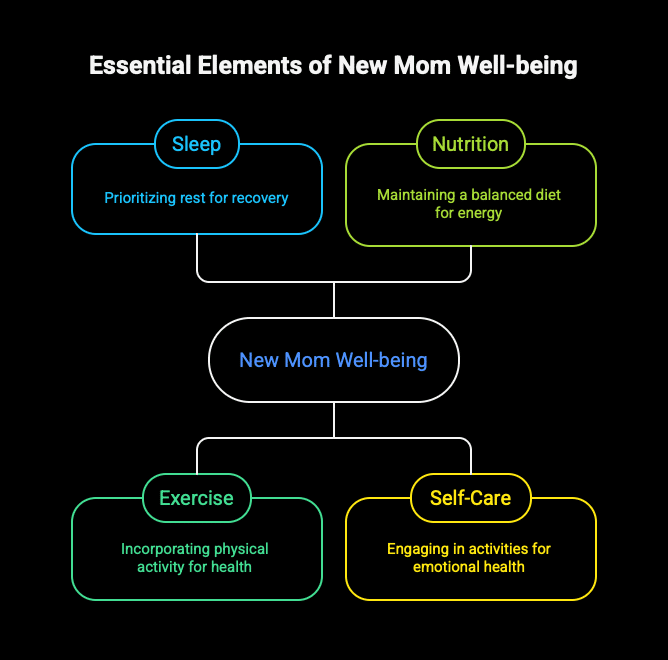
Let’s look at four essential areas to focus on: sleep, exercise, nutrition, and self-care.
1. Sleep
Every mom has heard the phrase, “sleep when the baby sleeps.” It sounds simple in
theory, but in reality, it can feel nearly impossible. Those short windows often come with
a mental checklist: “Now’s my chance to wash bottles, fold laundry, or finally do the
dishes.” It’s tempting to use that time to catch up on chores.
But here’s something to consider: sometimes the dishes can wait, and the laundry
doesn’t need to be done right this second. Before jumping into another task, pause and
ask yourself, does this really need to be done now, or can it wait? Your rest matters.
Even a short nap or just closing your eyes for a few minutes can make a real difference
in restoring your energy and emotional balance.
2. Exercise
Exercise doesn’t have to mean hitting the gym every day or following a strict workout
plan as that is rarely realistic in the early time of motherhood. Instead, try thinking of it
as gentle movement. It could be a short walk outside with your stroller, stretching while
your baby enjoys tummy time, or simply moving your body however feels good in the
moment. Fresh air and gentle activity can do wonders for your mood, and the best part
is, you can often include your baby along the way.
3. Nutrition
Eating well is an act of self-love that often gets overlooked when you’re exhausted and
just trying to make it through the day. Nourishing your body doesn’t have to mean
cooking homemade meals or doing anything elaborate. Keep it simple and realistic for
where you are right now. Having easy, nourishing options like yogurt, fruit, whole-grain
toast, or even a frozen meal with a side of grapes can make a real difference in how you
feel. Remember, just as feeding your baby is important, feeding yourself matters too.
Your body is still healing and needs energy to function well.
4. Self-Care
Self-care isn’t always about a spa day or a weekend getaway (though those are
wonderful when they happen!) It’s about giving yourself permission to pause and do
something that recharges you, even for a few minutes. Maybe it’s calling a friend,
journaling your thoughts, listening to music, or simply stepping outside for a few deep
breaths.
It also means asking for help when you need it, whether from your partner, family, or a
trusted friend. Asking for support is not a sign of weakness; it’s an act of strength.
Final Thoughts
If you are in the midst of postpartum depression or simply not feeling like yourself,
please know that it does get better. You are not alone, and you don’t have to go through
this quietly. Support is available to help you navigate this life transition, whether from a
healthcare provider, a therapist, or someone you trust.
Motherhood is a beautiful experience, but it’s also okay to admit that it can be hard.
Caring for your mental health is one of the greatest gifts you can give yourself and your
baby. Remember: you’re doing your best, and that is more than enough.