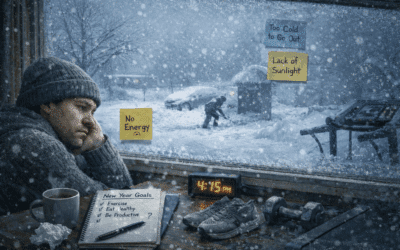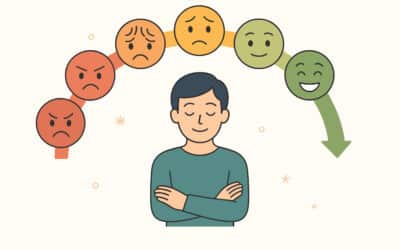

There’s something beautiful about fall in Utah. Golden leaves cover the mountains, mornings turn crisp, and there’s a quiet stillness in the air as the days grow shorter. Yet for many, that same shift brings something else: heaviness. As the light fades, you might notice yourself feeling more tired, irritable, or unmotivated. You may push yourself to “snap out of it” or wonder why you can’t keep the same pace you had all summer. But nothing is wrong with you. You’re responding to real biological, emotional, and environmental changes. If you’ve been feeling more withdrawn or weighed down lately, you’re not alone. For many Utahns, the transition from fall to winter can feel like a sudden dimming, inside and out.
When Beauty and Sadness Coexist
Fall has a way of holding contradictions. The mountains glow, the air feels clear, and yet something inside feels quieter and slower. The world around you is shedding, resting, and preparing for renewal, and your body wants to do the same. But modern life rarely slows down when the light changes. School ramps up, work deadlines pile on, and the holidays start to appear on the horizon. Even as your body craves rest, the world asks for more. That mismatch can make you feel off balance or guilty for not keeping up. If this sounds familiar, take a breath. This isn’t laziness or lack of motivation. It’s your body adapting to shorter days, colder weather, and less sunlight.
The Utah Factor: Why the Seasons Hit Harder Here
Utah’s environment amplifies seasonal mood changes. The high altitude, dry air, and sharp contrast between long bright summers and short gray winters all affect mental health. As daylight decreases, the brain produces less serotonin, which helps regulate mood, and more melatonin, which helps regulate sleep. That shift can make you feel sluggish, down, or disconnected. For some, it develops into Seasonal Affective Disorder (SAD), a form of depression triggered by changes in light exposure. Because Utah winters bring long nights and strong inversions that block sunlight, the change can feel especially sharp. Many people start noticing it as early as October or November. Recognizing this early helps you respond with care instead of criticism.
What I Learned About the “Dimmer Days”
Every year, those earlier sunsets sneak up on me. By mid-November, I can feel it — the heaviness, the slower mornings, the low motivation. For years, I blamed myself. I thought I was being lazy for not keeping up with my summer energy. It took time, therapy, and self-reflection to understand this wasn’t a character flaw. It wasn’t something I was choosing. It was a seasonal pattern that I could learn to manage with grace and self-compassion. When I began treating this time of year as something to work with instead of fight against, things started to change. I found ways to bring more light, warmth, and connection into my days, and you can too.
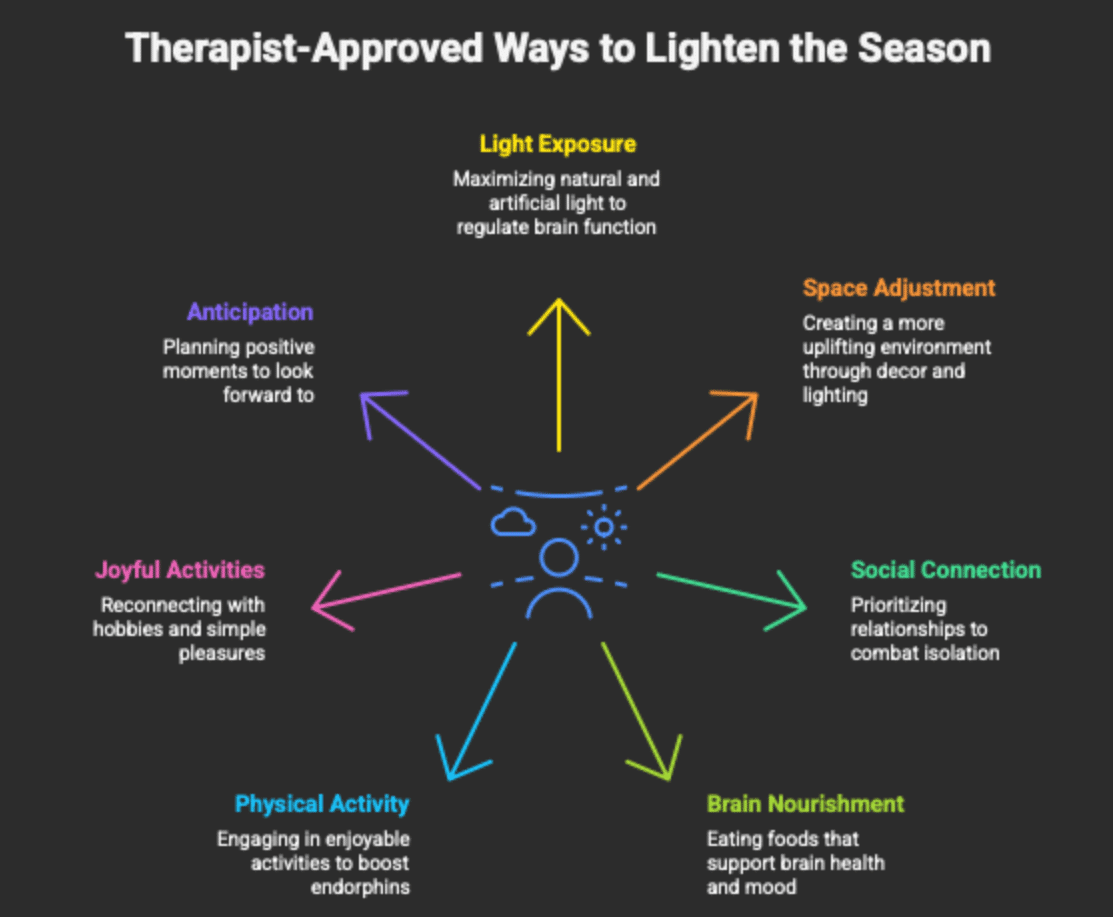
7 Therapist-Approved Ways to Lighten the Season
1. Hack Your Light Exposure
Light is medicine for the brain. Step outside within an hour of waking up, even for a few minutes. Natural sunlight helps regulate your circadian rhythm and serotonin levels. If mornings are dark, consider using a light therapy lamp (often called a “happy light”) for 10 to 20 minutes while you get ready.
2. Change Your Space
Small environmental shifts can lift your mood. Move your workspace near a window, replace heavy curtains with lighter ones, and use soft, warm lighting in the evenings. Think of it as creating a “winter oasis” in your home, a space that feels calm and alive.
3. Reconnect with People
When the days get shorter, isolation can creep in. It’s easy to stay home and scroll, but human connection is one of the strongest buffers against seasonal depression. Text a friend. Invite someone for coffee. Join a community class or group. Connection keeps your emotional energy flowing.
4. Nourish Your Brain
What you eat matters for your mood. Include foods rich in omega-3 fatty acids like salmon, flaxseed, and walnuts, and vitamin D from fortified dairy, eggs, or supplements. You can learn more about vitamin D’s impact on health from the National Institutes of Health. Stay hydrated too. Utah’s dry air can cause fatigue and headaches that mimic depression symptoms.
5. Move Your Body
Movement is a natural antidepressant. You don’t have to go to the gym or train for a marathon. Take a walk, do yoga, try snowshoeing, or dance in your kitchen. Regular movement boosts serotonin and helps you sleep better.
6. Reconnect with What You Love
Winter can make life feel repetitive. Intentionally weave in small joys such as your favorite show, baking something warm, playing music, or visiting a place you love. These rituals remind your brain of pleasure and meaning.
7. Create Joy Anchors
Plan things to look forward to. Mark your calendar with small positive moments, such as a dinner with friends, a weekend getaway, or a cozy movie night. Anticipation itself releases dopamine, the brain’s “feel-good” chemical. Even simple plans can help you feel more hopeful.
Reframing the Season
For a long time, I counted down the days until spring. Now, I try to see winter differently. It’s my teacher, reminding me to rest, let go of what’s not serving me, strengthen boundaries, and turn inward. Nature models this beautifully. Trees don’t fight the dark; they release what they no longer need and wait for light to return. You can do the same. If this season feels heavy, ask yourself what winter might be trying to teach you. Maybe it’s to slow down, simplify, or reconnect with yourself.
When to Reach Out for Help
It’s normal to feel a dip in energy or motivation during darker months. But if sadness, disconnection, or fatigue start to linger, it could be more than a seasonal slump. Therapy can help you recognize patterns, find support, and build habits that bring warmth back into your life. At Cascade Counseling, we understand how deeply Utah’s seasons can affect mental health. Our therapists provide a supportive space to explore these changes and create practical tools to help you feel grounded, balanced, and connected again. You don’t have to go through the darker seasons alone.