

If you keep finding yourself stuck in the same relationship patterns, the Relationship Attachment Model (RAM) can offer a helpful way to understand why. Many people feel disconnected, anxious, or unsure how to build trust in relationships, even when they genuinely want closeness and connection.
Created by Dr. John Van Epp, the Relationship Attachment Model is a framework designed to explain how healthy relationships develop over time. It provides a practical way to understand why some relationships feel secure and stable while others leave us feeling confused, hurt, or uncertain.
Whether you’re dating, married, or simply trying to understand your relationship patterns, RAM offers a useful roadmap for building stronger connections.
What Is RAM?
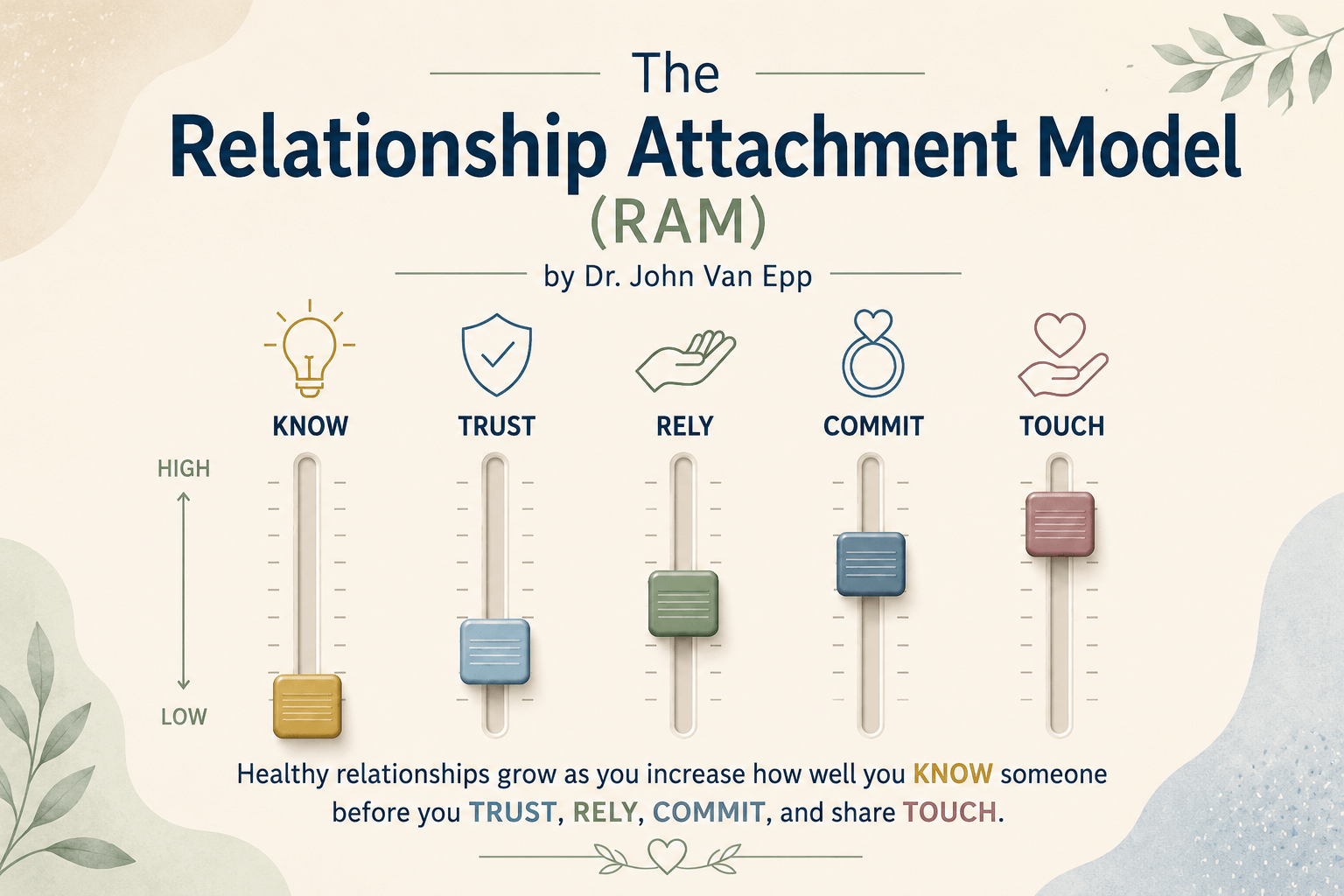
The Relationship Attachment Model (RAM) is a framework that explains how relationships grow and why some connections feel steady while others feel unstable. It focuses on five important bonds that should develop together over time:
- Knowledge
- Trust
- Reliance
- Commitment
- Touch
A simple way to think about RAM is this: when one part of a relationship develops much faster than the others, people are more likely to feel hurt, confused, or stuck.
This makes RAM especially helpful for people who want to make thoughtful dating decisions, strengthen existing relationships, or better understand why closeness sometimes feels risky.
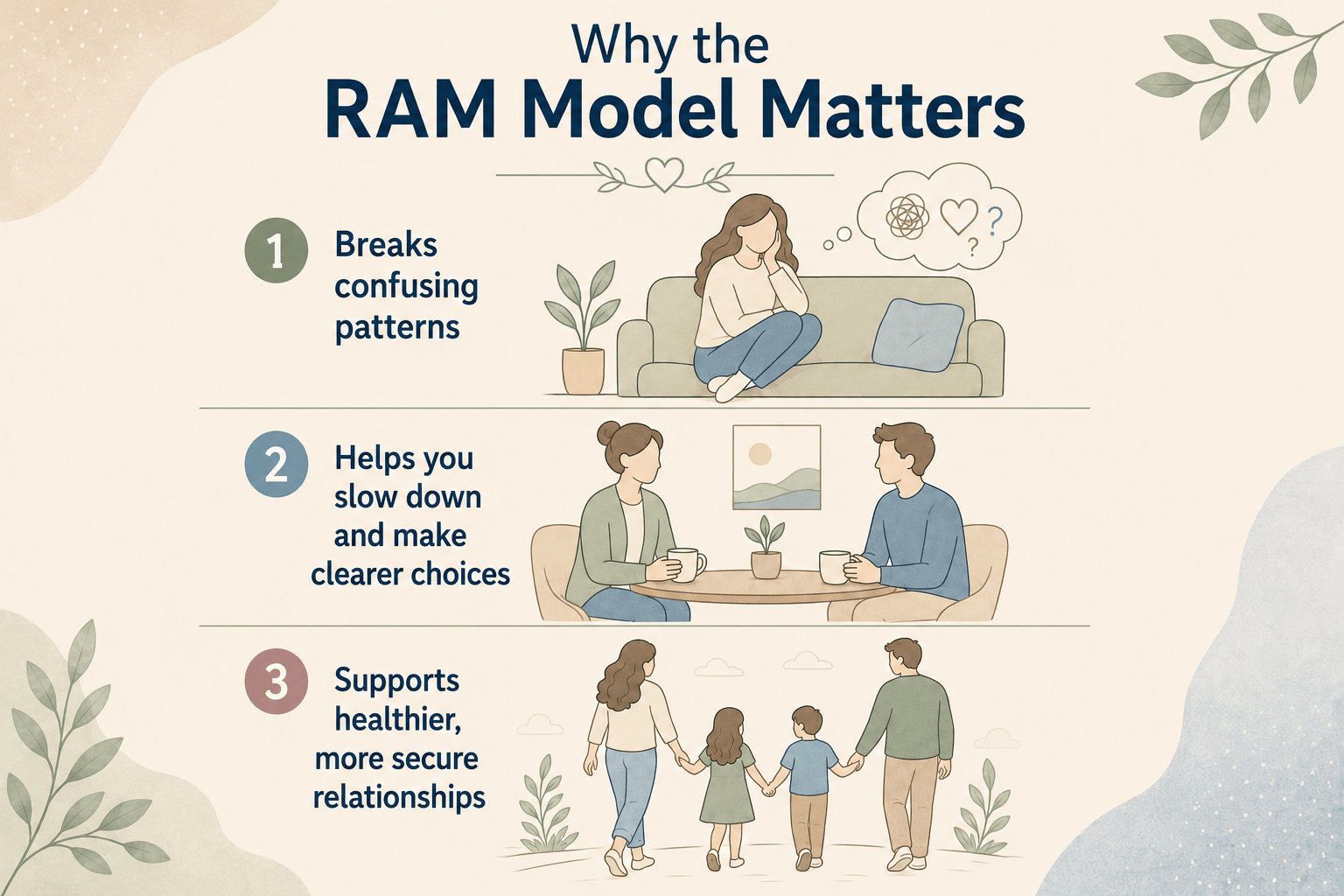
Why It Matters
Many people are not simply looking for better communication. They are looking for a safer way to connect, especially if they have experienced relationship struggles, anxiety, stress, or past emotional pain.
Research on attachment shows that our relationship patterns often influence how we seek closeness, support, and reassurance. In everyday life, this may show up as:
- Overthinking relationships
- Pulling away when things get difficult
- People pleasing
- Fear of rejection
- Difficulty trusting others
Understanding these patterns can help us respond more intentionally rather than simply reacting from fear or past experiences.
The Five Bonds
Here is a closer look at the five bonds that make up the Relationship Attachment Model.
Knowledge
Knowledge refers to how well you truly know another person.
You understand their values, habits, character, goals, and how they handle stress, not just the excitement or chemistry of being together.
Trust
Trust is confidence that someone is honest, dependable, and consistent.
Over time, trust develops when a person’s actions repeatedly match their words.
Reliance
Reliance is the ability to depend on someone in everyday life.
This bond grows when people consistently show up for one another, especially during difficult moments.
Commitment
Commitment is the decision to continue investing in the relationship.
It provides direction, stability, and a shared sense of purpose moving forward.
Touch
Touch refers to physical affection and closeness.
In healthy relationships, physical intimacy develops alongside the other bonds rather than racing ahead of them.
One reason RAM is so helpful is that it gives people a practical way to evaluate their relationships. Instead of asking, “Why does this feel off?” you can ask, “Which bond is developing too quickly, too slowly, or not enough?”
RAM and Therapy
RAM is not a replacement for therapy, but it can be a valuable tool for understanding relationship patterns.
Many people find that relationship challenges are connected to deeper experiences involving trust, attachment, anxiety, or past hurts. Understanding how attachment develops can provide insight into what is happening beneath the surface.
For many individuals and couples, that awareness becomes the first step toward healthier communication, stronger boundaries, and more secure relationships.
Who RAM Helps
The Relationship Attachment Model can be useful for:
- Dating adults who want to make more intentional relationship decisions
- Married couples who feel stuck in recurring conflict
- Parents who want to model healthy relationships for their children
- People who feel anxious or insecure in relationships
- Anyone looking for a practical framework for building trust and connection
Many people are trying to balance relationships alongside work, parenting, school, and countless other responsibilities. When life feels overwhelming, relationship struggles can quickly feel even heavier.
Common Concerns
Many people discover RAM because they find themselves asking questions like:
- “I know we care about each other, but something feels off.”
- “We moved too fast, and now I’m trying to catch up emotionally.”
- “I don’t know if I trust this person yet.”
- “I keep repeating the same pattern.”
- “I want a healthy relationship, but I don’t know where to start.”
RAM gives language to these concerns without placing blame or creating shame. It encourages people to slow down, think clearly, and evaluate whether a relationship is being built on genuine trust and connection or simply strong emotions.
What to Do Next
If you are trying to understand whether a relationship is healthy, RAM can be a valuable lens through which to view it. It offers a practical framework for understanding how trust develops, why certain patterns repeat themselves, and what healthy connection looks like over time.
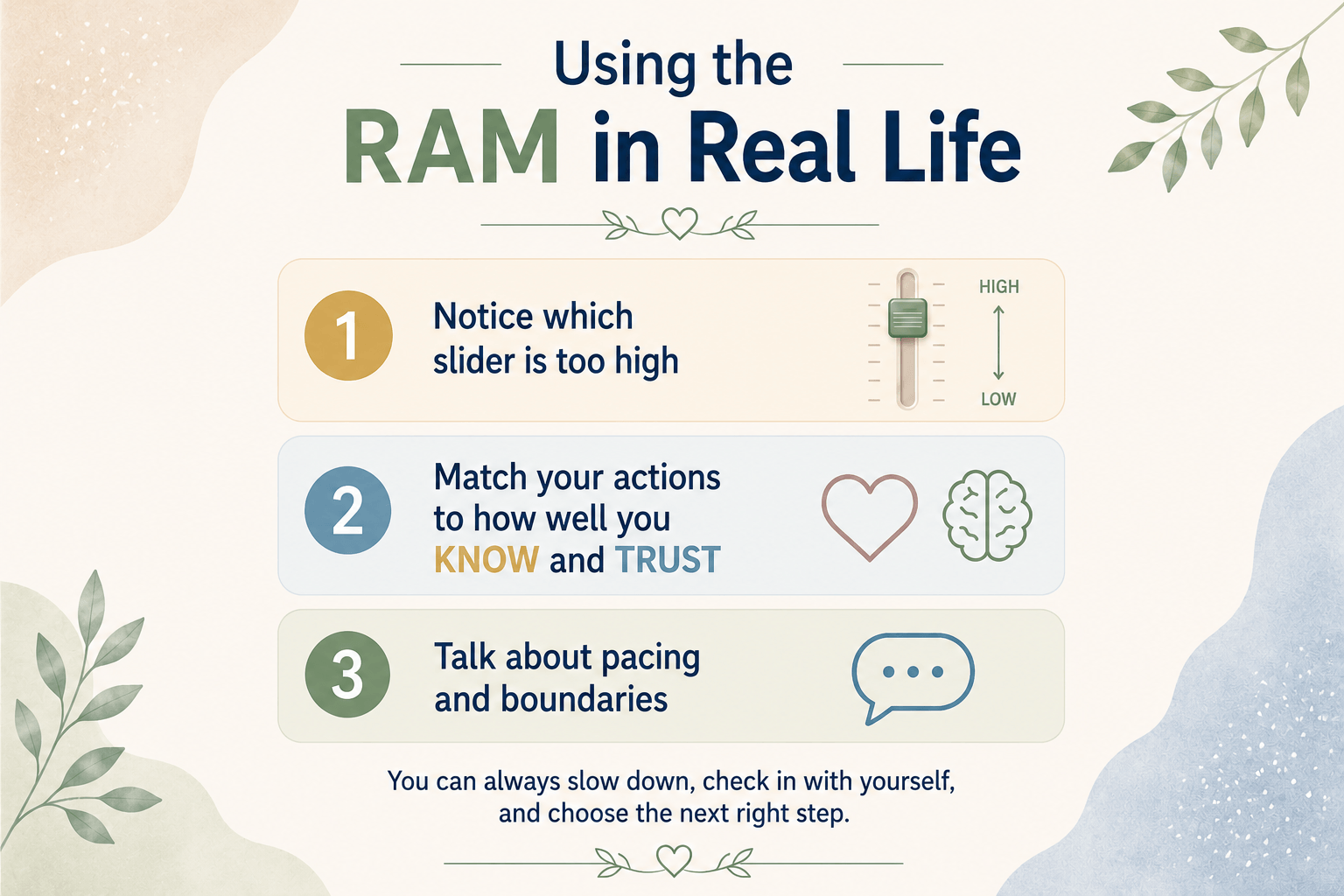
One of the most practical ways to use RAM is to slow down, evaluate where each bond stands, and make relationship decisions that match the level of trust and knowledge that has been built.
If you are feeling anxious, disconnected, uncertain, or stuck in recurring relationship patterns, therapy can provide a space to explore what is happening and what you need moving forward.
Sometimes a clearer understanding of your relationship patterns is the first step toward creating healthier, more secure connections.
Ready to Strengthen Your Relationships?
If you would like support as you work through relationship challenges, our therapists are here to help. We offer free 15 minute consultations to help you find a therapist who feels like a good fit for your needs and goals.
Whether you are navigating dating, marriage, trust issues, communication challenges, or relationship anxiety, scheduling a consultation can be a simple first step toward creating the kind of relationships you want.