

In Part 1, we explored the emotional pressure many people feel at the start of the New Year. In this post, we’ll look at what’s happening in the body and nervous system during winter and why your lack of motivation right now may actually be wisdom, not failure.
From both a therapeutic and biological perspective, winter is not designed for acceleration. It’s designed for conservation.
How Winter Affects the Nervous System
Human bodies evolved in response to seasonal rhythms long before modern productivity culture existed. Shorter daylight hours and colder temperatures signaled the body to slow down, conserve energy, and stay close to safety and warmth.
During winter, reduced sunlight affects serotonin and melatonin, which influence mood, sleep, and energy levels. Many people feel sleepier, more introspective, and emotionally tender. Focus can feel harder. Motivation often dips.
From a therapist’s perspective, this matters because behavior follows physiology. When the body is oriented toward rest and recovery, pushing for constant output often creates stress and shame rather than growth.

Why Winter Brings Fatigue and Comfort-Seeking
Many people notice changes in appetite, weight, and energy during winter and feel self-critical about it. But historically, storing more energy during colder months helped humans survive periods of scarcity. The body still responds to winter this way.
In therapy, I often see clients fighting these cues by restricting, overworking, or criticizing themselves for needing rest. That internal battle usually increases anxiety and emotional exhaustion. When people work with their biology instead of against it, they often feel more regulated and less ashamed.
Why January Is a Difficult Time for Big Changes
January is framed as a fresh start, but psychologically and biologically, it’s often a challenging time to demand change. After the holidays, many people are depleted. There may be grief, financial stress, disrupted routines, or lingering family dynamics still settling in the body.
From a therapeutic standpoint, this is rarely the best moment to overhaul habits. Motivation tends to be lowest when the nervous system feels pressured or unsafe. This is why many resolutions fade quickly, not because people lack willpower, but because the timing doesn’t match the body’s readiness for change.
Winter as a Season of Integration
In therapy, we talk often about pacing. Sustainable change happens when the nervous system feels supported, not rushed. Winter supports integration rather than initiation.
This season invites reflection and processing. Instead of asking, “What should I change?” winter asks, “What has been heavy?” and “What do I need to release?” Rest creates space for insight, and insight creates direction.
Why Spring Supports Growth
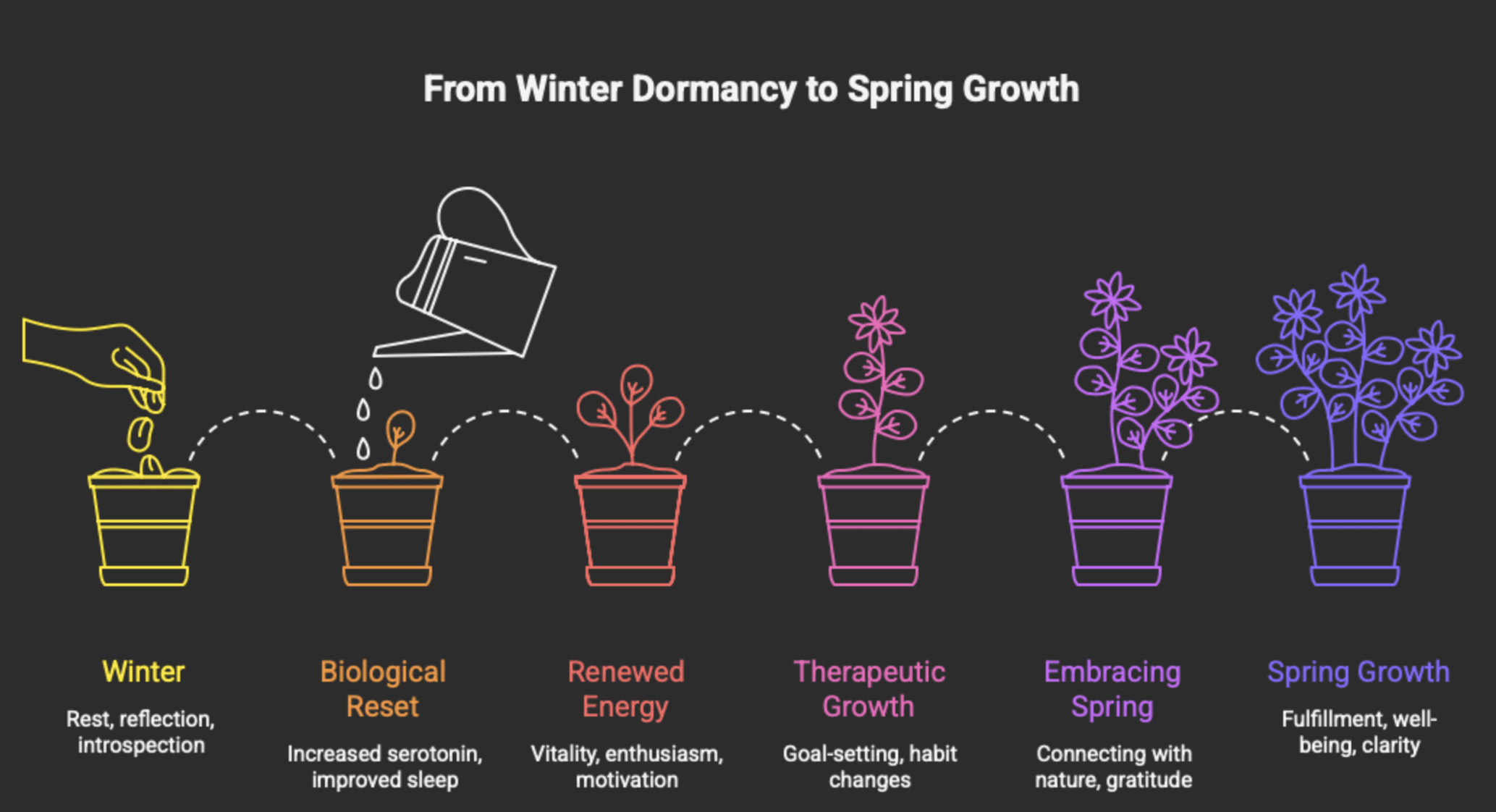
As daylight increases in spring, serotonin levels rise, sleep often improves, and energy naturally returns. From both a biological and therapeutic perspective, this is when goal-setting and habit changes tend to feel more accessible and less punishing.
Growth follows dormancy. When people allow winter to be what it is, spring often brings clarity and motivation without force.
A Seasonal Approach to Change
Rather than forcing resolutions in January, a seasonal approach can be more supportive. Winter can be for rest and reflection. Spring can be for intention and momentum. Summer can be for action. Fall can be for reassessment.
This framework reduces shame and builds self-trust. It teaches people to listen to their bodies instead of overriding them.
A Therapist’s Reminder
If your body wants rest, that’s not a flaw. If motivation feels distant, that doesn’t mean you’re failing. If goals feel heavy right now, it may simply mean the season is asking for something different.
You are allowed to wait for spring to plant new goals. Change doesn’t disappear when you pause. Often, it becomes clearer.
If winter has you feeling tired, unmotivated, or disconnected, it is not a personal failure. It may be your body asking for support. At Cascade Counseling, our therapists help you understand your nervous system, your needs, and what a gentler path forward can look like. You can schedule a free 15-minute consultation to connect with a therapist and explore support this season and beyond.