

There’s a moment most parents know well. You’ve tried everything. You’ve given consequences, taken things away, raised your voice, lowered your voice, and googled solutions late at night. And somehow, the harder you push, the more the gap between you and your child seems to grow.
If that sounds familiar, you’re not doing it wrong. You’re just working in the direction most of us were taught, from the outside in.
What if the most powerful parenting isn’t about managing behavior, but shaping who your child becomes?
This is a question at the heart of therapy-informed parenting, and it’s one we spend a lot of time exploring with families at Cascade Counseling.
This post is for the parent who is tired of reacting. The one who loves their child deeply and still feels like something isn’t working. The one who wants a real relationship with their child, not just compliance.
Parenting from the Inside Out: What It Means and Why It Matters
Most traditional parenting advice starts with behavior. How do we stop it, redirect it, reward it, or punish it? That’s not a bad instinct. Behavior does matter. But research consistently shows that behavior is often a symptom, not the source.
When we focus only on behavior, we miss the child beneath it.
Parenting from the inside out means focusing on what is underneath. Think of it like a pyramid. At the top are the hard moments, the meltdowns, defiance, and conflict. That layer matters. But it only works because of what is built underneath it.
The relationship you’ve built.
How your child feels about themselves in your presence.
And how you see them.
Most problems at the top are solved lower down.
The Relationship Has to Come First
Here’s a phrase we often return to in parenting work: if anything becomes more important than your relationship with your child, something has shifted out of place.
That sounds simple, but it rarely feels that way in real life.
When your child is lying, melting down in public, or pushing limits after a long day, correction feels urgent. In those moments, the relationship can feel secondary.
But children, especially struggling children, don’t respond to correction the way we hope when the relationship is strained. Control may create short-term compliance, but it does not build internal values or responsibility.
Those are built from connection.

Love Is Not a Reward
One of the most important ideas in therapy-informed parenting is this: love has to be unconditional.
Not just as a feeling, but as something your child experiences consistently, regardless of behavior, mood, or performance.
This does not mean there are no limits. It means your child’s worth is never on the line.
When children feel they have to earn connection by being “good enough,” they begin to focus on approval instead of developing an inner sense of direction. Over time, this can lead to anxiety, perfectionism, and a fragile sense of self.
In practice, this looks like:
- Staying emotionally steady even when they are struggling
- Separating who they are from what they did
- Letting them know they matter, regardless of performance
Parenting Is Growth Work Too
Some kids are naturally flexible and easygoing. Parenting them does not stretch us as much.
Others are intense, strong-willed, or deeply emotional. These are the kids who challenge us.
That’s not a problem. That’s the work.
These children often bring out our own impatience, fear, or need for control. But they also give us the opportunity to grow.
The child who argues may be developing strong thinking skills.
The child who feels deeply may be developing emotional intelligence.
When we shift from trying to change who they are to understanding how they are wired, everything starts to feel different.
Talk Less, Ask More
Most parents talk a lot. We explain, correct, and try to teach. But too much talking can shut down the very thinking we are trying to build.
Instead of leading with a lecture, try getting curious.
- What happened?
- How were you feeling?
- What were you hoping for?
- What do you think would help next time?
When children feel genuinely heard, they engage more. They also begin to learn how to think through situations, rather than just follow instructions.
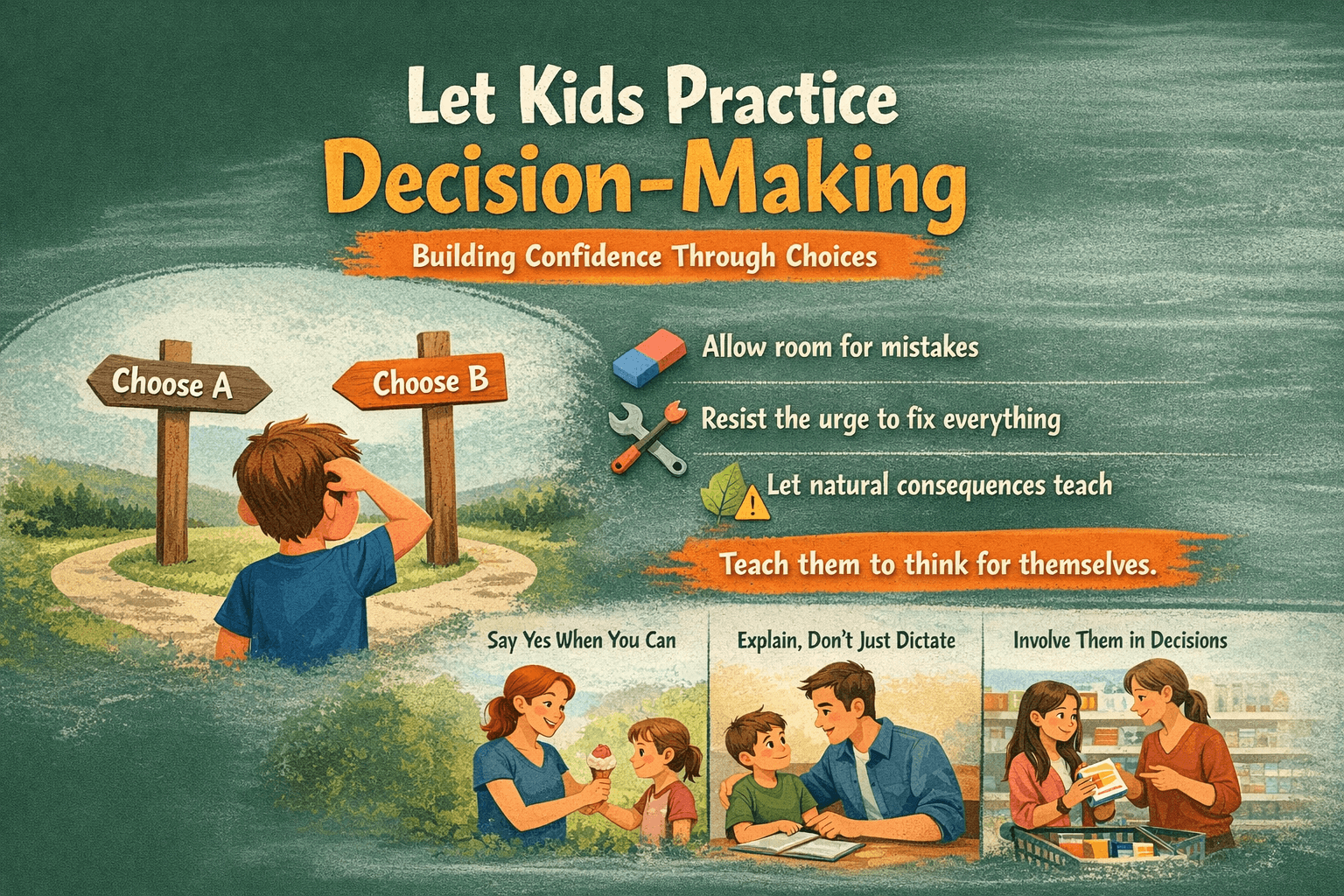
Let Kids Practice Decision-Making
Children learn to make good decisions by practicing them.
This means allowing some space for mistakes, resisting the urge to fix everything, and letting natural consequences teach when appropriate.
The goal is not to give up structure. It is to give your child a sense of agency.
Say yes when you can.
Explain rather than just dictate.
Involve them in decisions that affect them.
When something goes wrong, it becomes a learning moment instead of just a problem to correct.
How You See Your Child Matters
How you view your child matters more than any strategy.
Children can feel whether they are being seen as a problem to manage or a person to understand.
When you begin to see your child as a good kid having a hard time, rather than a bad kid making bad choices, your tone shifts. Your response softens. Connection becomes possible again.
A helpful question in hard moments is:
What is the most generous explanation for this behavior that still fits?
That question alone can change everything.
What Children Actually Need
Across decades of research, three needs show up consistently:
Safety
A space where it is okay to make mistakes and not be perfect
Confidence
Messages that focus on effort and growth, not just outcomes
Connection
At least one person who truly sees them and stays
Even small shifts matter.
Instead of “You’re so smart,” try:
“You worked really hard on that.”
One builds resilience. The other builds pressure.
You Don’t Have to Have It All Figured Out
The goal is not perfect parenting. It is real parenting. Connected, honest, and willing to grow.
You will not get it right every time. No one does.
But when you focus on the relationship, everything else becomes easier to work through.

You Are Not Alone in This
If you are feeling stuck, overwhelmed, or unsure how to support your child, you are not alone.
At Cascade Counseling, we work with parents who want to better understand their child and build stronger, more connected relationships at home.
We offer free 15-minute consultations so you can ask questions, get clarity, and see if it feels like a good fit.
Reach out when you’re ready. You don’t have to figure this out on your own.