
What Are Invisible Coping Skills (And Why They Matter)
Have you ever felt anxiety rise in your chest, your thoughts start to spiral, or stress make it hard to focus, but you couldn’t leave what you were doing, grab a tool, or take a break? That’s exactly when invisible coping skills matter most.
Invisible coping skills are techniques you can use without props, apps, or special settings. They live inside your body, your awareness, and your nervous system. These skills help calm you in real time, bring you back to the present moment, and give you a sense of steadiness when emotions feel intense.
Life doesn’t always pause when stress shows up. These skills are designed for moments when you still need to function, stay present, or keep going. Whether you’re dealing with anxiety, relationship tension, parenting stress, or burnout, invisible coping skills help you respond with more intention instead of reacting from overwhelm.
How Invisible Coping Skills Work
When your nervous system becomes activated, the part of your body responsible for fight, flight, or freeze takes over. Stress hormones increase, your thoughts speed up, and your body looks for escape. In those moments, logic alone usually doesn’t help.
Invisible coping skills work by sending your nervous system a different signal. Instead of feeding the stress response, these skills gently activate the body’s calming system. That shift allows your breath to slow, your muscles to soften, and your thoughts to settle enough to regain a sense of control.
These skills don’t eliminate stress, but they interrupt the spiral long enough for you to feel more grounded and present.
Invisible Coping Skills You Can Use Anywhere
These are skills you can use quietly and internally, without anyone else needing to know. They work at your desk, in your car, during a difficult conversation, or in the middle of a busy day.
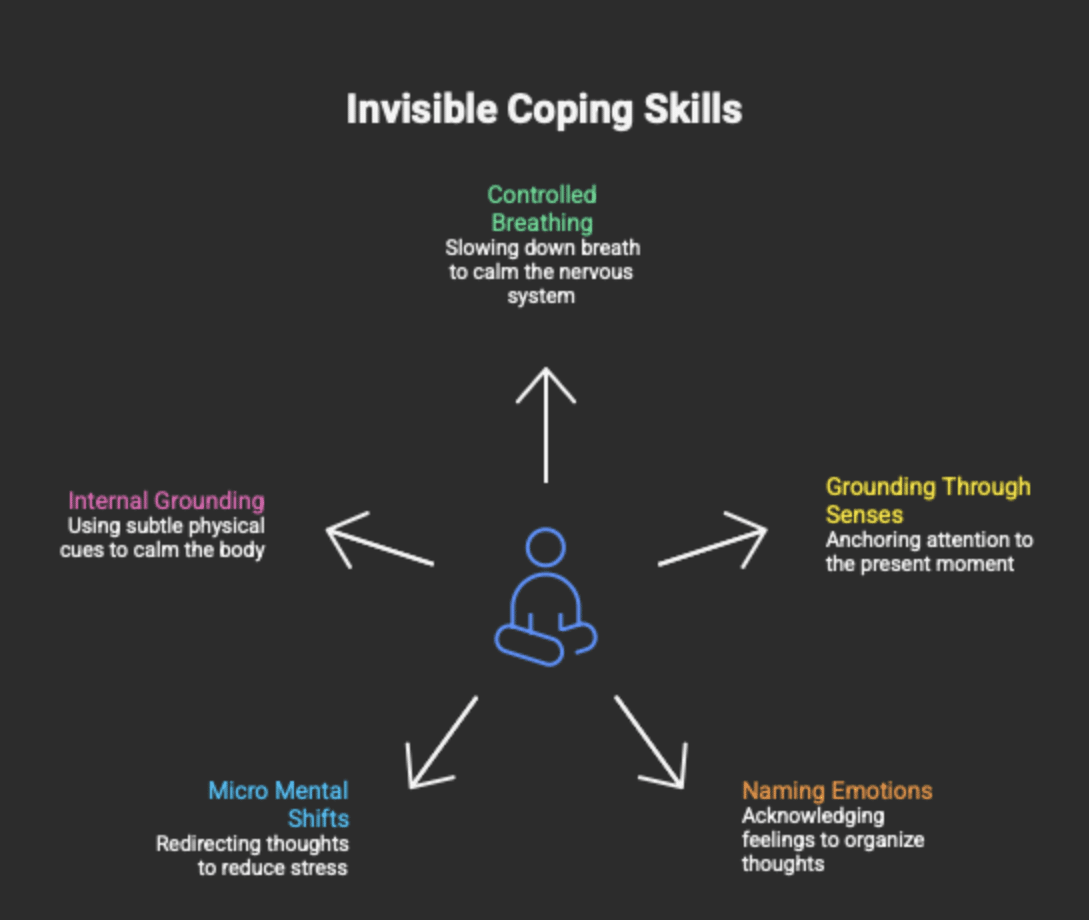
1. Controlled Breathing
Your breath is one of the fastest ways to influence your nervous system. Slowing it down tells your body that you are safe.
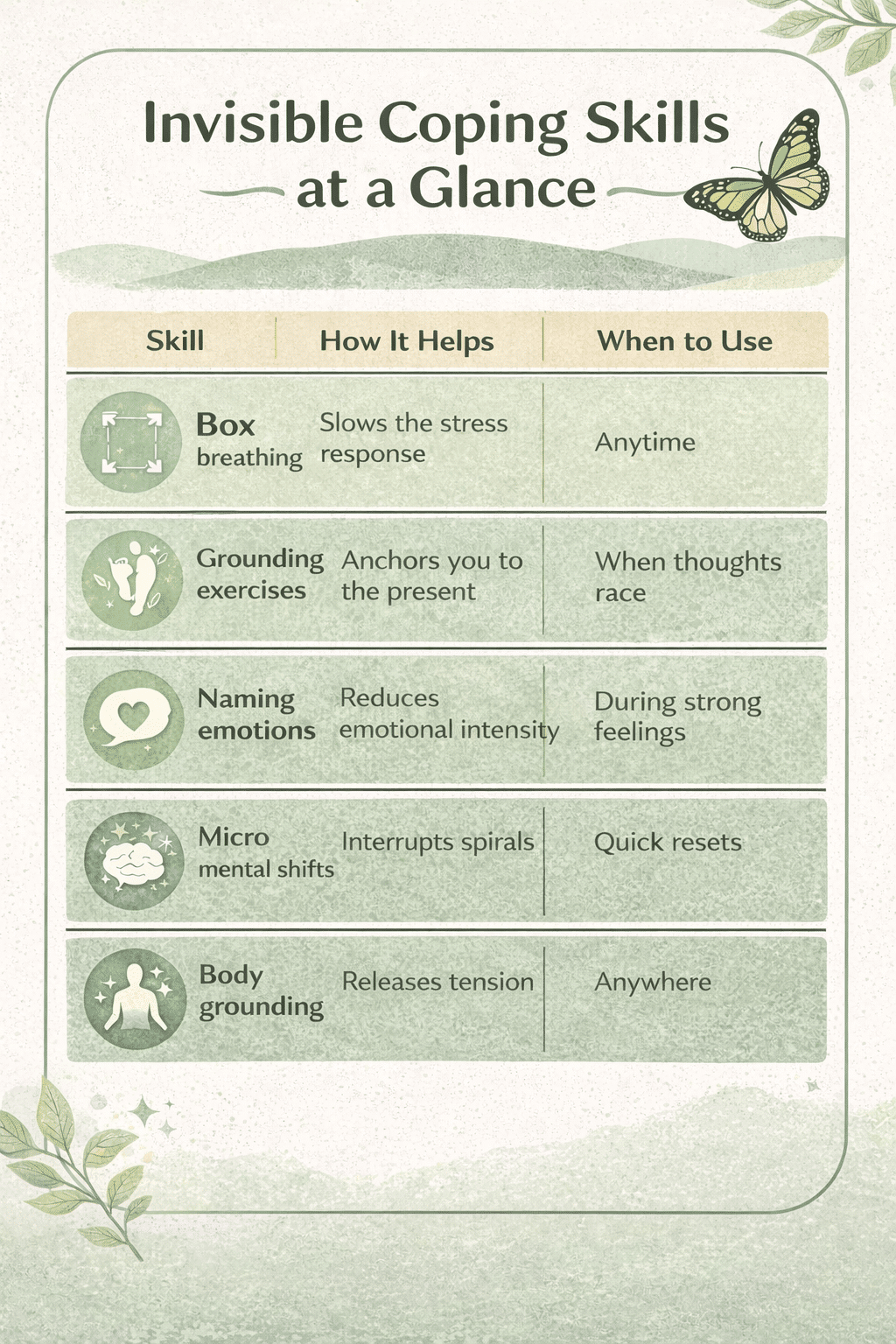
Box breathing: Inhale for four seconds, hold for four, exhale for four, pause for four. Repeat several cycles.
4-7-8 breathing: Inhale through your nose for four, hold for seven, exhale slowly for eight.
Longer exhales help release tension and signal your body to settle.
2. Grounding Through the Senses
Grounding brings your attention out of your thoughts and back into the present moment.
5-4-3-2-1 exercise:
Name five things you see, four things you feel, three things you hear, two things you smell, and one thing you taste.
3-3-3 grounding:
Name three things you see, three things you hear, and move your body in three small ways.
These techniques help interrupt mental spirals and anchor you back into your body.
3. Name What You’re Feeling
Sometimes the most regulating thing you can do is name what’s happening.
Try silently saying, “I’m feeling tense and overwhelmed right now.”
Labeling emotions helps your brain organize the experience instead of amplifying it. You’re not fixing the feeling, just acknowledging it.
4. Micro Mental Shifts
Small mental redirects can be surprisingly effective when stress builds.
Slowly count backward from twenty-nine to zero.
Visualize a calm, familiar place.
Imagine tension leaving your body with each exhale.
These shifts give your mind something steady to focus on while your body settles.
5. Internal Grounding Through the Body
You can calm your system through subtle physical cues.
Place a hand on your chest or stomach and breathe slowly into that space.
Relax your jaw, drop your shoulders, and adjust your posture.
Gently roll your shoulders or stretch your neck.
Your body often leads the way toward calm, even when your thoughts feel stuck.

Why Invisible Coping Skills Matter More Than You Think
These skills aren’t less effective because they’re simple. They’re effective because they’re available to you anytime, without relying on external tools.
Many people assume calm requires perfect conditions. In reality, your nervous system can learn to settle from the inside out. Invisible coping skills help you pause long enough to choose your next step instead of reacting automatically.
They won’t solve everything, but they can reduce overwhelm enough to help you move forward with more clarity.
When Invisible Skills Help, And When More Support Is Needed
Invisible coping skills are meant to support you in the moment, not replace deeper work when patterns feel chronic or exhausting.
You might notice that the skills help sometimes, but not consistently. Stress may keep returning in familiar ways, or you may feel emotionally worn down or stuck.
If that’s happening, it doesn’t mean you’re doing something wrong. It may simply mean your system needs more support.
Therapy can help you understand the patterns beneath the stress and build longer-lasting tools for regulation, boundaries, and emotional safety.
A Gentle Next Step
Invisible coping skills remind you that you already carry tools for calming your nervous system. With practice, they become easier and more natural.
If stress, anxiety, or overwhelm still feels heavy, therapy can offer deeper support. Having a space to slow down, understand your patterns, and feel supported can make a meaningful difference.
If you’re curious about therapy or want help finding the right fit, we offer free 15-minute consultations. You don’t have to do this alone, and your next calm moment doesn’t have to wait.