

When conflict happens in relationships, it’s not because the two people in the relationship don’t love each other. More often, it’s because one person feels unseen or unheard. This can lead to irritation, sarcastic comments, defensiveness, and dismissive responses. It can also lead to things being said that someone didn’t truly mean, which can break connection and emotional safety in the relationship. Even when it isn’t our intention for this to happen, it is a very common pattern.
To truly build connection, even when conflict arises, it is important to practice expressing your needs without criticizing your partner.
Here are some ways to do that.
Regulate Before You Communicate
If you’re highly activated, your tone will carry criticism even if your words don’t.
Before expressing a need:
• Take a few breaths
• Slow your speech
• Get clear on what you actually want, not just what you’re upset about
Emotional regulation helps prepare you for the conversations that need to happen.

Move from Accusation to Appreciation
One of the simplest yet most powerful shifts you can make in communication is moving from accusation to appreciation. Instead of saying, “You’re always on your phone during dinner,” which can instantly make your partner feel criticized or defensive, try expressing the deeper desire underneath the frustration.
For example, you could say that you really value this time together and would appreciate having dinner as a space for just the two of you to connect without distractions. This approach focuses on what you want more of rather than what they are doing wrong. It invites closeness instead of conflict. When you frame your words around connection, presence, and shared experience, you create an opportunity for your partner to step toward you rather than pull away.
Identify the True Need Beneath the Anger
Anger is often a secondary emotion. Beneath it is something more vulnerable.
For example:
• Anger about your partner working late might really be loneliness.
• Anger about dishes might really be feeling unsupported.
• Anger about tone might really be feeling disrespected.
When you speak from anger, your partner hears an attack. When you speak from vulnerability, your partner hears your heart.
Try translating your frustration into a need. Instead of focusing on what they did wrong, focus on what you need more of. That shift alone can completely change the direction of a conversation.
Understanding the Difference Between Healthy Silence and Expression
Consistent silence can quietly create criticism and resentment. While it is healthy to step away at times to create space mentally and emotionally, doing it too often can create distance in the relationship. Healthy communication is clear, direct, and assertive, not aggressive, passive-aggressive, or dismissive.
Use Ownership-Based Language
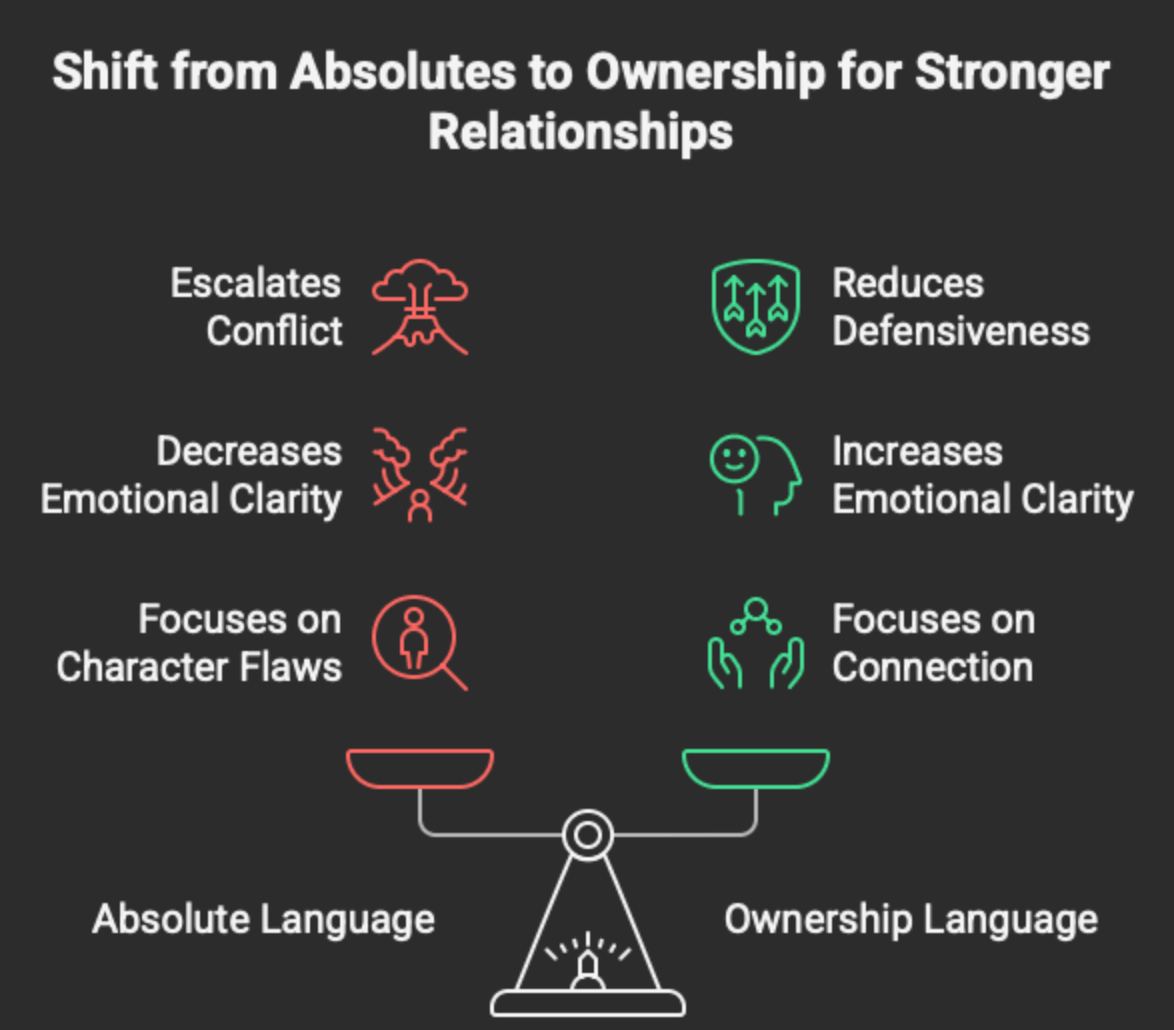
One of the biggest mistakes couples make is speaking in absolutes. Words like always and never escalate conflict quickly.
Instead, practice ownership language:
• I feel overwhelmed lately.
• I miss spending time together.
• I need more reassurance sometimes.
• I feel disconnected when we don’t talk much.
This approach does three powerful things:
1. It reduces defensiveness.
2. It increases emotional clarity.
3. It keeps the focus on connection rather than character flaws.
You are not attacking who your partner is. You are sharing what you need.
Drop the Scorecard
Healthy expression focuses on the present moment.
Unhealthy expression digs up past moments like:
• “Last week you…”
• “Three months ago you…”
Unless there’s a repeating pattern you are calmly addressing, try to stay in the present. Healthy communication helps solve one issue at a time.
When criticism appears, it often hides a deeper desire. When you replace blame with honesty and frustration with vulnerability, you create emotional safety. And emotional safety is where real connection grows.
Expressing your needs in a healthy way does not have to be perfect. Not every conversation will go smoothly. But each time you choose ownership over blame, you strengthen emotional safety in your relationship. Healthy communication takes practice over time, and no one does it perfectly. It becomes easier the more you practice. The more clearly you express your needs, the more likely they are to be truly heard.

We are Here to Help!
If you and your partner find yourselves stuck in patterns of criticism, defensiveness, or feeling misunderstood, you are not alone. Many couples struggle with how to communicate their needs in ways that strengthen connection rather than create more conflict.
Working with a therapist can help you slow down these patterns, understand what is really happening beneath the surface, and learn healthier ways to communicate with each other. At Cascade Counseling, we offer a supportive space for individuals and couples to rebuild emotional safety and connection. We also offer free 15-minute consultations so you can see if therapy feels like the right next step for you. Reach out today to start moving from criticism toward deeper connection.