
Failure happens to all of us. We miss opportunities, say the wrong thing, make a decision we regret, or fall short of what we hoped we would do. Sometimes it’s big. Sometimes it’s small. Either way, it often sticks with us longer than we expect.
What usually hurts most is not the mistake itself. It is the spiral that comes after it. The replaying. The second-guessing. The quiet questioning of your confidence, your ability, or even your worth.
In counseling and performance-focused work, this shows up again and again. It is rarely failure that causes the most damage. It is the way we respond to it.
Why Failure Feels So Difficult
Failure often feels personal.
Many people move quickly from “I made a mistake” to “I am a failure.” Once that shift happens, confidence takes a hit. The mistake becomes more than an event. It becomes a statement about who you are.
This response makes sense. Our brains are wired to protect us from embarrassment, rejection, and threat. When something goes wrong, it can feel like evidence that we are not capable enough or that we do not belong. In a culture that values achievement and visible success, mistakes can feel like something to hide rather than something to learn from.
Even high performers struggle with this. It is rarely just about what happened. It is about what they believe the mistake says about them.
When Failure Starts Defining You
One helpful thing to notice is the difference between what happened and the story you tell yourself about it.
Failure is an event.
The story is the meaning you attach to it.
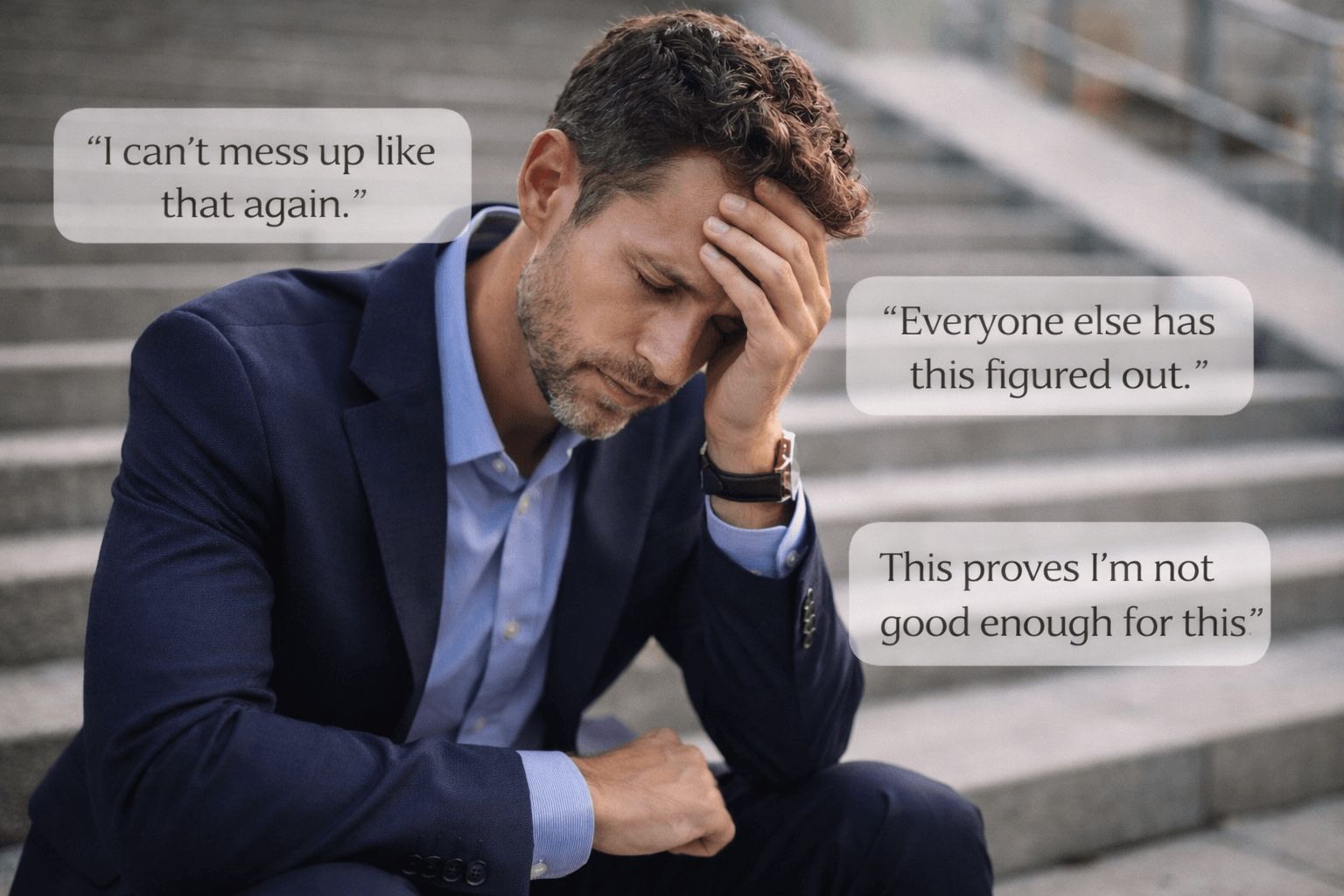
Some common stories sound like:
-
“I can’t mess up like that again.”
-
“Everyone else has this figured out.”
-
“This proves I’m not good enough for this.”
When failure turns into identity, people often respond in two ways. They become harshly self-critical, or they pull back altogether. Both responses shrink confidence rather than rebuild it.
What We Usually Do After a Mistake
Many of us learned, directly or indirectly, that being hard on ourselves would prevent future mistakes. In reality, that approach often does the opposite.
After a failure, people commonly:
-
Replay the moment repeatedly
-
Criticize themselves internally
-
Avoid similar situations
-
Wait until they “feel confident again” before trying
That pulling back is not about laziness or lack of motivation. It is usually about protection. Avoidance feels safer than risking the same emotional hit again.
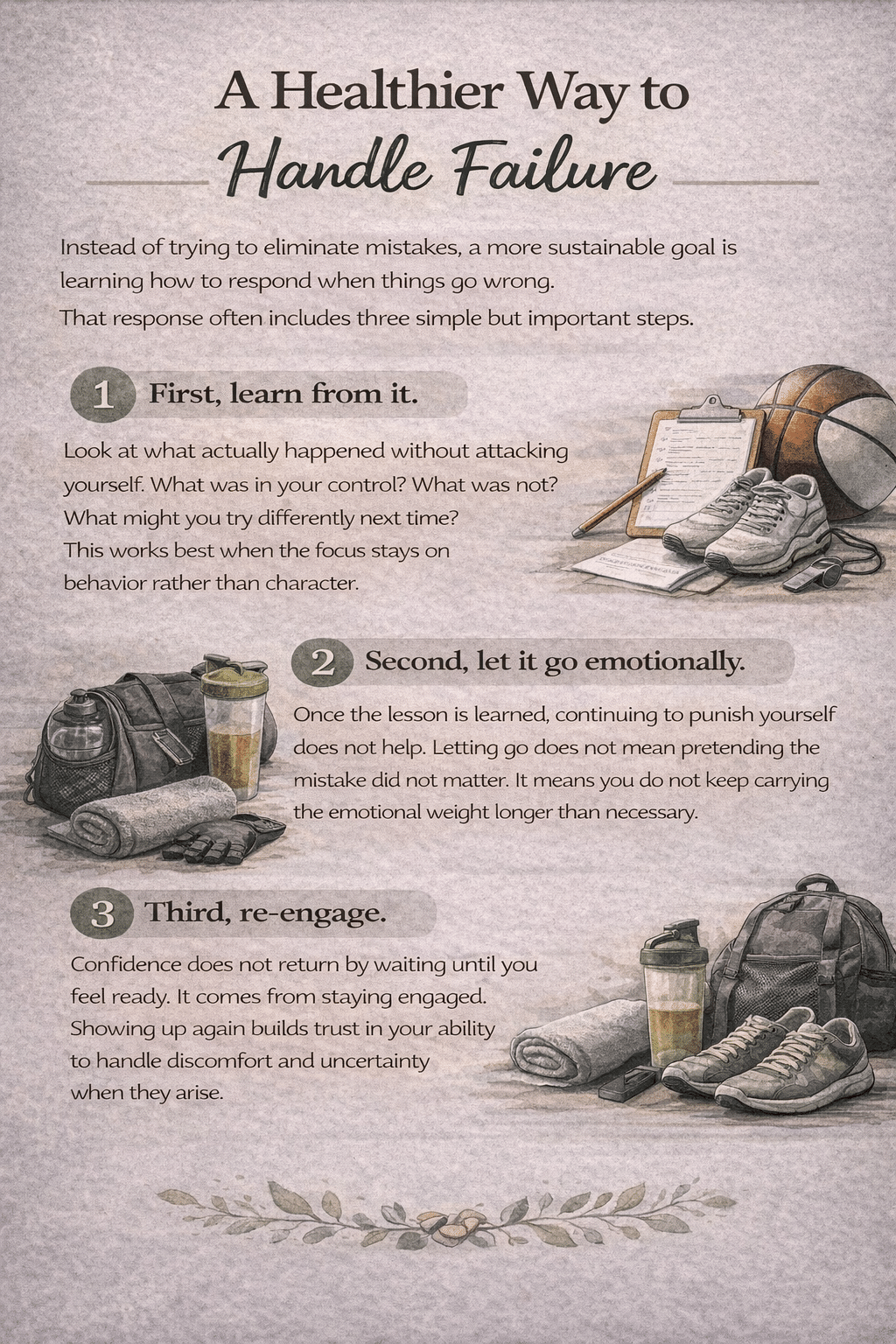
A Healthier Way to Handle Failure
Instead of trying to eliminate mistakes, a more sustainable goal is learning how to respond when things go wrong.
That response often includes three simple but important steps.
First, learn from it.
Look at what actually happened without attacking yourself. What was in your control? What was not? What might you try differently next time? This works best when the focus stays on behavior rather than character.
Second, let it go emotionally.
Once the lesson is learned, continuing to punish yourself does not help. Letting go does not mean pretending the mistake did not matter. It means you do not keep carrying the emotional weight longer than necessary.
Third, re-engage.
Confidence does not return by waiting until you feel ready. It comes from staying engaged. Showing up again builds trust in your ability to handle discomfort and uncertainty when they arise.