

Sleep influences far more than how tired you feel. It shapes the way you think, how you respond to stress, how well you regulate emotions, and how connected you feel to the people around you. For many people, sleep is the first thing sacrificed when life gets busy. We answer late night emails, doom scroll into the early morning hours, or unwind with a show long after our brain needed rest. Sleep hygiene is not about perfection. It is about creating habits and routines that make restorative sleep more likely. With small and consistent changes, you can support your brain, protect your mental health, and wake up with more clarity and resilience.
Why Sleep Matters for Mental Health
Sleep is the nervous system’s reset button. When you sleep, your brain processes emotions, consolidates new information, and restores chemicals that influence mood and focus. When sleep is interrupted by late nights, unpredictable schedules, or restless tossing, the brain never fully completes that cycle. Over time, the impact becomes visible. Irritability increases. Stress tolerance shrinks. Simple tasks feel harder. Your ability to cope with conflict or disappointment weakens. This is why people who routinely sleep poorly have a higher risk of anxiety, depression, and burnout. When sleep improves, emotional stability returns. You think more clearly. You handle challenges more calmly. You feel more like yourself. Sleep is not a luxury. It is one of the body’s most important mental health tools.
The Foundation of Sleep Hygiene
Sleep cannot be forced, but your environment and habits can make it easier. Think of sleep hygiene the same way you would think of preparing soil before planting. You do not control the seed itself, but you create the conditions that help it grow. The same is true of sleep. You cannot force your body to shut down, but you can remove obstacles, reduce stimulation, and create rhythms that gently guide your brain toward rest.
Keep a Consistent Sleep Schedule
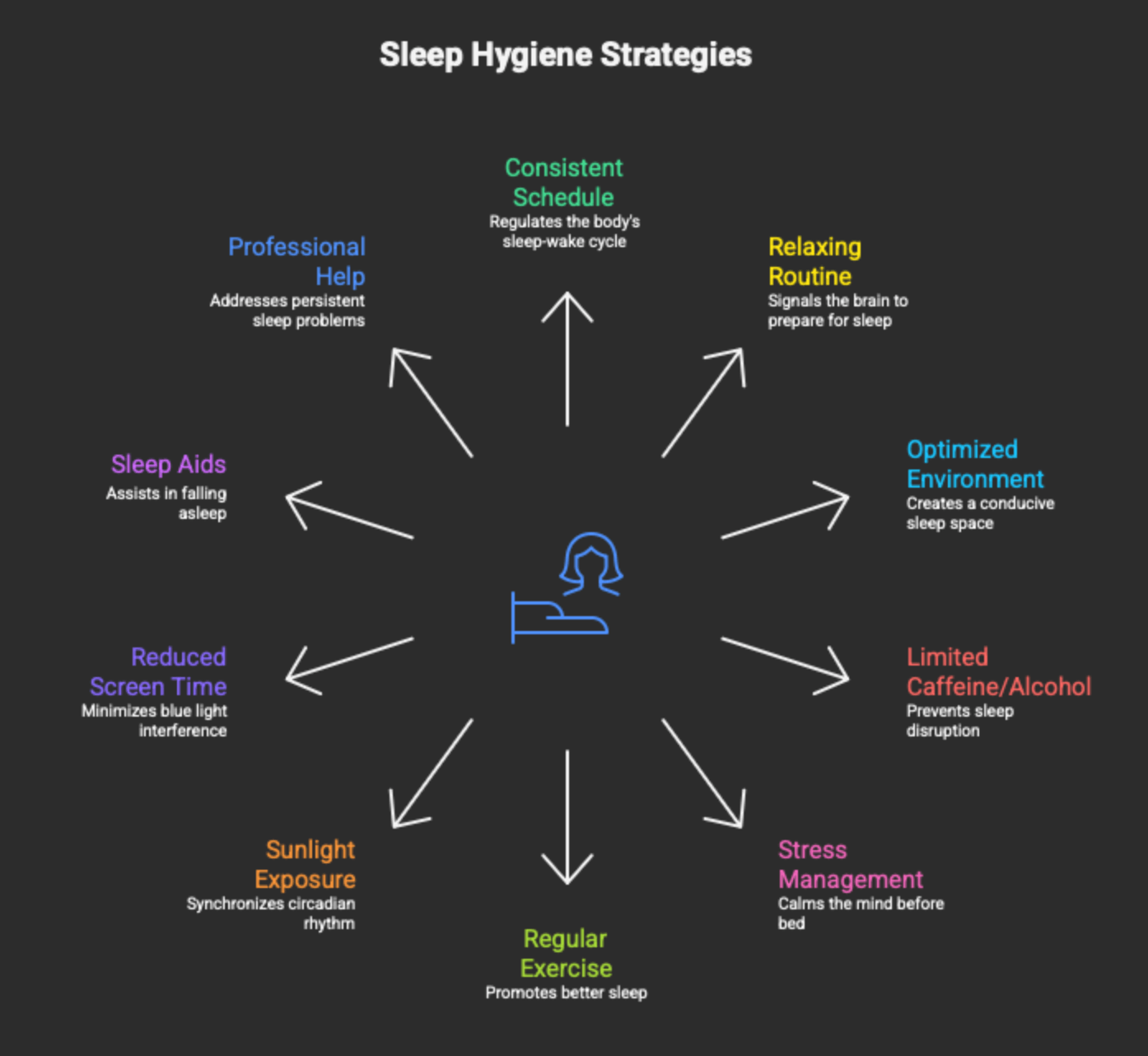
Your body relies on rhythm. Going to bed and waking up at the same time each day trains your circadian clock. A regular schedule helps your brain predict when to release hormones like melatonin that make sleep feel natural rather than forced. When you shift your schedule dramatically on weekends, your brain struggles to catch up. You may feel groggy, overstimulated, or “jet lagged” without ever leaving town. Choosing a consistent bedtime is one of the simplest changes you can make, and it is often the one with the biggest impact.
Create a Calming Pre Sleep Routine
Your brain needs a gentle transition out of “go mode.” The hour before bed should include activities that quiet the nervous system. Stretching, journaling, reading, listening to calming music, or taking a warm shower can all help signal that the day is ending. These habits do not need to be complicated. They simply need to be repeated. When your body learns that these cues lead to sleep, falling asleep becomes easier with far less effort.
Design a Sleep Friendly Environment
Your bedroom should support rest, not stimulation. A cool temperature often between 60 and 67 degrees helps your body naturally lower its temperature, which is essential for falling asleep. Darkness matters too. Even small amounts of light can interrupt melatonin production. Blackout curtains, eye masks, or covering electronic lights can help. Noise is another common disruptor. White noise, earplugs, or a fan can create a consistent backdrop and keep sudden sounds from waking you. Pay attention to your mattress and pillows. If they leave you sore or uncomfortable, your body will fight sleep all night. Investing in supportive bedding is an investment in your long term wellbeing.
Limit Screen Time Before Bed
Screens are one of the biggest modern obstacles to sleep. Blue light interferes with the brain’s production of melatonin. The content on screens keeps your mind active. Scrolling social media, reading emails, or catching up on TV stimulates attention and emotion at the exact time your body is trying to slow down. Begin reducing screen time at least 30 to 60 minutes before bed. If you must use devices, turn on night mode and reduce brightness. Many people discover that this single change improves their sleep more than any supplement or expensive gadget.

Be Mindful With Caffeine, Alcohol, and Late Eating
Caffeine stays in the body longer than most people realize. Drinking coffee, soda, or energy drinks within six to eight hours of bedtime can make it difficult to fall asleep, even if you feel tired. Alcohol creates another trap. It may help you fall asleep faster, but it disrupts the deeper stages of sleep that restore emotional balance. Heavy meals at night can cause discomfort or reflux. If you are hungry, choose something light like yogurt, fruit, or nuts so your body can relax.
Get Morning Light and Move Your Body
Natural light is one of the strongest signals the brain uses to regulate circadian rhythm. Stepping outside shortly after waking for even ten minutes helps boost mood related neurotransmitters and improves sleep later in the day. Physical movement also supports sleep. You do not need intense workouts. Gentle daily movement, walking, stretching, or moderate exercise helps you fall asleep faster and experience deeper rest. If possible, avoid high intensity exercise late at night since it can leave you feeling wired.
Train Your Brain by Using Your Bed for Sleep Only
Your brain makes associations quickly. If you answer emails, scroll your phone, or watch TV in bed, your body learns that the bed is a place of stimulation and problem solving. Over time, it becomes harder to relax in that space. Reserve your bed for sleep and intimacy. If you cannot fall asleep after about 20 minutes, get up and do something calming until you feel sleepy. This keeps your brain from associating lying awake with frustration.
Final Thoughts
Sleep hygiene is not about perfection. It is about creating conditions that make rest easier. The habits you build around sleep influence how clearly you think, how you respond to stress, and how connected you feel to the world. Start small. Choose one change you can commit to this week. Notice how your body responds and adjust as needed. Better sleep leads to better days. Better days lead to a healthier mind, stronger relationships, and a life that feels more manageable.