

If you’re in a relationship where ADHD is part of the picture, you’ve probably heard or thought some version of this:
• “If you just tried harder…”
• “Why can’t you remember this one thing?”
• “I feel like I’m carrying everything.”
And if you’re the partner with ADHD, you may be carrying a quiet but heavy sense of shame, knowing you care deeply yet still struggling to follow through in ways that seem effortless for others.
Here’s the truth most couples never hear. ADHD relationship challenges are rarely about effort, motivation, or love. They’re about the absence of systems.
ADHD Brains Don’t Thrive on Memory. They Thrive on Structure
ADHD affects executive functioning, the brain’s ability to plan, initiate, prioritize, remember, and sustain attention. This means many of the things relationships quietly rely on, such as remembering plans, tracking tasks, and anticipating needs, do not happen automatically.
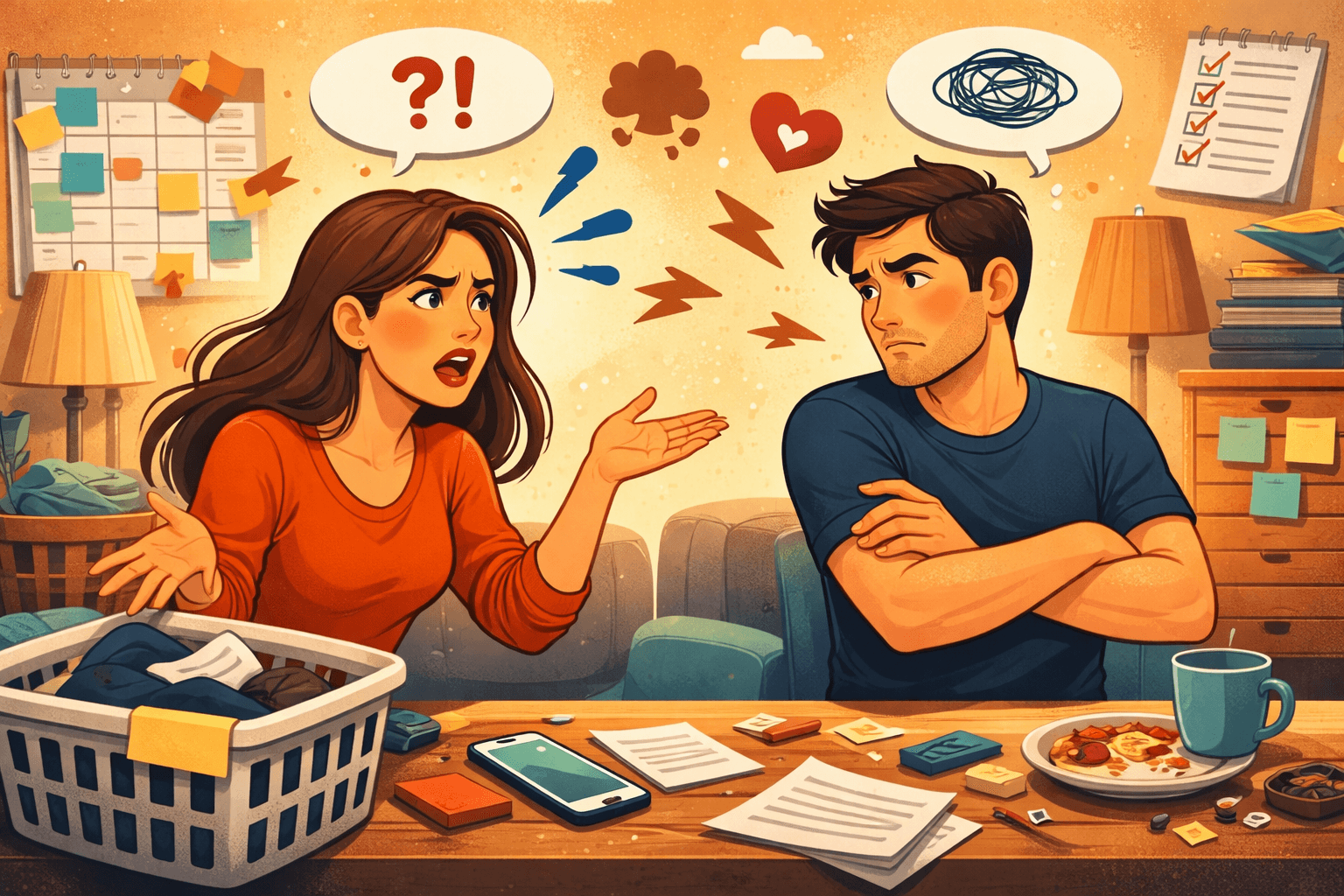
When couples rely only on memory, good intentions, or verbal reminders, they often get stuck in painful cycles:
• One partner feels like the manager or parent.
• The other feels criticized, controlled, or like they’re constantly failing.
• Both feel disconnected and resentful.
This cycle isn’t about love or commitment. It’s about two nervous systems trying to function without enough external support. Systems are what interrupt that cycle.
What Is a System in a Relationship?
A system is an external structure that supports follow-through without relying on willpower, reminders, or emotional labor.
Think:
• Shared calendars instead of “I’ll remember.”
• Written agreements instead of vague expectations.
• Routines instead of last-minute scrambling.
• Visual cues instead of verbal nudging.
Systems are not rigid rules. They are relational supports. They do not replace communication or intimacy. They create space for both partners to feel capable, heard, and cared for.
Just as important, systems protect the relationship from becoming the system. When every interaction is about tracking tasks or avoiding mistakes, the relationship itself becomes a source of stress. Systems redirect that energy toward shared solutions rather than blame.
Why Systems Reduce Conflict and Emotional Burnout
Without systems, couples often default to emotional regulation through each other:
• Reminding
• Checking
• Prompting
• Rescuing
• Feeling frustrated when nothing changes
Over time, this wears down trust, patience, and closeness.
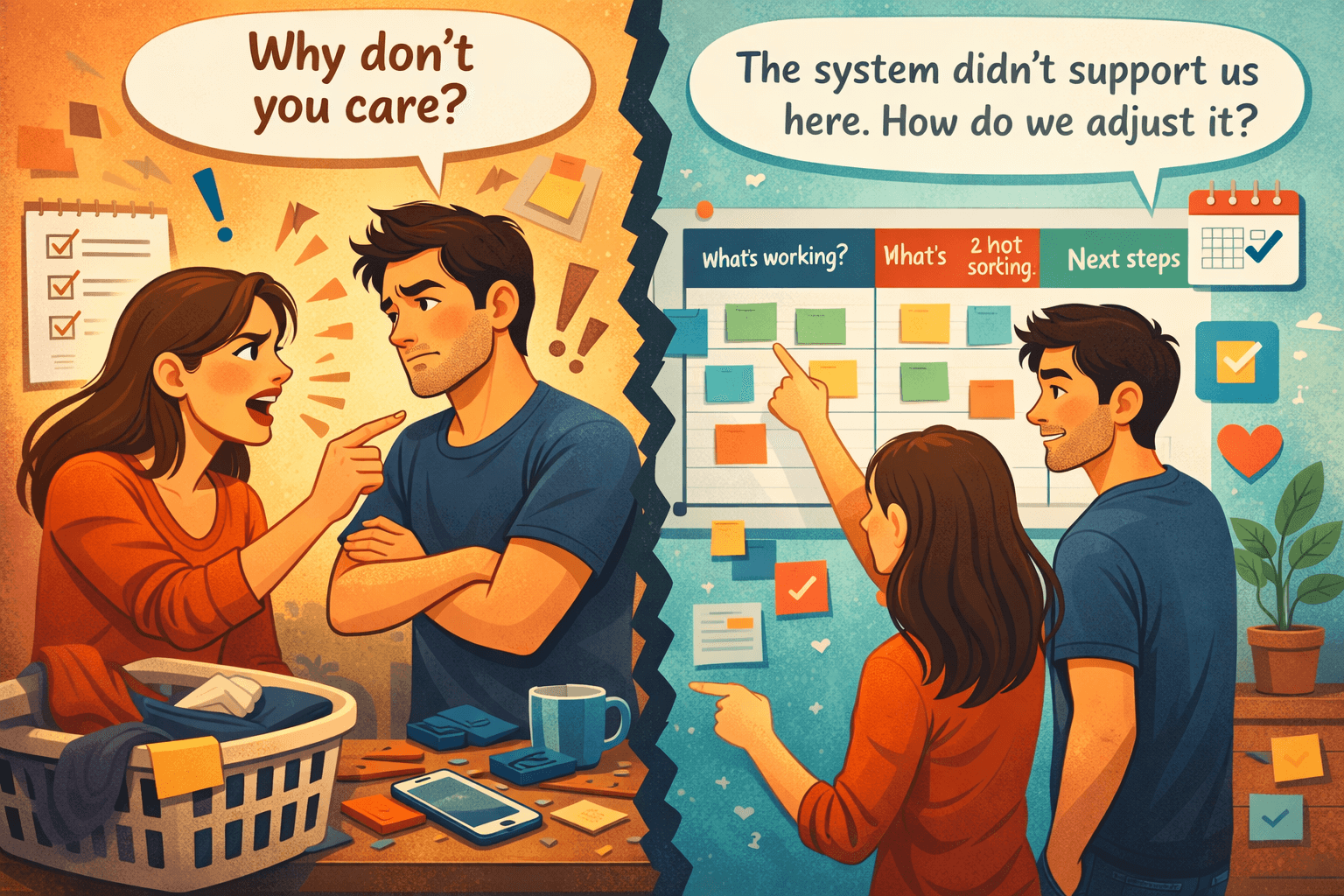
Systems help couples shift from:
“Why don’t you care?”
to
“The system didn’t support us here. How do we adjust it?”
That shift matters. It moves the problem outside the relationship instead of placing it on one person. It also opens the door to empathy and teamwork.
Examples of ADHD-Friendly Relationship Systems
Below are a few areas where systems tend to make the biggest difference.
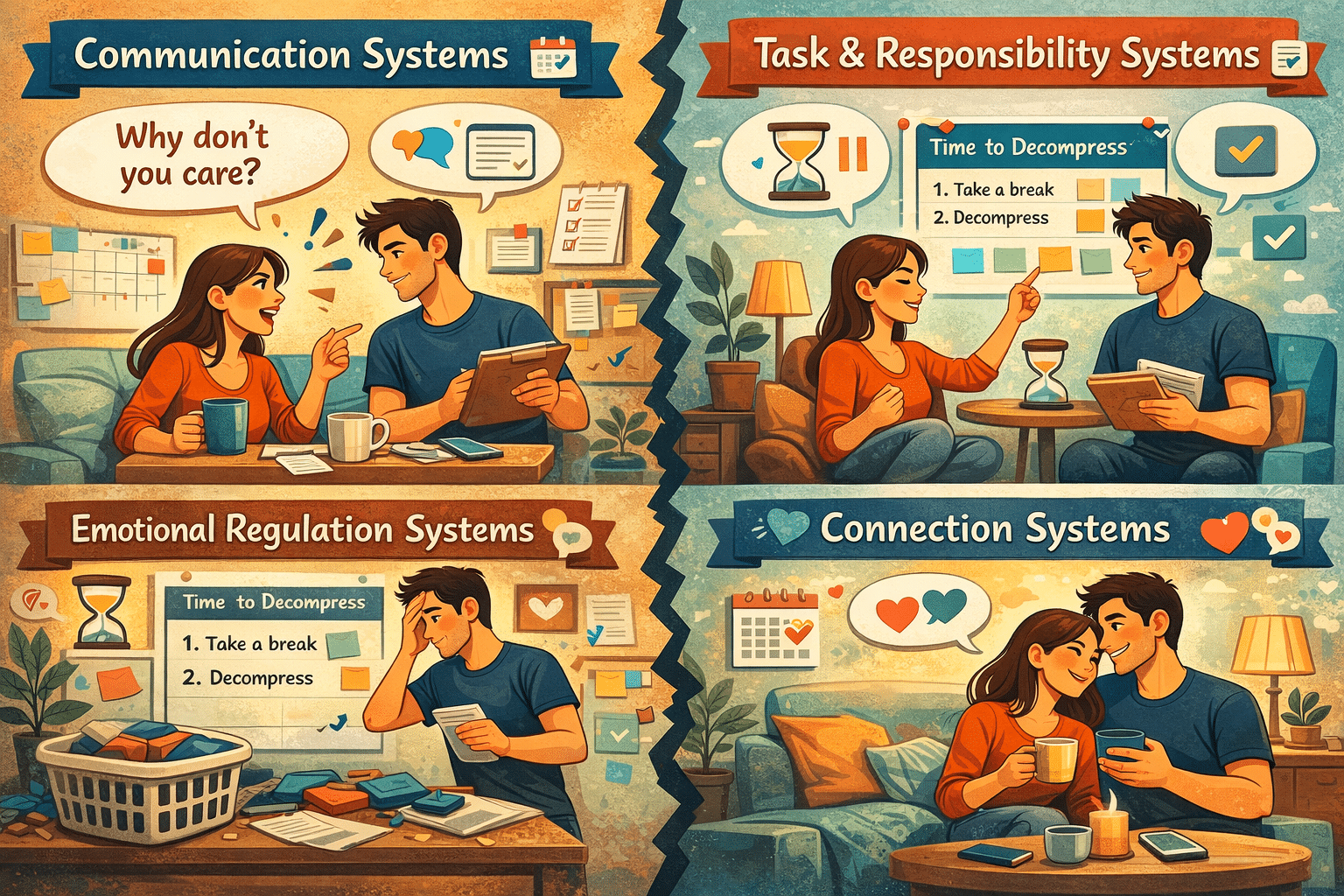
1. Communication Systems
Instead of relying on “we’ll talk about it later,” try:
• A weekly check-in time.
• A shared note or app for ongoing topics.
• Clear expectations about when conversations happen, not during overwhelm.
These systems reduce misunderstandings and help communication feel more intentional over time.
2. Task and Responsibility Systems
Instead of mental tracking:
• Use visible task lists such as whiteboards or apps.
• Clearly assign ownership so tasks aren’t framed as “helping.”
• Agree on minimum standards so everyone knows what done actually means.
This eases resentment for the non-ADHD partner and reduces shame for the ADHD partner.
3. Emotional Regulation Systems
ADHD can intensify emotional responses. Helpful systems might include:
• Planned decompression time.
• Signals for when a pause is needed.
• Agreed-upon repair rituals after conflict, such as a brief break before continuing.
Having these structures allows strong emotions to be managed without falling into familiar patterns of withdrawal or criticism.
4. Connection Systems
Connection doesn’t happen by accident. It’s built on purpose:
• Scheduled quality time, even short pockets matter.
• Simple rituals like morning coffee together or nightly check-ins.
• Predictable moments of closeness that ease insecurity and rejection sensitivity.
For ADHD couples, consistency creates emotional safety. Systems make sure connection isn’t left to chance.
Systems Are Not Controlling. They’re Compassionate
Many people worry that systems will feel rigid or unnatural. In practice, they often do the opposite.
Systems reduce mental and emotional load so both partners can show up more fully. They ease failure loops for ADHD partners and reduce burnout for non-ADHD partners. That’s not control. That’s care.
When both people feel supported by structure, there is more room for closeness, play, and shared growth.
The Goal Isn’t Perfection. It’s Sustainability
Healthy ADHD relationships aren’t built on constant effort or heroic patience. They’re built on:
• Externalizing what the brain struggles to hold.
• Designing the relationship to support both nervous systems.
• Adjusting systems over time without blame.
When systems are working, couples stop asking why everything feels so hard and start asking what support would make things easier for both of us.
That shift changes everything.
Building Systems Together
A few guidelines that help systems last:
-
Start small. Choose one area and one simple system.
-
Collaborate. Both partners need input.
-
Make it visible. Systems work best when they live outside the brain.
-
Adjust as needed. Systems are meant to change.
-
Notice wins. Acknowledge when things feel easier or calmer.
Systems Are a Love Language
It may sound practical, but systems are deeply relational. They communicate:
• I see you.
• I know this is hard.
• I want us to succeed together.
ADHD-friendly systems turn frustration into collaboration, shame into confidence, and exhaustion into steadiness.
Final Thoughts and Next Steps
ADHD relationships don’t need more effort. They need better systems. Effort alone leads to cycles of criticism and burnout. Systems create structure, reduce emotional strain, and leave more room for connection.
If you and your partner feel stuck in familiar patterns, working with a therapist who understands ADHD and relationships can help you identify where systems are missing and build ones that actually work for your real life.
At Cascade Counseling, we offer free 15-minute consultations so you can talk with a therapist, ask questions, and see if support feels like a good fit. You don’t have to figure this out on your own. Sometimes the right system starts with the right support.