

If you have ADHD, or are dating someone who does, you’ve probably noticed a pattern in your relationship that can feel frustrating, confusing, and even painful. One partner chases, while the other pulls away. Arguments feel endless, intimacy feels difficult, and no matter how much you care about each other, it can feel like you are not on the same page.
This pattern is known in couples therapy as the pursuer–withdrawer cycle, and ADHD can make it more intense. In this post, we’ll break down what this cycle looks like, why it happens, and how ADHD interacts with it. Most importantly, we’ll cover practical steps for breaking free so your relationship can feel safer, calmer, and more connected.
What Is the Pursuer–Withdrawer Cycle?
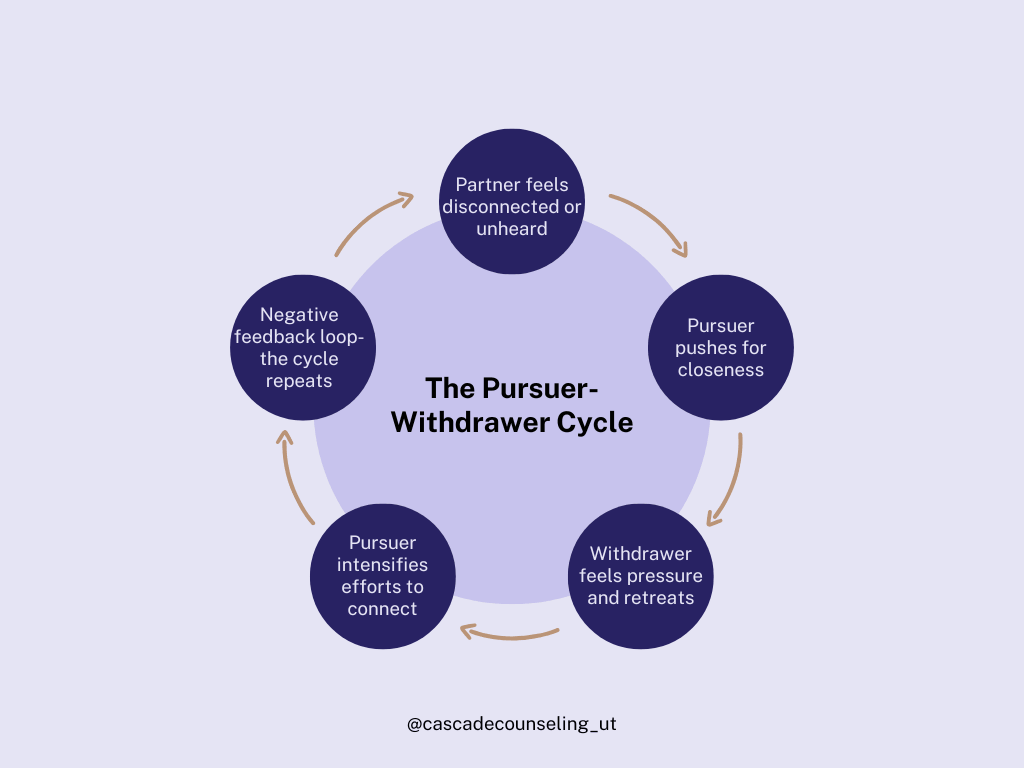
At its core, the pursuer–withdrawer cycle is a communication pattern that develops when emotional needs are not being met. Here’s how it typically works:
The Pursuer: This partner feels frustrated, disconnected, or unheard. They often try to fix the problem by talking, pushing for closeness, or asking for reassurance.
The Withdrawer: This partner feels pressured, overwhelmed, or criticized. They respond by pulling back, shutting down, or retreating into distraction.
The more the pursuer pushes, the more the withdrawer retreats. And the more the withdrawer retreats, the more the pursuer chases. This creates a negative feedback loop that can feel difficult to escape.
While this dynamic can happen in any relationship, it is especially common in couples where one or both partners have ADHD.
Why ADHD Fuels the Cycle
ADHD impacts relationships in ways that are often subtle and misunderstood. Here are a few key ways it contributes:
Emotional Dysregulation
ADHD can make emotions feel more intense. Small frustrations can feel overwhelming, and moments of disconnection can feel much bigger than they are.
- The pursuer may react from a place of strong emotional need, which can feel overwhelming to their partner.
- The withdrawer may feel emotions just as strongly but struggle to regulate them, leading to shutdown instead of engagement.
This combination can quickly intensify the cycle.
Hyperfocus and Distractibility
ADHD can make it difficult to consistently notice or respond to a partner’s emotional cues.
- The withdrawer may become deeply focused on work, hobbies, or other tasks, unintentionally neglecting the relationship.
- The pursuer may interpret this as rejection, leading to increased attempts to reconnect.
Over time, both partners may begin to expect disappointment, which reinforces the cycle.
Miscommunication and Misinterpretation
Challenges with attention, memory, and executive functioning can create misunderstandings.
- The pursuer may interpret forgetfulness or distraction as lack of care.
- The withdrawer may feel criticized or overwhelmed by repeated requests for connection.
This mismatch often fuels frustration and disconnection.
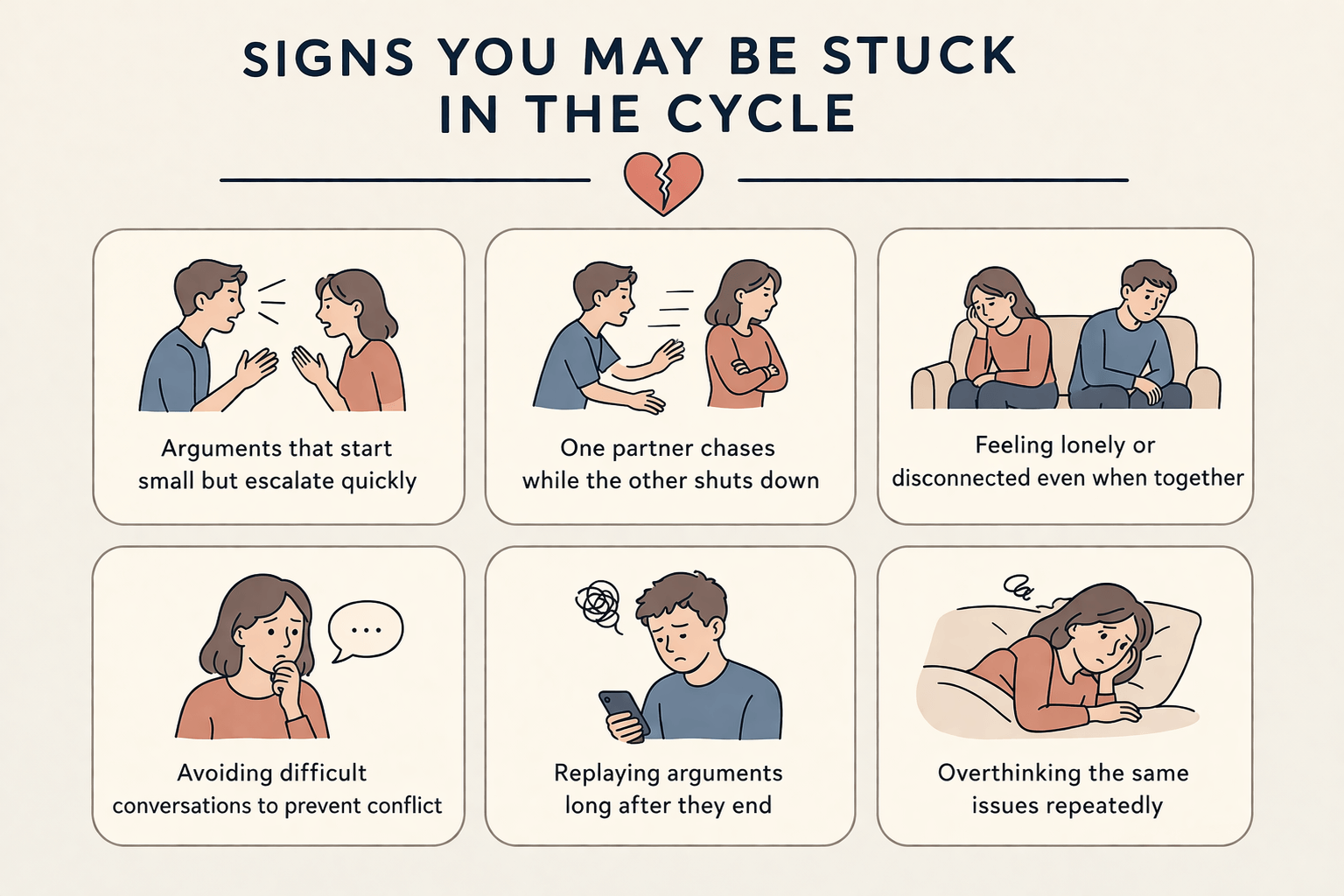
Signs You May Be Stuck in the Cycle
It is not always obvious, especially when both partners care deeply. Some common signs include:
- Arguments that start small but escalate quickly
- One partner consistently chasing while the other shuts down
- Feeling lonely or disconnected even when together
- Avoiding difficult conversations to prevent conflict
- Replaying arguments long after they end
If this sounds familiar, you are not alone. Many couples find themselves stuck in this pattern without realizing it.
The ADHD Twist: Why It Feels More Intense
ADHD can amplify the cycle in unique ways.
The Pursuer with ADHD:
- May shift between intense focus on the relationship and distraction
- Experiences strong emotional highs and lows, making conflict feel urgent
- May struggle to self-soothe, increasing chasing behaviors
The Withdrawer with ADHD:
- May need space to regulate but is perceived as rejecting
- May forget commitments, unintentionally escalating conflict
- May avoid conflict due to anxiety, deepening withdrawal
Whether ADHD shows up more in one partner or both, the result is often increased intensity and emotional exhaustion.
Breaking the Cycle
The good news is that this cycle can be understood and changed. It begins with awareness and small, consistent shifts.
Recognize Your Role
Start by identifying your pattern.
- Am I chasing or withdrawing?
- What emotions are underneath my behavior?
- How might ADHD be influencing my responses?
Awareness creates space for change.
Pause Before Reacting
ADHD can increase impulsive reactions, especially during conflict.
- Take a breath before responding
- Ask for a pause if needed
- Return to the conversation once emotions settle
Even a short pause can interrupt the cycle.
Use Clear Communication
Clarity helps reduce misunderstanding.
- Replace “You never listen” with “I felt unheard when that happened”
- Focus on your experience rather than your partner’s intent
This reduces defensiveness and increases understanding.
Build Connection Outside of Conflict
Connection should not only happen after conflict.
- Schedule time together
- Celebrate small moments
- Check in regularly without trying to fix anything
These moments strengthen the relationship and reduce the need for chasing.
Practice Self-Regulation
Self-regulation is essential, especially with ADHD.
- Take movement breaks
- Practice simple breathing or grounding
- Write down thoughts before responding
As regulation improves, the cycle loses intensity.
Consider Therapy
Support can make a meaningful difference.
- Couples therapy helps both partners understand the cycle
- Individual therapy builds regulation and awareness
- ADHD coaching provides practical tools for daily challenges