
Talking with our kiddos about mental health can feel intimidating. Talking about suicide or self-harm can feel even harder.
“Where do we even start?” is a question I hear often.
Many parents worry that they will say the wrong thing, frighten their child, or introduce an idea their child was not already considering. These concerns make sense. We want to protect our children.
But avoiding hard conversations does not make the hard things go away. Kids often notice more than we realize. They hear conversations at school, encounter mental-health content online, notice when people around them are struggling, and experience emotional pain of their own.
When adults consistently avoid these subjects, kids may learn that their feelings are too uncomfortable to talk about.
The goal is not one perfect conversation. It is to build a pattern of connection in which our kids know:
“You do not have to carry this alone.”
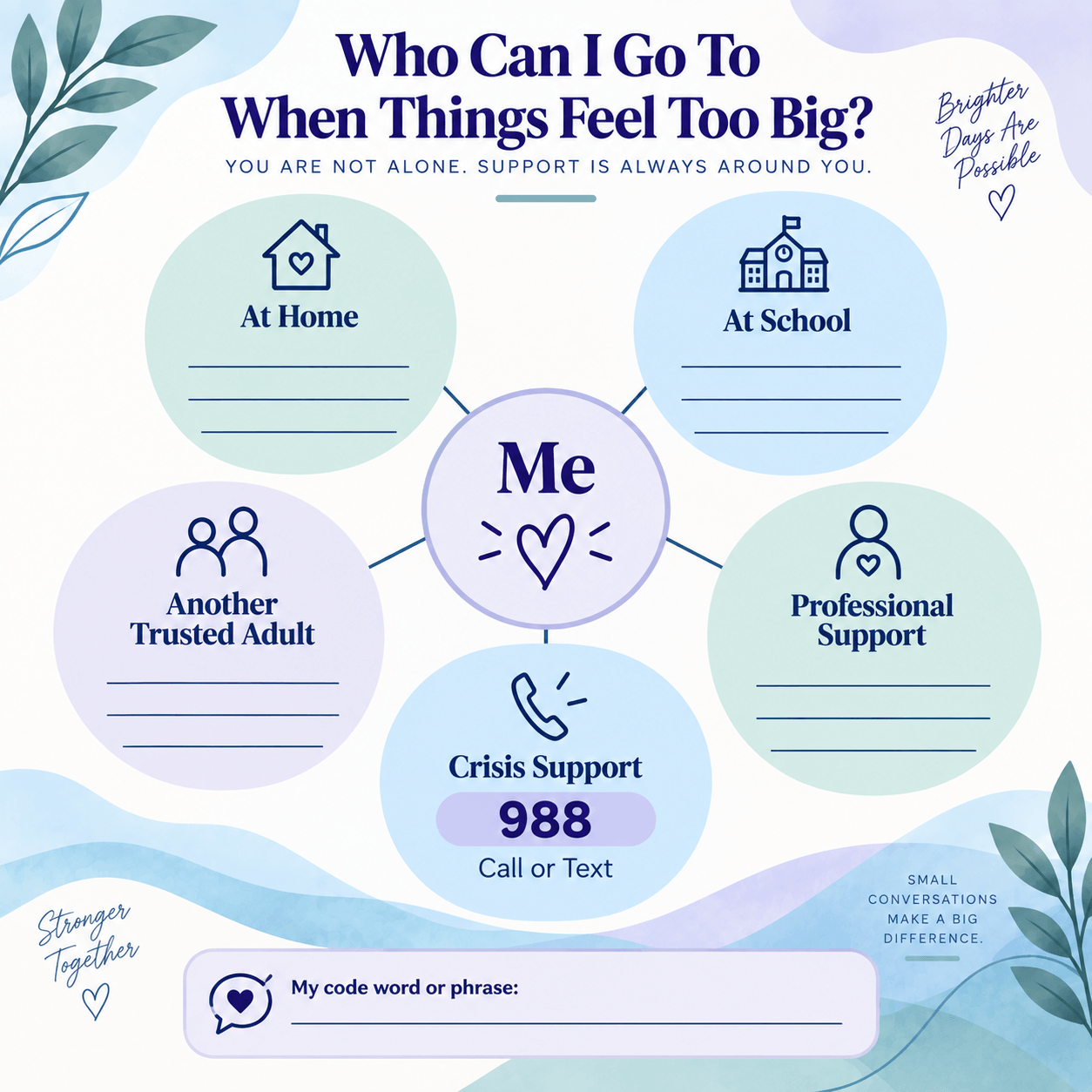
If your child is in immediate danger or cannot remain safe, stay with them and call 911 or go to the nearest emergency department. You can also call or text 988 for immediate crisis support.
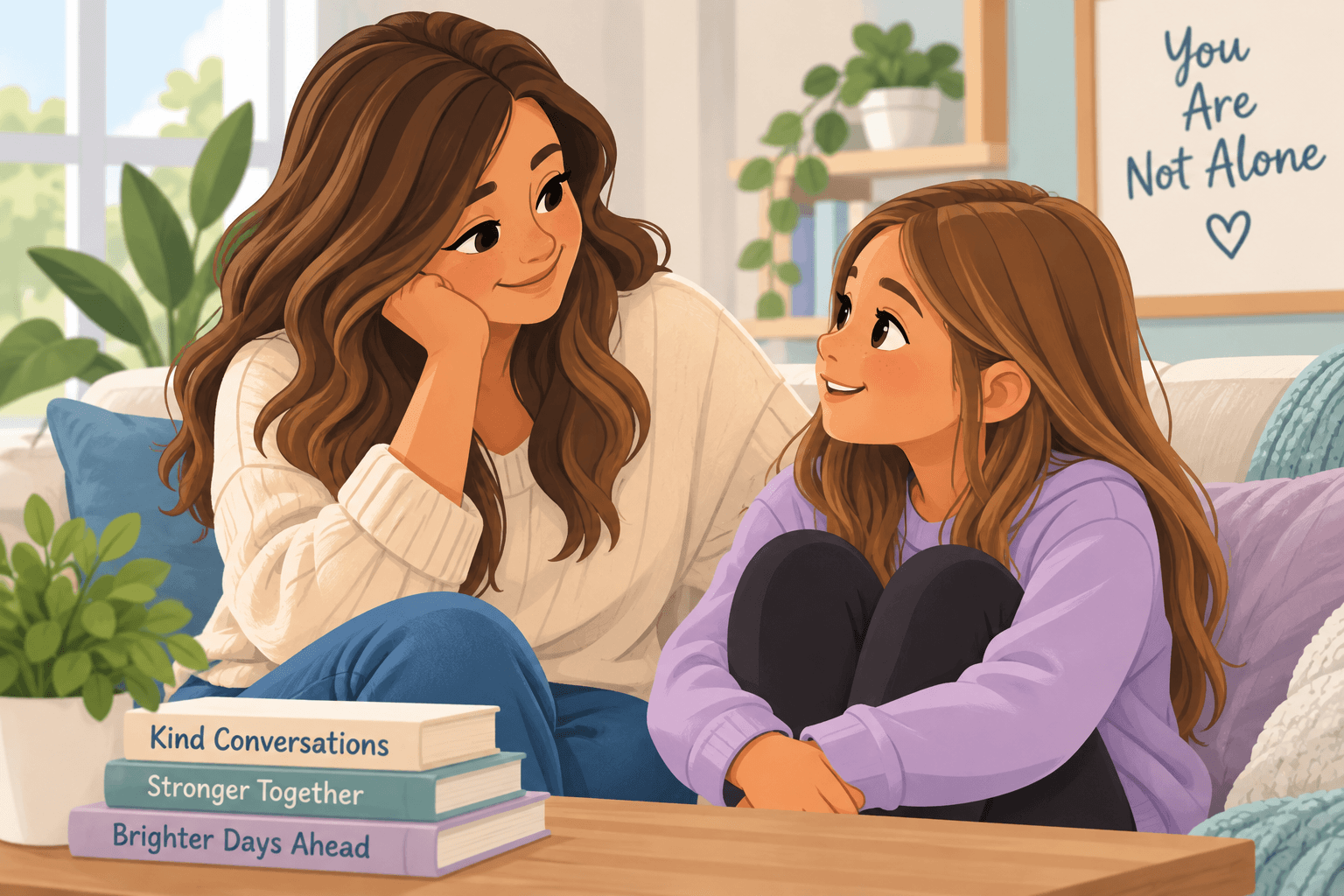
Connection Starts Before a Crisis
The best time to begin talking about mental health is during ordinary moments.
Instead of only asking, “How was school?” try:
- What was the best part of your day?
- What was the hardest part?
- Did anything make you feel left out, worried, or embarrassed?
- What has been taking up space in your mind lately?
- What do you wish grown-ups understood about being your age?
These conversations do not have to feel formal. In our home, we share our “high and low” from the day. Other families use “sweet and sour.” The point is to make talking about both the good and hard parts of life normal.
Your child may not always want to talk. You may ask a thoughtful question and get “I don’t know.”
That does not mean the invitation failed. Calm, consistent curiosity keeps the door open.
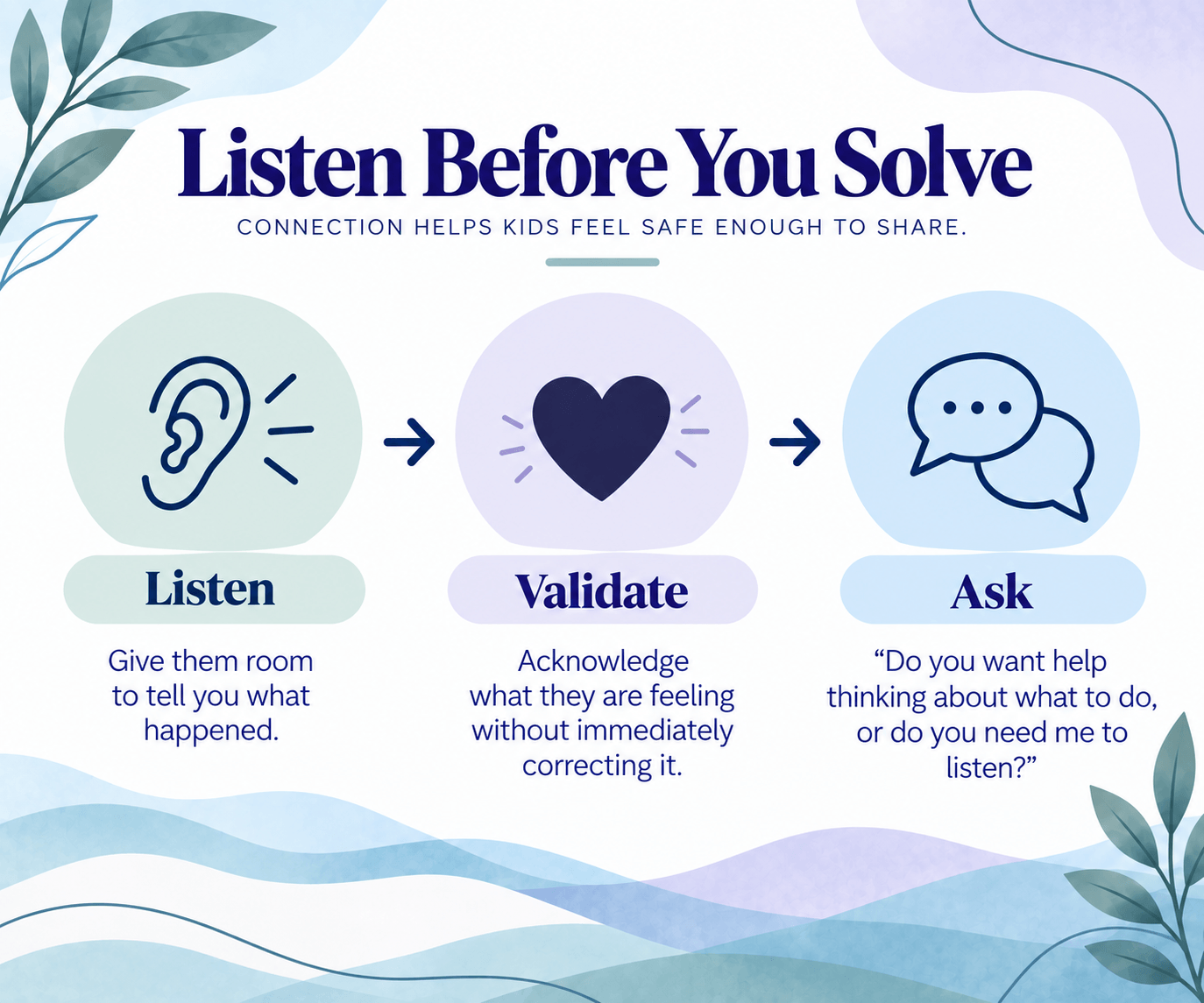
Connection Before Solutions
It is hard to watch our children hurt. We naturally want to reassure them, offer advice, or explain why the situation may not be as bad as it feels.
Those responses usually come from love, but they can unintentionally move past what our child is trying to tell us.
If your child says, “Nobody likes me,” you may want to answer, “That’s not true. You have lots of friends.”
A more connecting response might be:
“That sounds really lonely. What happened today that left you feeling that way?”
Listening does not mean agreeing with every conclusion. It means making space for your child’s experience before deciding together what comes next.
You might ask:
“Do you want help thinking about what to do, or do you need me to listen for a minute?”
Emotions are not problems parents are responsible for removing. Our kids can feel sad, angry, scared, or overwhelmed and still experience connection with us.
We can help them feel seen, heard, supported, and loved while the emotion is still present.
Ask Directly About Suicide
If your child talks about wanting to disappear, not wanting to be alive, hurting themselves, or believing everyone would be better without them, take it seriously.
Begin with connection:
“I’m really glad you told me. I want to understand what you’re experiencing.”
Then ask clearly:
“Are you thinking about suicide or killing yourself?”
Asking directly does not put the idea of suicide into a child’s mind or increase suicidal thoughts. It shows your child that you are willing to hear the real answer. Both the National Institute of Mental Health and the American Academy of Pediatrics encourage calm, direct questions.
Avoid wording that pressures your child to reassure you:
“You wouldn’t ever do something like that, would you?”
That tells them “no” is the answer you need to hear.
Self-harm does not always mean someone intends to die, but it does signal significant distress and increased risk. If your child is harming themselves, ask directly about suicide.
If Your Child Says Yes
Hearing that your child has thought about suicide can be terrifying. You may feel panic, anger, guilt, disbelief, or fear about what happens next.
But in that moment, your child needs to know that telling the truth did not push you away.
Say:
- “I’m really glad you told me.”
- “You are not in trouble.”
- “I love you, and I’m staying with you.”
- “We are going to take the next steps together.”
Ask whether they are thinking about suicide right now, whether they have done anything to hurt themselves, and whether they have made a plan.
You do not need to conduct a complete risk assessment yourself. Your role is to remain present, support safety, and connect with qualified help.
If your child is currently in danger:
- Do not leave them alone.
- Secure firearms, medications, and other potentially lethal items.
- Call or text 988.
- Ask 988 whether a Mobile Crisis Outreach Team is appropriate.
- Call 911 or go to an emergency department if the danger is immediate.
Even if the thoughts have passed, arrange an assessment with a qualified mental-health or medical professional.
Suicidal thoughts should never be punished, dismissed, or treated as manipulation. Your child may still feel upset after talking with you. That does not mean the conversation failed.
Success is not measured by how quickly the emotion changes. Success is that your child reached toward connection and experienced you staying with them.
Notice Significant Changes
No single behavior automatically means a child is suicidal. Look for clusters of warning signs, major changes, or behaviors that are new or increasing:
- Talking or writing about wanting to die
- Expressing hopelessness, shame, or feeling like a burden
- Withdrawing from friends, family, school, or usual activities
- Giving away meaningful possessions
- Major changes in sleep, eating, mood, or behavior
- Becoming unusually reckless
- Searching for ways to die
- Self-harm or a previous suicide attempt
Young children may communicate distress through play, drawings, physical complaints, aggression, or repeated statements about disappearing or dying.
We do not need to panic every time a child says something concerning. We also should not assume they are “too young to mean it.”
When something feels different, lean in.
You Do Not Need Perfect Words
Our children do not need us to have a flawless script. They need us to notice, ask, listen, stay present, support safety, and involve additional help when needed.
We cannot promise our kids that they will never experience emotional pain. We can teach them that pain does not have to disconnect them from the people who love them.
A calm and caring question will not create suicidal thoughts. It may create the connection a child needs to finally share them.
Utah County Resources
-
988 Suicide & Crisis Lifeline: Call or text 988 for free, confidential support at any time.
-
SafeUT: Use the SafeUT app to chat with a licensed counselor or submit a confidential safety tip.
-
Mobile Crisis Outreach: Call 988 and ask whether a crisis team can come to your home, school, or another location.
-
Youth stabilization services: Call 988 or 1-833-SAFE-FAM (1-833-723-3326).
-
Youth Behavioral Health Receiving Center/Vantage Point: 1189 East 300 North, Provo; 801-373-2215. Call ahead to confirm current hours and availability.
-
Immediate danger: Call 911 or go to the nearest emergency department.
Cascade Counseling provides ongoing mental-health services for children, teens, and families in Utah. If your family needs support with anxiety, depression, trauma, self-harm, suicidal thoughts, or another concern, therapy can provide a place where your child does not have to carry it alone.
Cascade Counseling is not an emergency service. For an immediate safety concern, use 988, 911, a crisis receiving center, or the nearest emergency department.
Free Resource: A Guide for Hard Conversations
Not sure what to say when your child is struggling? We created a free conversation guide for parents with practical prompts and supportive language to help you start difficult conversations about mental health, self-harm, and suicide with more confidence.
Download the free guide and keep it somewhere easy to find when you need help finding the words.