

The start of the year is “supposed” to feel like a reset.
New goals. Fresh routines. A sense of momentum.
But for many adults, the early weeks of the year feel very different. Instead of motivation, there’s fatigue. Instead of clarity, there’s irritability, numbness, overwhelm or a constant sense of being behind. The energy you hoped would come with a fresh start just didn’t show up.
If that’s where you are, you’re not alone. And you’re not weak.
In my work as a therapist, I often hear some version of this:
“I should be able to handle this, but I’m exhausted all the time.”
This is often burnout speaking. It’s the part of your mind trying to push through even when your system is asking for a break.
Burnout doesn’t always look dramatic. Many people experiencing burnout are still functioning. They’re showing up to work, taking care of family, and doing what needs to be done, all while feeling depleted underneath. They’re tired in a way that sleep doesn’t fix.
This post explores what burnout really is, how it shows up in everyday life, and what can help when pushing through and resting harder no longer work.

What Burnout Really Feels Like
Burnout is more than feeling tired. It’s a state of ongoing exhaustion that affects your body, emotions, and thinking.
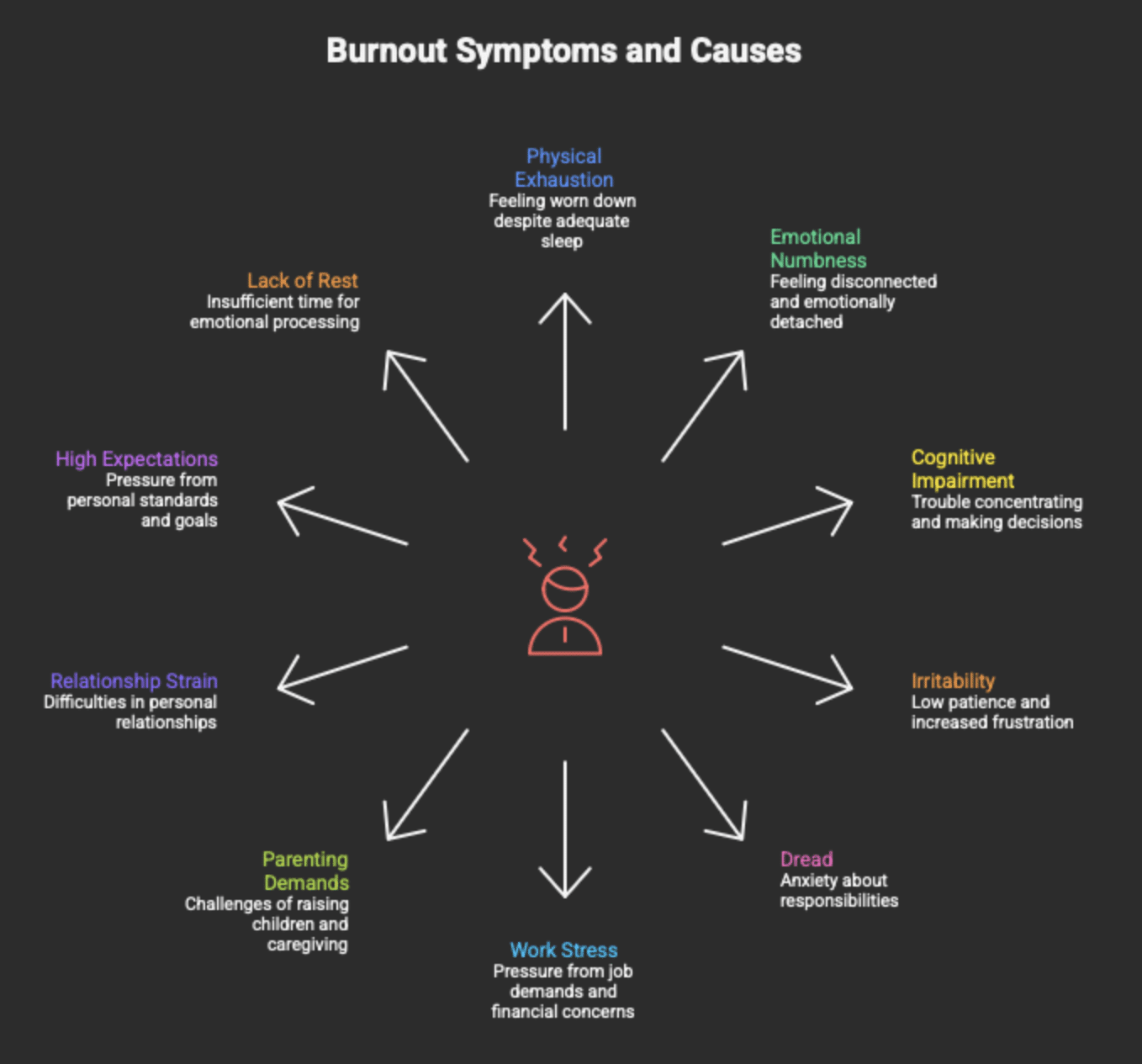
People I work with often describe burnout as:
-
Feeling worn down no matter how much they sleep
-
Irritability or low patience, even with people they care about
-
Trouble concentrating or making decisions
-
Emotional numbness or feeling disconnected
-
A sense of dread about responsibilities that used to feel manageable
Burnout tends to build gradually. Many people don’t notice it at first because they’re used to pushing through. A part of you may say, “I just need to try harder,” or “Once this phase passes, I’ll feel better.” That part is often trying to protect you, but it can also keep you stuck.
Why Burnout Is So Common
Burnout rarely happens in isolation. In therapy, I usually see it develop when ongoing pressure is paired with very little recovery.
Common contributors include:
-
Work stress and financial pressure
-
Parenting or caregiving demands
-
Relationship strain
-
High personal expectations
-
Little time for emotional rest or processing
Many adults I meet are capable, dependable, and used to being the one who holds everything together. Burnout often shows up in people who have learned to keep going, even when it costs them. If you’ve been carrying a lot for a long time, your exhaustion makes sense.
Signs Burnout May Be Asking for Attention
Burnout has a way of signaling that something needs care. Some signs I encourage people to pay attention to include:
-
Feeling emotionally drained most days
-
Running on autopilot and feeling disconnected from yourself
-
Being more reactive or withdrawn than usual
-
Feeling stuck in “get through the day” mode
-
Even small tasks feeling overwhelming
It’s common to minimize these signs or tell yourself to push a little longer. It’s also okay to listen when your system is asking for support.
What Actually Helps Burnout
One thing I often share with clients is that burnout usually doesn’t resolve with rest alone. Many people try sleeping more, cutting back on responsibilities, or using coping skills they already know and still feel depleted. That doesn’t mean those efforts failed. It often means your nervous system and emotions need deeper support.
Helpful steps toward recovery may include:
-
Pausing to notice patterns and sources of stress
-
Setting sustainable boundaries without guilt
-
Reconnecting with values and what matters most to you
-
Therapy support to process overwhelm, learn regulation skills, and make gradual changes that last
This isn’t about fixing yourself. It’s about responding to what your system has been asking for.
How Therapy Can Help with Burnout
Therapy offers a structured, supportive space to work through burnout. In sessions, I often help people:
-
Slow down without judgment
-
Name experiences and emotions they may have been ignoring
-
Learn tools that support regulation, not just productivity
-
Explore realistic changes in habits, routines, and expectations
You don’t have to wait until burnout becomes severe to seek help. Many people reach out while they’re still functioning because they know something needs to shift. Feeling exhausted isn’t a personal failure. It’s a signal that your system has been running on overdrive.

You Don’t Have to Push Through This Alone
If the beginning of the year feels heavier than expected, there’s nothing wrong with you. Burnout is a human response to carrying too much for too long.
If you’re feeling burned out, overwhelmed, or disconnected, support is available. Therapy can be a place to slow down, sort through what’s been weighing on you, and find steadier footing again.
If you’re curious about therapy, you’re welcome to reach out and see if it feels like a good fit. Here at Cascade Counseling, we offer free 15- minute consultations so you can talk with a therapist, ask questions, and see if therapy feels like a good fit for you. Our therapists are experienced in helping people navigate burnout, overwhelm, anxiety, relationship stress, and the emotional weight that often shows up at the start of a new year.
You do not have to wait until things feel unmanageable to reach out. Therapy can be a space to slow down, make sense of what your system has been responding to, and begin creating steadier, more sustainable ways of moving forward.
If you are curious about support, we are here. Sometimes taking that first step is enough to remind you that you do not have to carry this alone.