

Our world is constantly giving us sensory input.
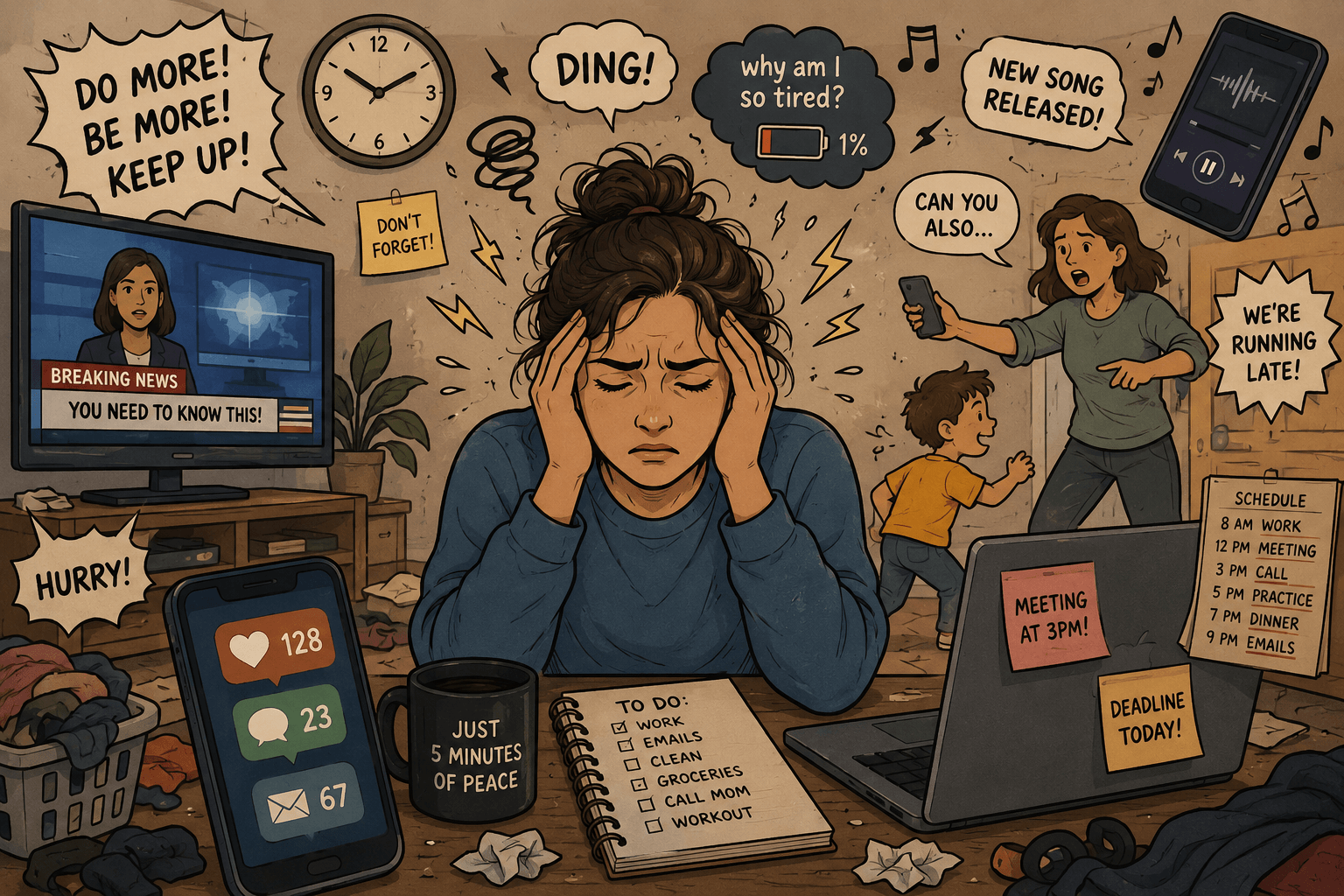
We see it most obviously with our phones. Scrolling, notifications, messages. But it goes beyond that. There is almost always something playing in the background. Music in the car, a podcast while you’re walking, a show on at home.
Even when those things are turned off, it’s rarely quiet. You might hear cars passing by, people talking, or the steady hum of everyday life around you.
And it’s not just what you hear. It’s what you see, too.
You’re constantly taking in reminders of what needs to get done, things on your to-do list, unfinished projects, and expectations about what you should be doing, accomplishing, or having. It’s easy for comparison to creep in without you even noticing.
Over time, all of this can create a mind that feels full. Not in a productive way, but in a way that makes it difficult to slow down, step back, and simply be present.
What This Looks Like in Everyday Life
Many people describe it like this:
“My mind never turns off.”
“I feel like there’s always something running in the background.”
“I just want a break from my thoughts.”
There is often a constant stream of thoughts about work, school, relationships, responsibilities, and everything else competing for attention. It can feel exhausting.
When those thoughts become overwhelming, it makes sense that many people look for relief.
Often that means turning to more stimulation. Putting on a show, listening to music, scrolling social media, or staying busy. Not because these things are bad, but because they can temporarily quiet the noise.
Why It Feels So Hard to Slow Down
When your mind is constantly taking things in, it has less space to notice what’s happening internally.
It’s not that your thoughts and emotions disappear. They simply get pushed beneath everything else demanding your attention.
Part of you is trying to keep up with what needs to happen next, what you might be forgetting, and what’s happening around you. So instead of slowing down, your system stays in motion.
This is one reason why advice like “just relax” or “clear your mind” often feels frustrating. Your mind and body may not be used to that kind of stillness.
The Part Most People Miss
The world probably isn’t going to get quieter overnight.
There will still be responsibilities, distractions, noise, and thoughts. Your mind will likely continue generating reminders, plans, worries, and ideas. That’s what minds do.
The shift comes from learning that you can slow down even in the middle of all of that.
Not by getting rid of your thoughts, but by changing your relationship with them.
A Simple Way to Start: Using One Sense at a Time
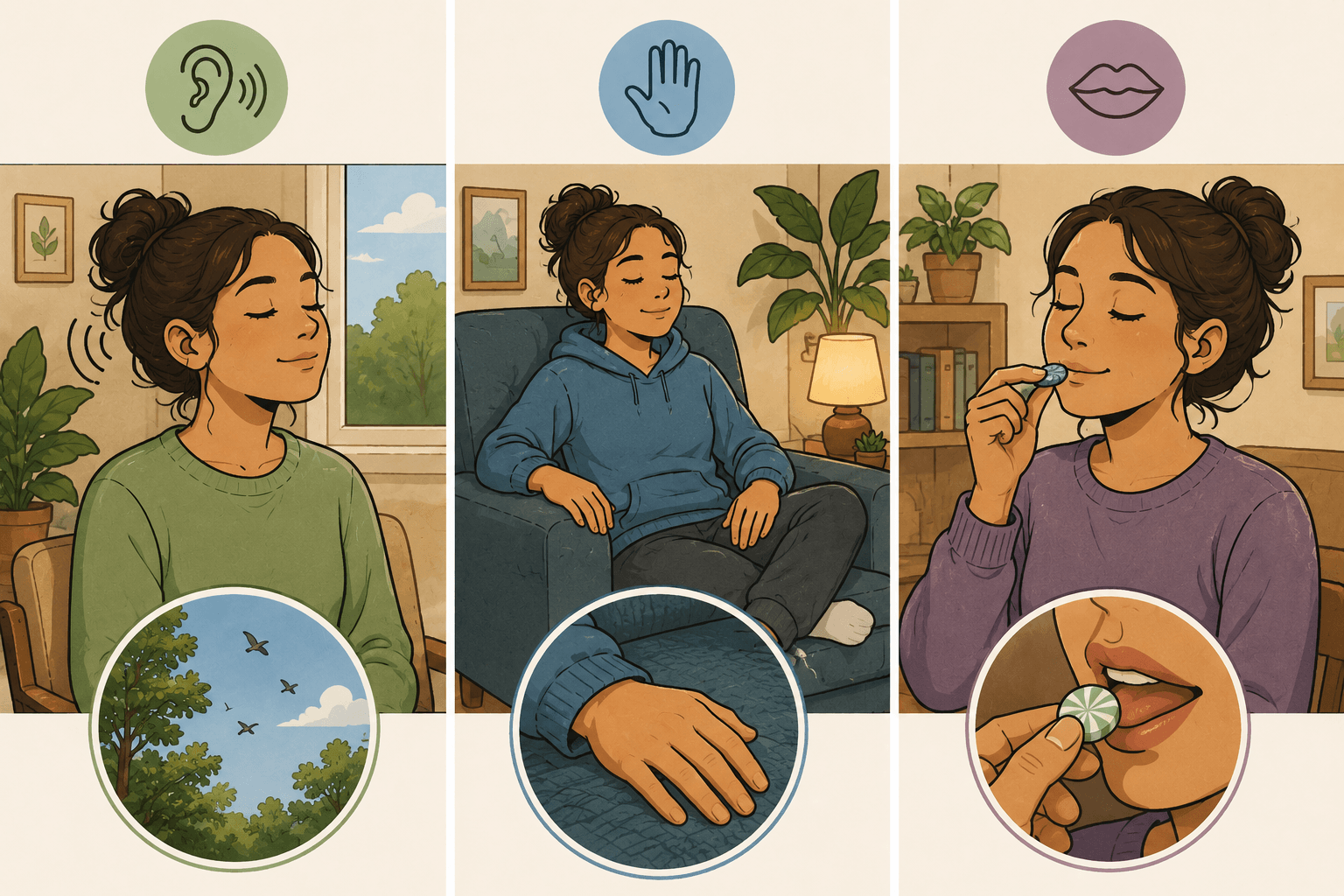
Instead of trying to calm everything at once, try focusing on just one sense. This gives your attention something steady to return to.
You might try:
Sound
Close your eyes and notice what you hear. See if you can distinguish sounds that are near, far away, loud, or soft.
Touch
Bring your attention to physical contact points. Notice your feet on the ground, your back against a chair, your clothes against your skin, or an object you’re holding.
Taste
Try something simple but noticeable, like a mint or sour candy. Pay attention to the flavor, texture, and how the experience changes over time.
You don’t need to do this for long. Even 30 to 60 seconds can make a difference.
The goal isn’t to do it perfectly. It’s simply to bring your attention back to the present moment.
What You Might Notice
At first, your mind may continue pulling you elsewhere.
You may start thinking about your to-do list or feel the urge to move on to something more productive.
That’s okay.
Part of you has become accustomed to staying busy and stimulated. Slowing down can feel unfamiliar.
With practice, these small moments of awareness can help create a little more space in your mind, reduce feelings of overwhelm, and help you feel more present throughout your day.
It’s not about stopping your thoughts.
It’s about not getting carried away by them every time they show up.

Coming Back to Yourself
If your mind feels busy all the time, it doesn’t mean something is wrong with you.
It may simply mean you’ve adapted to a world that is constantly competing for your attention.
And just as you’ve adapted to that pace, you can learn how to step out of it, even if only for a moment.
You don’t have to fix everything or quiet your mind completely.
You can start by noticing.
One sense.
One breath.
One moment at a time.
If you’re finding it difficult to slow down, therapy can provide a space to practice these skills, explore what’s contributing to the overwhelm, and learn ways to feel more grounded in everyday life.
At Cascade Counseling, we work with individuals navigating stress, anxiety, burnout, overwhelm, and the challenges of living in a world that rarely slows down. If you’re ready for support, we’re here to help.
Reach out to schedule a free 15 minute consultation and learn how therapy can help you feel more present, connected, and balanced.